windows nt 4
 8:03
Why You Can't Name A File CON In Windows
7.8M views • 6 years ago
Tom Scott
Tom Scott explains why Windows does not let you name a file CON, tracing the reserved device names back to backwards compatibility with DOS.
 19:40
How I Designed a Free Music Font for 5 Million Musicians (MuseScore 3.6)
608K views • 5 years ago
Tantacrul
Tantacrul explains how he and engraver Simon Smith designed the free music notation font for MuseScore 3.6. It draws on the history of the SCORE notation application by Leland Smith.
 17:05
How Physicists Created a Holographic Wormhole in a Quantum Computer
2.4M views • 3 years ago
Quanta Magazine
Quanta Magazine explains the 2022 experiment that claimed to create a holographic wormhole on Google's quantum computer. The description now notes that a later independent analysis questioned whether any wormhole was created.
 9:31
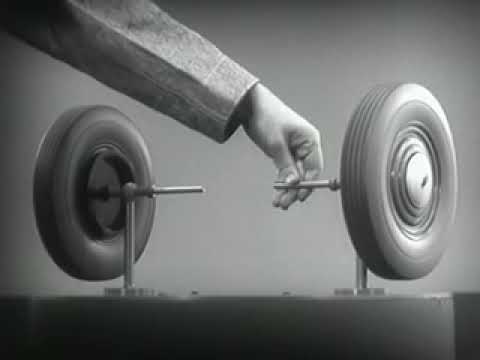
Around The Corner - How Differential Steering Works (1937)
22.3M views • 17 years ago
US Auto Industry
A 1937 GM-produced film explaining how the automobile differential lets wheels turn at different speeds around a corner. It uses clear animations and cutaway demonstrations to build the idea from first principles.
 24:39
SM64 - Watch for Rolling Rocks - 0.5x A Presses (Commentated) [OUTDATED]
5.5M views • 10 years ago
pannenkoek2012
Pannenkoek2012's commentated tool-assisted Super Mario 64 run collecting the Watch for Rolling Rocks star with half an A press, using parallel universes and QPU movement. The video is marked outdated in favor of a newer version.
 15:14
Why Canadians Can't Bike in the Winter (but Finnish people can)
3.3M views • 5 years ago
Not Just Bikes
Not Just Bikes argues that winter is not what stops Canadians cycling, using Oulu, Finland as proof that safe, well-maintained cycling infrastructure enables year-round biking despite harsh weather.
 48:25
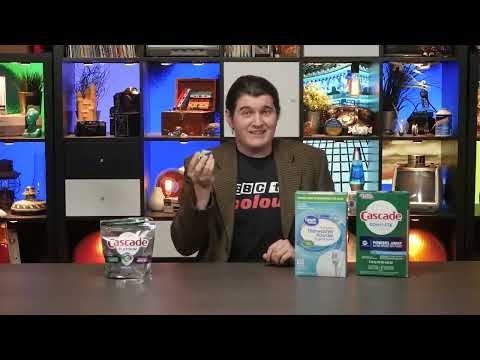
I messed up. You're using too much detergent.
5.4M views • 5 years ago
Technology Connections
Technology Connections explains dishwasher detergent use, arguing people use too much and that powder beats pods and gels. It follows an earlier dishwasher video and covers enzymes, bleach, rinse aids and when salt is needed.
 10:36
Why Would AI Want to do Bad Things? Instrumental Convergence
274K views • 8 years ago
Robert Miles AI Safety
Robert Miles explains instrumental convergence: why an AGI with almost any goal would tend to pursue sub-goals like self-preservation and resource acquisition. It builds on Omohundro's basic AI drives and his orthogonality thesis video.
 18:07
The more general uncertainty principle, regarding Fourier transforms
2.3M views • 8 years ago
3Blue1Brown
3Blue1Brown shows how the uncertainty principle arises from Fourier transforms. A wave packet cannot be narrow in both position and frequency, so the principle is a property of waves rather than of measurement.
 14:34
Visualization of Quantum Physics (Quantum Mechanics)
2.8M views • 9 years ago
udiprod
An animated visualization of basic quantum mechanics using a free particle, with simulations based on the actual equations. It covers waves, particles, and how measurement collapses the wavefunction.
 10:36
Renting vs. Buying a Home: The 5% Rule
5.3M views • 7 years ago
Ben Felix
Ben Felix explains how to compare renting and buying a home by looking at unrecoverable costs, and distills it into the 5% rule of thumb. It is framed for a Canadian audience but broadly applicable.
 26:10
Attention in transformers, step-by-step | Deep Learning Chapter 6
4.8M views • 2 years ago
3Blue1Brown
3Blue1Brown's visual walkthrough of the attention mechanism inside transformers, covering self-attention, multiple heads and cross-attention. It is chapter 6 of his deep learning series.
 6:00
Super Pointy Sprint Missile - 0 to Mach 10 in 15 Seconds - 100Gs & 6000°F
459K views • 6 years ago
Dark Footage
A short video on the US Sprint anti-ballistic missile, which accelerated to around Mach 10 in seconds under extreme g-forces and heat. It includes striking launch footage and a brief development history.
 12:35
The Mathematics of Quantum Computers | Infinite Series
718K views • 9 years ago
PBS Infinite Series
A PBS Infinite Series episode explaining the mathematics of quantum computers, including how qubits store complex numbers and how quantum computation differs from classical computation. Hosted by Kelsey Houston-Edwards.
 29:05
Datacenters Behaving Like Acoustic Weapons
1.8M views • 8 months ago
Benn Jordan
Benn Jordan investigates infrasound and low-frequency noise from data centers, including xAI's Colossus and a crypto mine, and reports his own experiments on the effects. The video covers the health and community impacts on nearby residents.
 14:40
How the Quantum Eraser Rewrites the Past | Space Time | PBS Digital Studios
2.9M views • 10 years ago
PBS Space Time
PBS Space Time explains the quantum eraser experiment, in which erasing which-path information appears to reverse causality in a double-slit setup. It discusses what this means for quantum mechanics.
 12:51
The Delayed Choice Quantum Eraser, Debunked
718K views • 5 years ago
Sabine Hossenfelder
Sabine Hossenfelder explains the delayed choice quantum eraser and argues it does not rewrite the past, as popular accounts claim. She walks through what the experiment actually shows.
 16:32
Pilot Wave Theory and Quantum Realism | Space Time | PBS Digital Studios
1.9M views • 9 years ago
PBS Space Time
A PBS Space Time episode introducing de Broglie-Bohm pilot wave theory, an interpretation of quantum mechanics that avoids much of the strangeness of the mainstream views. It is aimed at curious lay viewers.
 18:01
How the Fed's "Money Printer" Really Works
438K views • 6 years ago
Ben Felix
Ben Felix explains how central bank money creation and quantitative easing actually work, and what they do and do not imply for asset prices and currency. He addresses the common belief that the Fed prints unlimited money and props up markets.
 22:52
2016/2017 MUST-KNOW WEB DEVELOPMENT TECH - Watch this if you want to be a web developer
916K views • 10 years ago
LearnCode.academy
LearnCode.academy presents a roadmap of web development technologies to learn in 2016 and 2017, spanning front-end, back-end and DevOps tools.
 14:32
Orbital Data Centers Yes or No
18K views • 1 year ago
Eager Space
Eager Space examines the practicality of putting data centers in orbit, walking through three scenarios with cost calculations and the launch cost reductions that would be required.
 29:49
EEVblog #1132 - The 3 Cent Microcontroller!
257K views • 8 years ago
EEVblog
Dave Jones of EEVblog looks at a sub-3-cent microcontroller from Padauk and other obscure Chinese manufacturers. He shows how to find such parts and where to buy them in stock.
 13:05
Smoother animation ≠ Better animation [read pinned comment]
16.1M views • 5 years ago
Noodle
Animator Noodle explains why frame interpolation does not make animation better, covering timing, easing, smear frames and using the wrong tool for the job. A pinned correction says the video is partly outdated given later AI developments.
 11:11
Hauntology, Lost Futures and 80s Nostalgia
451K views • 8 years ago
Jonas Čeika - CCK Philosophy
A video essay explaining hauntology, Mark Fisher's idea of lost futures, and 80s nostalgia. It uses the Fallout games and other media as examples of a retro-futurism that mourns futures that never arrived.
 17:31
How Quantum Computers Break Encryption | Shor's Algorithm Explained
3.4M views • 7 years ago
minutephysics
MinutePhysics explains Shor's algorithm, showing how a quantum computer factors large integers by finding the period of a number modulo N. It walks through the modular arithmetic and number theory that give the exponential speedup over classical factoring, and why this threatens encryption.
 2:51
Tea Consent
12.4M views • 11 years ago
Blue Seat Studios
A three-minute animated video that explains sexual consent through the analogy of offering someone a cup of tea. It is based on a blog post by Emmeline May.
 14:03
Quantum Entanglement and the Great Bohr-Einstein Debate | Space Time | PBS Digital Studios
2.6M views • 10 years ago
PBS Space Time
PBS Space Time explains the Bohr-Einstein debate over quantum mechanics and how quantum entanglement settled it. It covers the weirdness of measurement and nonlocal correlations.
 16:36
Hacking at Quantum Speed with Shor's Algorithm | Infinite Series
238K views • 9 years ago
PBS Infinite Series
PBS Infinite Series explains how Shor's algorithm lets a quantum computer break RSA encryption, building on earlier episodes about cryptography and the math of quantum computers. It works through the idea step by step.
 14:18
Accent Expert Gives a Tour of U.S. Accents - (Part 2) | WIRED
2.7M views • 5 years ago
WIRED
Dialect coach Erik Singer tours a range of accents across North America with linguists in Part 2 of WIRED's accent series. It covers regional distinctions such as Southern Mississippi, Miami and Utah English.
 3:37
Why Web Filters Don't Work: Penistone and the Scunthorpe Problem
3.6M views • 10 years ago
Tom Scott
Tom Scott visits Penistone to explain the Scunthorpe problem, showing why naive web and profanity filters block innocent words.
 28:11
Why Everyone Is Talking About Data Centers In Space
408K views • 10 months ago
Scott Manley
Scott Manley examines why SpaceX, Google and others are looking at orbital data centers. He walks through the economics, heat rejection and solar power arguments, with links to the Lumen/Starcloud and Google Suncatcher papers.
 24:30
Is It Really Impossible To Cool A Datacenter In Space?
1.1M views • 7 months ago
Scott Manley
Scott Manley explains the thermal balance of spacecraft and how a satellite could be configured to radiate away the heat from datacenter-scale computing in space. His rough numbers suggest it is feasible.
 21:33
Accent Expert Gives a Tour of U.S. Accents - (Part One) | WIRED
9.6M views • 5 years ago
WIRED
Dialect coach Erik Singer and several linguists tour distinct accents across English-speaking North America. It is the first part of a WIRED series on US accents.
 13:43
Why Quantum Information is Never Destroyed
715K views • 8 years ago
PBS Space Time
A PBS Space Time episode asking whether the universe's information can ever truly be lost, tying quantum mechanics, determinism and black holes together. It sets up the black hole information paradox.
 15:53
Quantum Field Theory visualized
2.7M views • 6 years ago
ScienceClic English
ScienceClic gives a 15-minute animated introduction to quantum field theory, covering fields, spin, conserved quantities, the standard model and interactions.
 8:33
Drawing Conclusions: Is renting really a waste of money?
5.4M views • 11 years ago
The Globe and Mail
A short Globe and Mail animated explainer on why renting can leave you as well off as buying a home. It walks through a rent-versus-buy comparison using Toronto numbers and the opportunity cost of a down payment. The video notes it dates from 2015 and the housing market has changed since.
 19:27
Quantum Computing Expert Explains One Concept in 5 Levels of Difficulty | WIRED
8M views • 8 years ago
WIRED
IBM's Dr. Talia Gershon explains quantum computing to five people of increasing expertise: a child, teen, college student, grad student and professional. The WIRED series format moves from simple analogies to technical detail.
 9:16
Floating Point Numbers - Computerphile
2.5M views • 12 years ago
Computerphile
Tom Scott explains for Computerphile how floating point numbers work, why moving the binary point is fast, and why it handles money badly.
 16:37
Does It Make Sense To Put Data Centers In Space? Can They Really Cost Less To Operate?
502K views • 2 years ago
Scott Manley
Scott Manley analyzes the idea of putting data centers in orbit, prompted by Lumen Orbit's funding. He examines the claimed advantage of constant solar power against launch cost, cooling and mass.
 15:00
The Material Science of Metal 3D Printing
2.7M views • 7 years ago
Real Engineering
Real Engineering explains the materials science behind metal 3D printing, including crystal structure, laser sintering, and why printed parts develop fatigue cracks. It shows how process imperfections limit the strength of printed metal.