I recently learned that waste heat will boil the oceans in about 400 years.
Sabine Hossenfelder2 HN recommenders · recommended in 2 months, 2023-2024
767K views · 3 years ago · explainer · evergreen
Sabine Hossenfelder explains that waste heat from ever-growing energy use could eventually boil the oceans in a few centuries, whatever the energy source. She discusses proposed ways to cool the planet.
HN cites it in energy debates as an illustration of the long-term thermal limits of exponential energy consumption growth.
 6:50
13 Misconceptions About Global Warming
Veritasium
5.9M views • 12 years ago
 55:50
Dan Britt - Orbits and Ice Ages: The History of Climate
TheIHMC
883K views • 14 years ago
 1:14:16
Arithmetic, Population and Energy - FULL LENGTH
kip399
191K views • 14 years ago
 1:14:46
Arithmetic, Population and Energy - a talk by Al Bartlett
lXlSalemlXl
201K views • 13 years ago
 19:07
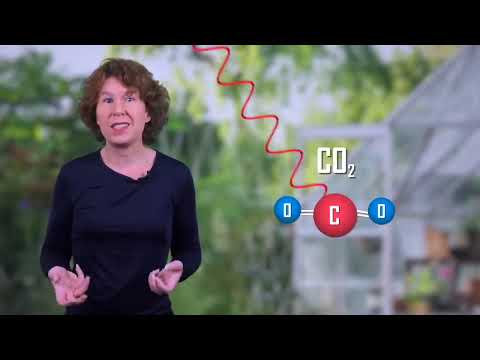
I Misunderstood the Greenhouse Effect. Here's How It Works.
Sabine Hossenfelder
989K views • 3 years ago
 17:33
Why renewables can’t save the planet | Michael Shellenberger | TEDxDanubia
TEDx Talks
5.7M views • 7 years ago
 18:17
Nebraska retiree uses earths's heat to grow oranges in snow
Kirsten Dirksen
3.4M views • 8 years ago
 22:47
Is Nuclear Energy Green?
Sabine Hossenfelder
1M views • 4 years ago
 8:23
A Century Of US Cooling - Erased By NOAA
Tony Heller
21K views • 8 years ago
 1:31:53
Gwynne Dyer -- Geopolitics in a Hotter World
The University of British Columbia
82K views • 16 years ago
 53:21
GSMT - Dan Holohan, Author: "The Lost Art of Steam Heating"
The General Society of Mechanics and Tradesmen
71K views • 11 years ago
 1:12:38
Assoc Prof Simon Michaux - The quantity of metals required to manufacture just one generation of...
Sustainable Minerals Institute UQ
122K views • 4 years ago
 4:00
The Greenhouse Gas Demo
Erik Christensen
304K views • 15 years ago
 21:37
I wasn't worried about climate change. Now I am.
Sabine Hossenfelder
2.5M views • 2 years ago
 21:33
A CONSERVATIVE solution to global warming (Part 1)
potholer54
278K views • 8 years ago
 14:35
The Time America Almost Stopped Climate Change | Climate Town
Climate Town
638K views • 5 years ago
 14:51
Grid: Renewable Baseload Power from a single desert location. Enough for 7 million homes!
Just Have a Think
197K views • 5 years ago
 21:27
It’s Time To Break Up With Our Gas Stoves | Climate Town
Climate Town
1.1M views • 4 years ago
 1:14:16
Exponential Growth Arithmetic, Population and Energy, Dr. Albert A. Bartlett
Hiroob
84K views • 11 years ago
 20:02
Hydrogen Will Not Save Us. Here's Why.
Sabine Hossenfelder
2.4M views • 3 years ago
5 comments from Hacker News
You might enjoy Sabine Hossenfelder's video exploring this "I recently learned that waste heat will boil the oceans in about 400 years": ▶ this video It turns out we can probably solve this by building planetary chimneys 5km tall that move heat to the outer atmosphere.
No matter which energy source you use, increasing energy use will eventually cause problems. With nuclear power, eventually you'll add so much waste heat added to the atmosphere that it will be worse than greenhouse gases: If we continue increasing energy consumption at current rates and cover it with nuclear power the ocean will boil in 400 years: ▶ this video Obviously that's not meant to be a serious scenario. But it's illustrative. I don't see the problem of lifting everyone up while using less energy. We just gotta be smart about the solutions we make, rather than just brute-forcing it by using lots of energy. Like: I prefer to bike to work. That makes my life better. I also prefer living in a walkable/bikeable town. If I'm forced to drive a car the energy associated getting to work will be very high. If I can use an e-bike it's a tiny fraction, and I get to exercise without wasting time in a gym.
It’s based on extrapolation of current trends, so I doubt it’ll actually happen. Besides, we’d all die before it got to that. But here are some sources that describe it: ▶ this video (commentary from Sabrine Hossenfelder, highly recommended) link link
I'm not sure the author realized this, but they're actually making a statement about how crazy exponential growth is. Not about the sustainability of tidal power. This becomes obvious once you look closer at what that 2% growth rate (as assumed in the post) implies. Our global energy consumption in 2008 was estimated to be 474 exajoules. The total energy received by the earth from the sun during a year is about 5 million exajoules, a fraction of which reaches the surface. 5 million is much more than 474. But at a seemingly modest 2% per year growth rate (as it was between 1980 and 2006), our energy consumption will match those 5 million exajoules in less than 500 years! Think about that: if energy consumption growth continues at the current pace, then in 500 years we'll either be using ALL solar energy received by the earth (leaving none for the biosphere), or we'll have figured out some magic technology to produce 5 million exajoules of energy per year. Assuming the magic technology, where are we going to get rid of all that extra heat? It would effectively be like having a second sun on earth, cooking us in place. edit: I copied the numbers above from a post I wrote in 2010, so it may be a bit out of date. But Sabine Hossenfelder recently made a video where she talked about a similar timescale, i.e. boiling oceans in 400 years: ▶ this video
I think we should start talking about the possible climate impact of waste heat from nuclear thermal power plants too. I'm definitely pro-nuclear, wherever it makes sense, in the short term. As long as it's never at the expensive of building renewables too. But many nuclear proponents talk as if nuclear is the end-goal for power generation. That we should just replace everything with nuclear. But if we do, it's going to get harder to bring the Earths climate back to equilibrium, since a world on 100% nuclear power would add a lot of heat to planet. Not as bad as greenhouse gases, but significant enough to make reversal harder. Sabine Hossenfelder has a video covering the topic: ▶ this video I think focusing on solar and energy storage will always be a good bet. It will probably be the absolute dominant way to get energy in 100 years, along with geothermal in colder climates. We're just one generational improvement from that being inevitable, and those improvements are arguably already out of the lab and in trial production stage. Given how important solar+storage will be, the amount of R&D flowing into it will be staggering in the coming decades. When we've completed the transition to sustainable solutions (which right now is requiring a lot of mining and energy intensive metal processing, which will mostly be recycled in the future) and the population growth flattens and then reverses, I'd hope that the amount of energy needed for industry will fall dramatically. Edit: I'm also h