Ted Nelson in Herzog's "Lo and Behold"
TheTedNelson3 HN recommenders · recommended in 3 months, 2017-2022
42K views · 9 years ago · interview · evergreen
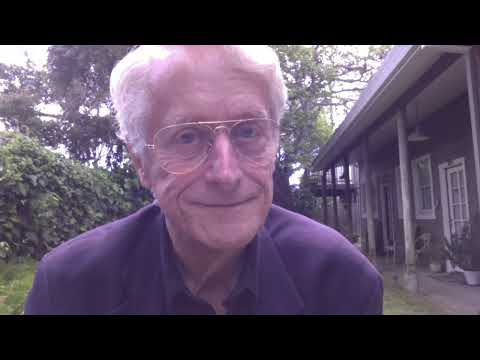
A short excerpt from Werner Herzog's film Lo and Behold in which Ted Nelson lays out his ideas about hypertext and interconnection. Herzog concludes that Nelson is the only sane person in computing.
HN shares it as an accessible window into Ted Nelson's vision of Xanadu and linking, which commenters say gains meaning with historical context.
 25:48
Ted Nelson struggles with uncomprehending radio interviewer, 1979
TheTedNelson
19K views • 9 years ago
 12:23
Xanadu Basics 1a - VISIBLE CONNECTION
TheTedNelson
20K views • 8 years ago
 7:26
Ted Nelson's Eulogy for Douglas Engelbart
Computer History Museum
17K views • 12 years ago
 7:32
Ted Nelson demonstrates Xanadu Space
photonhunter
84K views • 18 years ago
 47:57
Here I Stand, at Age 80
TheTedNelson
25K views • 9 years ago
 14:46
Computers for Cynics 0 - The Myth of Technology
TheTedNelson
33K views • 14 years ago
 17:33
Alan Kay's tribute to Ted Nelson at "Intertwingled" Festival
TheTedNelson
41K views • 12 years ago
 6:03
Bill Atkinson: Hypercard
TWiT Tech Podcast Network
10K views • 10 years ago
 0:57
Steve Jobs talks about what he saw and he missed at Xerox PARC
Yoshiki Ohshima (大島芳樹)
21K views • 8 years ago
 26:52
The Computer Chronicles - Hypercard (1987)
The Computer Chronicles
53K views • 13 years ago
 9:41
How Steve Jobs got the ideas of GUI from XEROX
Ringo Pebam
272K views • 12 years ago
 3:00
Bill Gates demonstrates Visual Basic (1991)
Crapkai
2.1M views • 10 years ago
 5:46
Apple Knowledge Navigator Video (1987)
Mac History
235K views • 14 years ago
 3:47
Sketchpad, by Dr. Ivan Sutherland with comments by Alan Kay
David Carroll
54K views • 19 years ago
 12:47
Apple's Future Computer: The Knowledge Navigator
Blake Patterson
304K views • 15 years ago
 54:20
Bret Victor Inventing on Principle
Luna Programming Language Tutorials
22K views • 8 years ago
 1:13:51
Douglas Engelbart Interviewed by John Markoff of the New York Times
Computer History Museum
14K views • 13 years ago
 2:20:15
The Final Demonstration of the Xerox 'Star' computer
Computer History Museum
22K views • 13 years ago
 49:22
Douglas Adams - Hyperland
UJ ObscureMedia
55K views • 12 years ago
 56:22
Bret Victor - The Humane Representation of Thought
Colin McDonnell
58K views • 11 years ago
6 comments from Hacker News
"Amazingly, Herzog concludes that Ted is the only sane person in the computer field." [ ▶ this video ] At the time Ted conceived his visionary ideas, the magazines were full of pictures of guys in suits standing in front of secretaries typing into screenless hardware, and business machines with racks of IBM tape-reels. There was little non-corporate networking (except for the beginnings of PLATO), and only dreamers talked of making all information available to everyone. Wikipedia is a kludge by comparison.
My read was similar, I also couldn’t get through Lo and Behold which set off bullshit alarms [0] and just gave me the impression of confidence being used in the place of actual explanation. It feels like an emperor has no clothes situation. For some reason people think it signals high status or intellectualism to like Herzog so they say they do. I haven’t watched all of his movies so this may be unfairly harsh, but that was my initial impression. Portal podcast also came across that way to me. First interview with Thiel was interesting, but I stopped somewhere after the next couple. Too much “the media doesn’t want us to talk about this” and “the Clintons are a globalist conspiracy against the people”. If you have real arguments then make them. Don’t just confidently state things as fact without backing them up. Thankfully when Sam Harris was on he at least pushed back on some of the bullshit. [0]: ▶ this video
Ted Nelson who coined the term _hypertext_ in _1963_ claimed in Werner Herzog’s documentary “Lo and Behold” that his original idea for “copy and paste” would always link back to the original. This article below based on the Herzog interview has more context but not the exact _quote_ (context pun intended) that I remember from the documentary. Full interview of Ted Nelson from “Lo and Behold”: ▶ this video > Nelson, who was featured in Werner Herzog’s latest film, Lo and Behold, believes that instead of the existing formats we use online, where text often mirrors the constraints of paper, we should have a system of two-way links that would allow readers to see the context of any quotation... > There are a few offline examples, such as the Talmud and the Rosetta Stone, where text is read side-by-side. Nelson believes this is how online documents should be constructed. > “As far as I’m concerned, this is the way literature should develop,” he says. “I don’t consider this technology, I think it’s literature. Being able to see visible connections between pages seems to me absolutely fundamental.” > Nelsons says this setup would be the ideal format for reading annotations, additional details, correspondence, and disagreements: “It’s essentially a different genre of writing.” > As Nelson sees it, our current use of online documents is very limiting. He’s particularly disturbed by how we use the words cut and paste. When the Macintosh was introduced in 1984, cut came to mean “hide this pi
I suspect this comment is aimed at segments like this one with Ted Nelson of Hypertext fame: ▶ this video On first viewing, I too felt it was incomprehensible wordsoup in some sense - but upon learning more about Nelson and the history and context around which his ideas were developed, I've grown to find this interview almost magical.
Here is an interview in which Ted Nelson explains his vision to Werner Herzog: ▶ this video The interview is included in 'Lo and Behold, Reveries of the Connected World' documentary. The whole documentary is rather critical of the impact the Internet revolution had on our society, but Herzog seemed to really admire Ted Nelson's alternative vision for the global network.
There's someone who definitely spent a lot of time on this, definitely check out Ted Nelson's ZigZag structure: link It is exactly that, an attempt to structure data in a similar way that our thoughts are formed. I believe it was this video where he shortly explained that concept; ▶ this video Although it might be a different video since Ted Nelson is all over the place with his documents and videos.