hypertext
 49:22
Douglas Adams - Hyperland
55K views • 12 years ago
UJ ObscureMedia
Hyperland is a 1990 BBC documentary written by and starring Douglas Adams, who tours an imagined future of hypertext and software agents. It features Ted Nelson among others.
 7:32
Ted Nelson demonstrates Xanadu Space
84K views • 18 years ago
photonhunter
Ted Nelson demonstrates Xanadu Space, his software for representing hypertext in three-dimensional space with linked, referenced content fragments.
 3:52
Ted Nelson in Herzog's "Lo and Behold"
42K views • 9 years ago
TheTedNelson
A short excerpt from Werner Herzog's film Lo and Behold in which Ted Nelson lays out his ideas about hypertext and interconnection. Herzog concludes that Nelson is the only sane person in computing.
 44:38
Joe Armstrong & Jeremy Ruston - Intertwingling the Tiddlywiki with Erlang | Code Mesh LDN 18
11K views • 7 years ago
Code Sync
Joe Armstrong, creator of Erlang, and Jeremy Ruston, creator of TiddlyWiki, discuss hypertext, Ted Nelson's idea of intertwingled knowledge, and a way to combine TiddlyWiki with Erlang. It is a Code Mesh LDN 2018 talk.
 47:57
Here I Stand, at Age 80
25K views • 9 years ago
TheTedNelson
Ted Nelson, the originator of hypertext and Project Xanadu, gives a personal account at age 80 of his ideals, his career, and how a poor career plan led to discoveries and adventures. It works as an alternative history of personal computing and hypertext.
 12:23
Xanadu Basics 1a - VISIBLE CONNECTION
20K views • 8 years ago
TheTedNelson
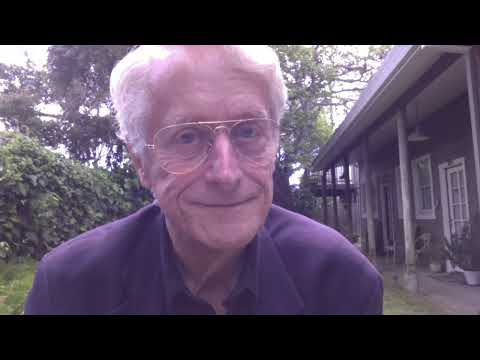
Ted Nelson explains the original Xanadu hypertext idea of visible connection, the notion that links between documents should be shown and preserved. He argues that the Web and current document standards lost this concept.
 1:40:53
The Mother of All Demos, presented by Douglas Engelbart (1968)
1.2M views • 14 years ago
Marcel
The full recording of Douglas Engelbart's 1968 demonstration, which introduced the mouse, hypertext, video conferencing, word processing, and real-time collaborative editing. It runs about 100 minutes.
 25:48
Ted Nelson struggles with uncomprehending radio interviewer, 1979
19K views • 9 years ago
TheTedNelson
A 1979 CBC radio interview in which Ted Nelson tries to explain how computers could serve as tools for thinking and visualizing. The interviewer keeps failing to grasp the idea, and Nelson patiently answers again and again.
 56:23
Inventing the Computer Mouse | Douglas Engelbart | Talks at Google
30K views • 19 years ago
Talks at Google
A Talks at Google visit by Douglas Engelbart, inventor of the mouse. He presents his lifelong aim of augmenting collective human intelligence, followed by a Q&A.
 5:36
1968 “Mother of All Demos” by SRI’s Doug Engelbart and Team
302K views • 7 years ago
SRI
Highlights from Doug Engelbart's December 1968 demonstration at SRI, the first public showing of the mouse, hypertext, windows, real-time collaborative editing and shared-screen teleconferencing. This is a roughly six-minute condensed version of the full demo.
 14:46
Computers for Cynics 0 - The Myth of Technology
33K views • 14 years ago
TheTedNelson
The opening episode of Ted Nelson's Computers for Cynics series, in which he casts doubt on conventional accounts of computer basics. He argues that conventions and packaging are mistaken for technology.
 7:26
Ted Nelson's Eulogy for Douglas Engelbart
17K views • 12 years ago
Computer History Museum
Ted Nelson's short eulogy for Douglas Engelbart, delivered at the Computer History Museum in 2013, reflecting on his friend and Engelbart's ideas.
 9:27
"Silicon Valley Story" — a Very Short Romantic Comedy by Ted Nelson
6K views • 16 years ago
TheTedNelson
A short romantic comedy by Ted Nelson about the 'microcircuitry of love', with Doug Engelbart as his father and Stewart Brand as the villainous CEO.
 14:02
Computers for Cynics 2 - It All Went Wrong at Xerox PARC
23K views • 14 years ago
TheTedNelson
Ted Nelson, in his Computers for Cynics series, gives a critical history of Xerox PARC's vision of personal computing. He lists what he sees as the limitations and wrong turns in PARC's approach to the desktop and documents.
 12:47
Apple's Future Computer: The Knowledge Navigator
304K views • 15 years ago
Blake Patterson
Apple's late-1980s Knowledge Navigator concept video, produced under John Sculley, showing a professor using a tablet-like device with a conversational software agent. It envisions hypertext, touchscreens and voice assistants.
 1:13:51
Douglas Engelbart Interviewed by John Markoff of the New York Times
14K views • 13 years ago
Computer History Museum
A Computer History Museum interview in which John Markoff of the New York Times talks with Douglas Engelbart about his life and research. It covers the influences and struggles behind his work on the mouse, hypertext and collaborative computing, and his aim of helping humanity tackle complex problems.