The History of Europe: Every Year
CottereauCited 7× on HN, 2018-2024
33.9M views · 8 years ago · explainer · evergreen
An animated map showing the borders and populations of European countries for every year since 400 BC. Vassal states and colonies are excluded from population counts.
HN users link it whenever a thread needs a quick illustration of how much European borders have shifted and how much conflict there was.
 1:01
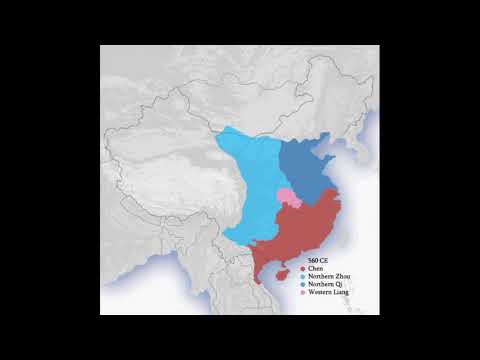
China - 3,000 Years of History in a Minute
EarthDirect
150K views • 13 years ago
 4:48
Hans Rosling's 200 Countries, 200 Years, 4 Minutes - The Joy of Stats - BBC
BBC
11.5M views • 15 years ago
 27:13
The Longest Year in Human History (46 B.C.E.)
Historia Civilis
7.4M views • 7 years ago
 7:09
A New History for Humanity – The Human Era
Kurzgesagt – In a Nutshell
10.1M views • 9 years ago
 20:36
Hans Rosling: Debunking third-world myths with the best stats you've ever seen
TED
2.2M views • 19 years ago
 6:40
Overpopulation – The Human Explosion Explained
Kurzgesagt – In a Nutshell
14M views • 9 years ago
 5:43
The EU Has Orbits, and the UK Fell Out of All of Them
CGP Grey
0 views • 7 years ago
 11:54
The Most Complex International Borders in the World
WonderWhy
7.9M views • 12 years ago
 58:51
DON'T PANIC — Hans Rosling showing the facts about population
Gapminder Foundation
3.3M views • 11 years ago
 55:50
Dan Britt - Orbits and Ice Ages: The History of Climate
TheIHMC
883K views • 14 years ago
 10:16
Hans Rosling: Global population growth, box by box
TED
1.9M views • 16 years ago
 13:56
Understanding the Russian mindset
CaspianReport
994K views • 12 years ago
 18:31
The Fallen of World War II
Neil Halloran
15.1M views • 10 years ago
 20:36
The best stats you've ever seen | Hans Rosling
TED
4.4M views • 19 years ago
 1:03:45
2. The Bronze Age Collapse - Mediterranean Apocalypse
Fall of Civilizations
8.2M views • 6 years ago
 6:08
Immigration, World Poverty and Gumballs
NumbersUSA
6.8M views • 16 years ago
 5:26
Some Countries Exist Only on Paper
CGP Grey
12.3M views • 13 years ago
 18:33
Is the world getting better or worse? A look at the numbers | Steven Pinker
TED
1.6M views • 8 years ago
 16:37
Why the world population won’t exceed 11 billion | Hans Rosling | TGS.ORG
THINK Global School
2M views • 10 years ago
 1:10:18
1177 BC: The Year Civilization Collapsed (Eric Cline, PhD)
National Capital Area Skeptics (NCAS)
8.8M views • 10 years ago
7 comments from Hacker News
It's often forgotten how much conflict there was in Europe (and most of the world) in the 18th and 19th centuries. How this was fairly "normal" It's really forgotten how relatively peaceful our time is. I'm not complaining, in fact, I want to protect it. And that means we can't forget what was. ▶ this video
> as experienced by people living at the time there's another twist of all this. Communication back in time has been.. mostly missing - and slow if any. So people in two distant cities could be on two different planets, with similar outcome :) Seems those "linear" timelines, put in that context, look more like bitemporal things.. so its possible that city B learned that city A was in war when that war actualy ended, or later.. and reaction (if any) might be misplaced.. As of maps of "rivers".. that's similar to how people migrations - or army moves are shown. btw, there's this history-map of europe 1-year-per-second: ▶ this video and also this, i don't know are they of same author: link
> So, tell me again about why everything is the fault of "The West", including all the western countries who have never attacked anyone, in your mind? Not the person you're responding to, but I think it is important to recognize that the US is practically the military of The West (and some more like Japan and Korea), or rather those on the side of democracy in the cold war. Lots of this is because after a bunch of very big wars in Europe (Napoleonic Wars, WWI, WWII) -- and a bunch of smaller wars -- the countries essentially decided that it was best to have smaller militaries and out source it to somewhere that didn't have a long history of border disputes. Helped that the US already had a strong military, were an ocean away, and their bordering neighbors aren't major competitors. On the flip side, the USSR was essentially this same thing but for the communist side (till China started to rise in power). Some military historians suggest that the rise of super powers was a big component for the long peace. There's a lot to this history that's way more complicated than can be put in a singular comment and involves much more of the globe than just Europe (even the US's, Mexico's, and Canada's independences rely and exacerbated on these conflicts). People use this history to write a wide variety of narratives. Long Peace: link Borders in Europe from 1000AD to now: ▶ this video
This is an animated map of who owned what parts of Europe over the past 1000 years. Do you consider 'colonialism' to be different to any other form of human expansion done since time began? ▶ this video
> Can you look at the last decade of US military actions and say this has increased European security? Here is a video [0] of the borders of European countries over the last 1500 years. There is potentially a correlation behind their stability since 1945 (11:16 in the video) and the US having a number of troops stationed in Germany comparable to the German army. It is debatable whether it was all to do with the US; but the circumstantial evidence is substantial. The border redrawings may resume one day. [0] ▶ this video
Most parts of the world have gone through similarly horrific waves of border expansion and contraction at the cost of human lives and cultures, going back to the beginning of civilization. Take the borders of Europe, for example: ▶ this video I doubt the expansion of, say, the Roman Empire in what we now call Europe and Africa was any less violent than the expansion of the English-speaking world in what we now call North America. Humankind's track record on this earth is full of atrocities.
I liked the variant with names of countries and population count better that was published four months earlier: ▶ this video