apollo 11
 1:01:42
34C3 - The Ultimate Apollo Guidance Computer Talk
324K views • 8 years ago
media.ccc.de
Michael Steil and Christian Hessmann's 34C3 talk explaining the Apollo Guidance Computer end to end: hardware design, operating system, and mission software.
 48:36
The Charming Genius of the Apollo Guidance Computer - Brian Troutwine
170K views • 11 years ago
Erlang Solutions
Brian Troutwine's Code Mesh 2015 talk on the Apollo Guidance Computer. It covers the AGC's design, core rope memory, its interrupt and software behavior, and the pioneering engineering effort behind it.
 1:04:33
CppCon 2014: Jeff Preshing "How Ubisoft Develops Games for Multicore - Before and After C++11"
53K views • 12 years ago
CppCon
CppCon 2014 talk by Jeff Preshing on how Ubisoft Montreal developed games for multicore hardware, before and after C++11 concurrency support. It goes into atomics and lock-free programming in practice.
 1:29:49
Going Native 2012 Keynote Stroustrup
33K views • 14 years ago
savage309
Bjarne Stroustrup's keynote at Going Native 2012 covers the ideas behind C++11, including using types to prevent errors and simplifying code with the STL.
 45:35
The Real Story Behind Wayland and X - Daniel Stone (linux.conf.au 2013)
104K views • 13 years ago
Mladen Mijatov
Daniel Stone, a longtime X and Wayland developer, explains at linux.conf.au 2013 why X11's design became untenable and what motivated Wayland. The talk walks through X's history and accumulated cruft.
 43:33
Google I/O 2011: Chrome Dev Tools Reloaded
107K views • 15 years ago
Google for Developers
Paul Irish and Pavel Feldman present the newest Chrome Dev Tools features at Google I/O 2011, including live CSS editing, saving changes, breakpoints and network analysis. It also covers remote debugging.
 1:01:39
"Simple Made Easy" - Rich Hickey (2011)
219K views • 5 years ago
Strange Loop Conference
Rich Hickey's Strange Loop 2011 keynote distinguishing 'simple' (not intertwined) from 'easy' (familiar or near at hand). It argues that software complexity comes from complecting things and that we should pick simple constructs.
 1:06:39
Ruby Midwest 2011 - Keynote: Architecture the Lost Years by Robert Martin
172K views • 14 years ago
Confreaks
Robert C. Martin's Ruby Midwest 2011 keynote argues that software architecture should express the application's intent rather than its framework. He covers separating entities, interactors and boundaries so the web, database and framework are details.
 1:04:04
LISA11 - Fork Yeah! The Rise and Development of illumos
310K views • 14 years ago
USENIX
Bryan Cantrill's LISA11 talk on how illumos arose after Oracle closed OpenSolaris. It covers the history of Sun, ZFS, DTrace and Zones, and the diaspora of kernel engineers, with a famous rant about Oracle and Larry Ellison.
 1:01:39
"Simple Made Easy" - Rich Hickey (2011)
434K views • 5 years ago
ClojureTV
Rich Hickey's Strange Loop 2011 keynote separates 'simple' (not intertwined) from 'easy' (familiar or near at hand) and argues that software complexity comes from complecting things. It offers a vocabulary for judging designs and abstractions.
 48:02
BlackHat USA 2011: SSL And The Future Of Authenticity
95K views • 15 years ago
Christiaan008
Moxie Marlinspike's BlackHat 2011 talk examines weaknesses of SSL and the certificate authority system and proposes Convergence, a decentralized notary approach with trust agility.
 1:04:19
"We Really Don't Know How to Compute!" - Gerald Sussman (2011)
96K views • 5 years ago
Strange Loop Conference
Gerald Sussman's 2011 Strange Loop keynote argues we still do not know how to compute, comparing biological systems with how we program machines. It touches on propagators, constraint programming and robustness.
 45:35
The real story behind Wayland and X
46K views • 11 years ago
Linux.conf.au 2013 -- Canberra, Australia
X.Org developer Daniel Stone explains the history and technical limits of the X Window System and why Wayland was created, debunking myths from forum comments. He covers topics such as network transparency and blocking calls.
 1:00:12
Pitfall Classic Postmortem With David Crane Panel at GDC 2011 (Atari 2600)
76K views • 15 years ago
GameSpot
David Crane, designer of Pitfall for the Atari 2600, gives a GDC 2011 postmortem on the game's design challenges. He covers how he fit a large world into the console's tiny memory. The session ends with Q&A.
 20:27
Salman Khan TED Talk 2011 (from ted.com)
5.1M views • 15 years ago
Khan Academy
Salman Khan's TED 2011 talk on Khan Academy. He shows that it goes beyond video lectures to self-paced practice and analytics for teachers, and argues for filling gaps in understanding.
 26:19
FailCon 2011 - Uber Case Study
114K views • 15 years ago
BAMM.TV
Travis Kalanick's talk at FailCon 2011 about his earlier failed startups, given as a case study before Uber's rise. It describes lessons from those ventures.
 1:26:39
QuakeCon 2011 - John Carmack Keynote
295K views • 15 years ago
QuakeCon Official
John Carmack's keynote at QuakeCon 2011, an hour and a half of wide-ranging talk about id Software, Rage, engine open-sourcing, patents and programming practices.
 59:11
How to Speed up a Python Program 114,000 times.
171K views • 13 years ago
InfoQ
David Schachter describes how he made a data-collection Python program run 114,000 times faster, drawing on decades of experience. The talk covers pipelining, cache effects and other optimization lessons.
 1:00:34
Chuck Moore's Fireside Chat 2011
6K views • 14 years ago
GreenArraysInc
Chuck Moore, creator of Forth, gives his annual Fireside Chat at Forth Day 2011 at Stanford. He talks about his multi-core GreenArrays chip design and demonstrates code running on it.
 17:07
Duolingo -- the next chapter in human computation | Luis von Ahn | TEDxCMU 2011
394K views • 15 years ago
TEDx Talks
Luis von Ahn, creator of CAPTCHA and reCAPTCHA, presents Duolingo at TEDxCMU 2011. The idea is to have millions of people translate the web for free while learning a language, an example of human computation.
 45:35
[Linux.conf.au 2013] - The real story behind Wayland and X
35K views • 13 years ago
HackersOnBoard
A linux.conf.au 2013 talk by a Wayland developer who previously worked on X, telling the history of X and why Wayland was created. It covers X's hardware abstraction and architecture and why they became problematic for modern graphics.
 54:15
Google I/O 2011: Java Puzzlers - Scraping the Bottom of the Barrel
60K views • 15 years ago
Google for Developers
Josh Bloch and Jeremy Manson present the eighth installment of Java Puzzlers at Google I/O 2011, a set of surprising corner cases in the Java language and libraries. It includes puzzlers on traps such as regular expression performance.
 44:59
Google I/O 2011: Kick-Ass Game Programming with Google Web Toolkit
106K views • 15 years ago
Google for Developers
Google I/O 2011 session by Ray Cromwell and Philip Rogers on writing 2D and 3D games with HTML5 and GWT. It covers porting game libraries and physics engines, sharing code with Android, and publishing to the Chrome Web Store, and showcases the ForPlay library.
 3:55
Velocity 2011: Artur Bergman, "Artur on SSD's"
30K views • 15 years ago
O'Reilly
A four-minute Velocity 2011 talk in which Artur Bergman, then at Wikia, argues bluntly and with profanity that SSDs should replace spinning disks in servers.
 15:14
Velocity 2011: Jon Jenkins, "Velocity Culture"
52K views • 15 years ago
O'Reilly
Amazon's Jon Jenkins at Velocity 2011 on how operations can drive revenue and on Amazon's highly available, autonomous architectures. It includes details on deployment frequency and Amazon's move to AWS.
 15:13
PdF 2011 | Eben Moglen: The alternate net we need, and how we can build it ourselves
20K views • 15 years ago
PdF YouTube
Eben Moglen's 2011 Personal Democracy Forum talk on the loss of anonymity and privacy on the internet. He proposes building an alternative net of personal servers, the idea behind FreedomBox.
 47:34
RailsConf 2011: Aaron Patterson, "Double Dream Hands: So Intense!"
26K views • 15 years ago
O'Reilly
Aaron Patterson's RailsConf 2011 talk on Rails 3.1 performance, showing why deeper Rack middleware stacks slow Rails and how a shallower pipeline helps. It also touches on Rack API design.
 15:05
Steve Yegge, "What Would You Do With Your Own Google?" - OSCON Data 2011
66K views • 15 years ago
O'Reilly
Steve Yegge's OSCON Data 2011 talk imagines what you could do with Google-scale storage and compute a decade later. He argues smart people should work on hard problems such as biology rather than cat pictures, and the talk ends with a moment many took as him quitting Google.
 51:12
Google I/O 2011: Writing Web Apps in Go
135K views • 15 years ago
Google for Developers
A Google I/O 2011 talk by Andrew Gerrand and Rob Pike on building and deploying a web application in Go. It argues that Go offers speed, reliability and simplicity together.
 40:34
Porting KVM to SmartOS - Brian Cantrill, Joyent, KVM Forum 2011
10K views • 15 years ago
Red Hat
Bryan Cantrill of Joyent describes the experience of porting KVM to SmartOS, an Illumos-based OS, at KVM Forum 2011. He covers the process, the pain points and how DTrace helped.
 21:13
Steve Jobs Presents to the Cupertino City Council (6/7/11)
2.7M views • 15 years ago
City of Cupertino
Steve Jobs presents Apple's proposal for a new campus to the Cupertino City Council in June 2011, answering council members' questions about the plan.
 1:07:28
CUFP 2011 Keynote: Pragmatic Haskell (Lennart Augustsson Standard Chartered Bank)
7K views • 14 years ago
anilmvs
Lennart Augustsson's CUFP 2011 keynote covers using Haskell commercially at Standard Chartered Bank. He discusses non-standard Haskell implementations, including a strict dialect, and weighs strict against lazy evaluation.
 14:26
OSCON 2011: Karen Sandler
15K views • 15 years ago
O'Reilly
Karen Sandler, then Executive Director of the GNOME Foundation, talks at OSCON 2011 about the risks of proprietary, closed-source software in implanted medical devices like her own pacemaker-defibrillator.
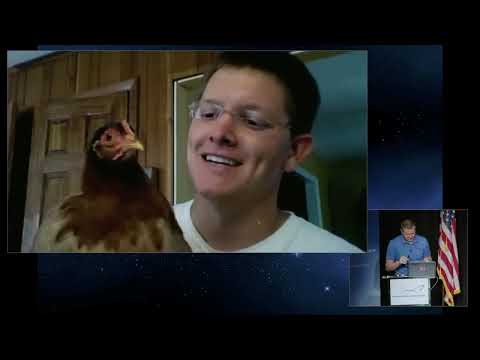 1:05:20
I Was SCARED To Say This To NASA... (But I said it anyway) - Smarter Every Day 293
5M views • 2 years ago
SmarterEveryDay
Destin Sandlin of Smarter Every Day gives a talk to an aerospace audience, comparing how Apollo was engineered and managed with NASA's Artemis program. He raises concerns about unresolved details, the number of launches and in-orbit fuel transfer needed to reach the Moon, and the loss of institutional knowledge.
 32:08
Tuesday @ 1130 ISA Shootout – a Comparison of RISC V, ARM, and x86 Chris Celio, UC Berkeley V2
50K views • 10 years ago
RISC-V International
Chris Celio of UC Berkeley compares the RISC-V, ARM and x86 instruction sets, with quantitative data on instruction counts and code density. It examines how the compressed extension fares against Thumb and x86.
 54:35
BlueHat IL 2023 - David Weston - Default Security
47K views • 3 years ago
Microsoft Israel R&D Center
David Weston's BlueHat IL 2023 talk traces the evolution of Windows security and previews Windows 11 and hardware advances. It ends with upcoming changes such as Rust in the kernel and fonts, signed binaries and adminless Windows.
 1:40:27
CppCon 2014: Herb Sutter "Back to the Basics! Essentials of Modern C++ Style"
323K views • 12 years ago
CppCon
Herb Sutter revisits basic C++ questions in light of C++11 and C++14: how to declare and initialize variables, pass values to functions, write loops, and use smart pointers. It covers auto, rvalue references, range-for, uniform initialization, lambdas, unique_ptr and shared_ptr.
 1:03:19
115 batshit stupid things you can put on the internet in as fast as I can go by Dan Tentler
74K views • 10 years ago
Devoxx
Dan Tentler shows a rapid-fire tour of insecure things found on the open internet using Shodan and his own scanning, from unprotected VNC endpoints to industrial controls. The emphasis is on how little security was considered before connecting them.
 31:28
rand() Considered Harmful
16K views • 13 years ago
aghuttun
Stephan T. Lavavej's GoingNative 2013 talk explaining why calling rand() and using rand() % 100 is bad in C++, and how the C++11 <random> header does the job properly.
 45:33
"A Political History of X" - Keith Packard (LCA 2020)
52K views • 6 years ago
linux.conf.au
Keith Packard traces the 35-year history of the X Window System at linux.conf.au 2020. He uses X to examine licensing, corporate interests and community dynamics in free software, including Unix workstation vendors and Stallman's influence.