artificial intelligence
 6:16
The Artificial Intelligence That Deleted A Century
2M views • 7 years ago
Tom Scott
A speculative-fiction video by Tom Scott, framed as coming from a future, about an AI called Earworm that enforces copyright so aggressively that humanity ends up forgetting a century of pop culture. It is animated and narrated as part of his series of videos from a future.
 13:03
Intelligence and Stupidity: The Orthogonality Thesis
710K views • 8 years ago
Robert Miles AI Safety
Robert Miles explains the orthogonality thesis: how an agent can be highly intelligent while pursuing goals that seem stupid or alien to humans. He separates intelligence from goals and touches on the stamp-collector example.
 15:27
Can The Human Body Handle Rotating Artificial Gravity?
3M views • 5 years ago
Scott Manley
Scott Manley surveys the research on whether people can adapt to rotating artificial gravity, from early Soviet centrifuge tests to modern studies. He concludes it is an engineering problem and discusses Coriolis effects and station radius.
 6:18
The artificial gravity lab
7.2M views • 7 years ago
Tom Scott
Tom Scott tours the rotating room artificial gravity facility at Brandeis University's Graybiel lab. It shows how humans cope with rotation-based gravity and the odd effects such as Coriolis forces.
 15:27
Why Not Just: Think of AGI Like a Corporation?
163K views • 7 years ago
Robert Miles AI Safety
Robert Miles asks whether corporations can be thought of as artificial general superintelligences and how far the analogy holds. He argues the differences, such as being limited by employees' capabilities, matter for AI safety.
 34:29
I took an IQ test to explain what's wrong with them
13.1M views • 3 years ago
Veritasium
Veritasium takes an IQ test and examines what IQ measures, its history including military use and eugenics, its controversies, and how it correlates with life outcomes. Experts including Cecil Reynolds and Stuart Ritchie contribute.
 23:55
Matrioshka Brains: Star-Powered Computers
505K views • 10 years ago
Isaac Arthur
Isaac Arthur explains the Matrioshka Brain, a hypothetical computer or artificial mind powered by an entire star using nested shells. It covers how such megastructures relate to Dyson spheres and superintelligence.
 10:26
Crowd Wisdom Principles
11K views • 4 years ago
Hypermind
A ten-minute explainer from Hypermind on the wisdom of crowds, covering Galton's discovery and the diversity theorem. It argues that collective intelligence comes from diversity, independence and aggregation.
 4:58
You Actually Share Your Brain With a Silent Stranger
20.2M views • 10 years ago
CGP Grey
CGP Grey explains split-brain patients, where severing the corpus callosum lets the two hemispheres act independently. He uses this to explore the idea of two minds in one head.
Topic match · Consciousness & cognition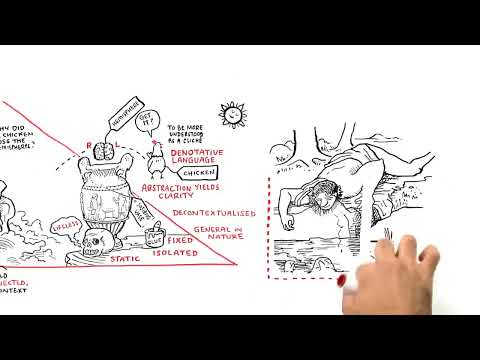 11:48
RSA ANIMATE: The Divided Brain
2.2M views • 15 years ago
Royal Society of Arts
An RSA Animate summary of Iain McGilchrist's lecture on the divided brain, arguing the brain's two hemispheres attend to the world differently and that this has shaped culture and society.
Topic match · Consciousness & cognition 15:28
The Braitenberg Vehicles
65K views • 10 years ago
Brian Douglas
Brian Douglas introduces Braitenberg vehicles, simple robots whose sensors are wired directly to motors yet show surprisingly lifelike behavior. He draws on Valentino Braitenberg's book Vehicles.
Topic match · Consciousness & cognition 30:02
The Future Of Reasoning
12.8M views • 5 years ago
Vsauce
Vsauce explores how human reasoning works, drawing on the social theory of reason and the extended mind thesis, made in partnership with Bill Gates around climate change.
Topic match · Consciousness & cognition 9:35
Is Your Red The Same as My Red?
34M views • 13 years ago
Vsauce
Vsauce explores qualia and whether different people experience colors the same way. It draws on color blindness, Mary's room, the explanatory gap and subjective experience.
Topic match · Consciousness & cognition 5:44
Why Teleportation Would Kill You
7.3M views • 10 years ago
CGP Grey
CGP Grey asks whether Star Trek-style teleportation would kill you and recreate a copy, working through the philosophy of identity and the Ship of Theseus. It is a short animated explainer.
Topic match · Consciousness & cognition 19:19
Was Penrose Right? NEW EVIDENCE For Quantum Effects In The Brain
1.1M views • 2 years ago
PBS Space Time
PBS Space Time examines Roger Penrose's idea that consciousness arises from quantum processes in the brain, and reviews new evidence about microtubules. It ends with an estimate of what replicating consciousness would demand.
Topic match · Consciousness & cognition 20:30
Does Superdeterminism save Quantum Mechanics? Or does it kill free will and destroy science?
989K views • 4 years ago
Sabine Hossenfelder
Sabine Hossenfelder explains superdeterminism as an interpretation of quantum mechanics, addressing common objections and misconceptions, including the worry that it kills free will or science. She ties it to Bell's theorem and hidden variables.
Topic match · Consciousness & cognition 5:25
Does the language you speak change how you think?
1.6M views • 3 years ago
Tom Scott
Tom Scott, with linguists Gretchen McCulloch and Molly Ruhl, examines whether the language you speak changes how you think. The short answer is mostly no, with caveats about the weak version of the Sapir-Whorf hypothesis.
Topic match · Consciousness & cognition 8:30
Deadly Truth of General AI? - Computerphile
941K views • 11 years ago
Computerphile
A Computerphile video in which Rob Miles warns against assuming a general AI will think like a human. He uses the thought experiment of a stamp-collecting AI to show how a goal-driven system could pursue its aim with dangerous results.
 9:09
England: South Sea Bubble - The Sharp Mind of John Blunt - Extra History - Part 1
3.5M views • 11 years ago
Extra History
The first part of Extra History's animated miniseries on the South Sea Bubble. It explains how England's government debt led Robert Harley to turn to financier John Blunt, whose schemes began inflating artificial demand for shares.
 4:39
How to slow down a stock exchange
4M views • 7 years ago
Tom Scott
Tom Scott visits IEX, a stock exchange that slows down trading with a long coil of fiber. The coil removes the speed advantage of high-frequency traders.