complex systems
 1:22:45
Building Software Systems At Google and Lessons Learned
257K views • 15 years ago
Stanford
Jeff Dean of Google describes his experiences building Google's systems and how its infrastructure evolved over time. The Stanford talk covers search, scaling tipping points and lessons from building large-scale software.
 14:36
Distributed Systems 1.1: Introduction
382K views • 6 years ago
Martin Kleppmann
The first lecture in Martin Kleppmann's 8-lecture distributed systems series from the University of Cambridge undergraduate course. It introduces the subject, and accompanying lecture notes are available.
 1:06:44
01 - Course Introduction & Relational Model (CMU Databases Systems / Fall 2019)
248K views • 7 years ago
CMU Database Group
The first lecture of Andy Pavlo's CMU 15-445 Intro to Database Systems (Fall 2019), covering course introduction and the relational model.
 1:33:25
Collapse of Complex Societies by Dr. Joseph Tainter
207K views • 14 years ago
vlada888
Joseph Tainter lectures at a 2010 sustainability conference on why complex societies such as Rome collapse. His thesis is that rising complexity brings diminishing returns until societies cannot afford to maintain it.
 1:14:25
Entanglement and Complexity: Gravity and Quantum Mechanics
370K views • 11 years ago
Stanford Institute for Theoretical Physics
Leonard Susskind lectures at Stanford on how gravity and quantum information theory have merged into a new way of thinking about physics. He covers entanglement and complexity, with applications from black holes to strange metals and the foundations of quantum mechanics.
 1:19:35
Lecture 1: Introduction
921K views • 6 years ago
MIT 6.824: Distributed Systems
The opening lecture of MIT 6.824 Distributed Systems (Spring 2020), introducing the course and core challenges of distributed systems. It begins a playlist that goes on to cover Raft and other consensus papers in Go.
 14:29
Milton Friedman - Why Tax Reform Is Impossible
241K views • 14 years ago
LibertyPen
Milton Friedman explains why the US tax code is enormously complex and why meaningful reform is unlikely. He argues that politicians profit from the complexity, since tax breaks are products they sell and the code works as a tool of reward and punishment. The clip is about 14 minutes from his lecture series.
 49:39
NeWS: A Networked and Extensible Window System, lecture by James Gosling
5K views • 10 years ago
Computer History Museum
A 1990 lecture by James Gosling on NeWS, Sun's networked window system in which clients send PostScript programs to the server for execution. It covers the high-level imaging model and compares NeWS with similar systems.
 14:10
Richard Dawkins demonstrates the evolution of the eye
238K views • 14 years ago
poejavlo
An excerpt from Richard Dawkins's lecture on Climbing Mount Improbable demonstrating how a complex eye can evolve through incremental steps. It answers the creationist irreducible complexity argument.
 1:37:33
21. Chaos and Reductionism
1.8M views • 15 years ago
Stanford
Robert Sapolsky's Stanford lecture on chaos and reductionism, which he calls one of the hardest of the course. It examines the limits of breaking systems into parts to understand them and introduces chaotic systems.
 52:48
Object-Oriented Programming is Garbage: 3800 SLOC example
258K views • 10 years ago
Brian Will
Brian Will critiques object-oriented programming and rewrites a roughly 3800-line OO program in a procedural style, cutting code and complexity. It is part of a series of OOP critiques.
 52:54
Rust at speed — building a fast concurrent database
225K views • 7 years ago
Jon Gjengset
A guest lecture Jon Gjengset gave at Two Sigma on using Rust for large, high-performance systems. It covers why Rust suits such projects, the Noria research database, a concurrent data structure used in it, and practical experience.
 51:16
What is Euler's formula actually saying? | Ep. 4 Lockdown live math
1.7M views • 6 years ago
3Blue1Brown
A 3Blue1Brown live lockdown math episode asking what Euler's formula e^(pi i) is actually saying. It builds intuition through exponentials, rotation and vectors landing on the unit circle.
 39:49
Lec 1 | MIT 18.06 Linear Algebra, Spring 2005
4.9M views • 17 years ago
MIT OpenCourseWare
The first lecture of Gilbert Strang's MIT 18.06 Linear Algebra course, covering the geometry of linear equations. It opens a full 35-lecture university course.
 2:31:27
Lecture: 2017 Maps of Meaning 01: Context and Background
6.4M views • 9 years ago
Jordan B Peterson
The first lecture of Jordan Peterson's 2017 Maps of Meaning course, setting out the Cold War context for his theory of belief and culture. He introduces the narrative structure of culture and archetypal characters for the individual, the known and the unknown.
 1:06:34
Paxos lecture (Raft user study)
114K views • 13 years ago
Diego Ongaro
John Ousterhout's slides-and-voiceover lecture on Paxos, made for the Raft user study comparing how students learn Raft and Paxos. It is a full introduction to the Paxos consensus algorithm.
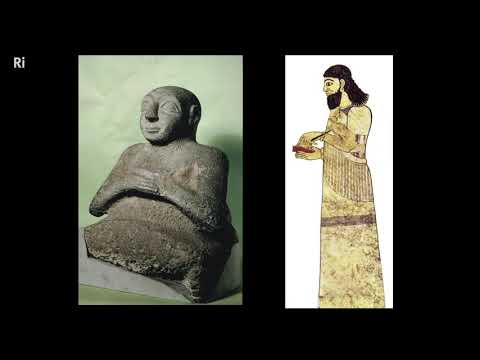 38:55
Cracking Ancient Codes: Cuneiform Writing - with Irving Finkel
2.8M views • 7 years ago
The Royal Institution
Irving Finkel of the British Museum lectures at the Royal Institution on the invention and decipherment of cuneiform writing in Mesopotamia, and why it is so hard to translate.
 19:32
Control Bootcamp: Overview
560K views • 9 years ago
Steve Brunton
The opening lecture of Steve Brunton's Control Bootcamp, covering the kinds of control and why closed-loop feedback matters. It starts a series that follows the control chapter of the Brunton and Kutz data-driven science book.
 58:17
Raft lecture (Raft user study)
87K views • 13 years ago
Diego Ongaro
John Ousterhout lectures on the Raft consensus algorithm, made for the Raft user study comparing how students learn Raft and Paxos. It covers leader election and log repair.
 1:12:56
Lecture 1A: Overview and Introduction to Lisp
420K views • 7 years ago
MIT OpenCourseWare
The first lecture of MIT's 6.001 (SICP) with Abelson and Sussman, giving an overview of the course and an introduction to Lisp. It argues that computer science is about managing complexity and abstraction, not computers.
 11:41
RSA ANIMATE: Changing Education Paradigms
18M views • 16 years ago
Royal Society of Arts
An RSA Animate drawn from a Sir Ken Robinson talk arguing that current education systems are modeled on the industrial age. It discusses divergent thinking, standardization, and how schools disengage kids.
 46:46
Category Theory 1.1: Motivation and Philosophy
394K views • 10 years ago
Bartosz Milewski
The first lecture in Bartosz Milewski's category theory series for programmers. It covers the motivation and philosophy behind category theory and why composition matters for handling complexity.
 1:06:15
The Hyperbolic Geometry of DMT Experiences (@Harvard Science of Psychedelics Club)
1.4M views • 7 years ago
Qualia Research Institute
Andres Gomez Emilsson of the Qualia Research Institute presents a model of DMT experiences using hyperbolic geometry and dynamical systems theory. He describes how different intoxication levels correspond to changing curvature and information content of experience.
 33:47
Why is Life the Way it Is? with Nick Lane
102K views • 11 years ago
The Royal Institution
Nick Lane's Royal Institution lecture on the origin of life and why it is the way it is. It draws on his book The Vital Question and the alkaline hydrothermal vent theory of abiogenesis.