complex systems
 10:44
P vs. NP and the Computational Complexity Zoo
3.7M views • 12 years ago
hackerdashery
An 11-minute animated introduction to P vs. NP and the wider landscape of complexity classes, inspired by the Complexity Zoo wiki. It assumes no background in computer science.
 11:26
Do Complex Numbers Exist?
854K views • 5 years ago
Sabine Hossenfelder
Sabine Hossenfelder asks whether complex numbers are just a convenient tool or necessary in physics. She discusses a recent paper arguing that quantum mechanics cannot be done with real numbers alone.
 14:03
Simulating alternate voting systems
4.5M views • 6 years ago
Primer
Primer uses simulations to compare voting systems such as first-past-the-post, approval, ranked choice and others. It shows how each system behaves and can be manipulated, with links to further voting theory resources.
 25:35
Epicycles, complex Fourier series and Homer Simpson's orbit
421K views • 8 years ago
Mathologer
Mathologer explains epicycles and complex Fourier series, inspired by an animation of Homer Simpson drawn with epicycles. It covers the shape of the Moon's orbit around the Sun and how to make your own epicycle drawings.
 20:28
The Most COMPLEX Pop Song of All Time
8.3M views • 5 years ago
Rick Beato
Rick Beato analyzes a pop song he argues is among the most harmonically complex ever, breaking down its chords and key changes. It is a music theory deep dive aimed at general music fans.
 50:09
Old pinball machines are amazingly complex
3.5M views • 3 years ago
Technology Connections
Technology Connections takes a long, detailed look at how a 1970s electromechanical pinball machine works, from relays to stepper motors and mechanical logic. It is the first part of a series.
 14:06
Testing 432 Hz Frequencies (and temperaments)
4M views • 7 years ago
Adam Neely
Adam Neely tests the claims for tuning to A=432 Hz by trying the unusual tuning systems that its proponents' numerology requires. He compares how they sound against standard tuning and temperaments.
 9:07
Which key is the saddest?
1.3M views • 9 years ago
Adam Neely
Musician Adam Neely examines whether certain keys sound sadder than others, looking at the history of tuning systems and temperaments and at how instrument timbre shapes the emotional character we hear. It draws on historical aesthetics writing and audio examples.
 11:54
The Most Complex International Borders in the World
7.9M views • 12 years ago
WonderWhy
WonderWhy surveys complex international borders, including enclaves like Vatican City, San Marino and Lesotho, the enclave-within-enclave town of Baarle, and the India-Bangladesh Cooch Behar region.
 6:31
Why Your Vote Doesn't Count
7.9M views • 15 years ago
CGP Grey
CGP Grey explains first-past-the-post voting and why it pushes elections toward two dominant parties. It is the first in his series on electoral systems.
 6:18
Animated Voting Methods
16K views • 9 years ago
Unify The Vote
An animated simulation comparing single-winner voting methods such as plurality, instant runoff and STAR. Colored regions show which candidate wins as a randomized electorate shifts across a two-dimensional political space, building on Ka-Ping Yee's earlier diagrams.
 12:35
The Mathematics of Quantum Computers | Infinite Series
718K views • 9 years ago
PBS Infinite Series
A PBS Infinite Series episode explaining the mathematics of quantum computers, including how qubits store complex numbers and how quantum computation differs from classical computation. Hosted by Kelsey Houston-Edwards.
 23:29
How Imaginary Numbers Were Invented
22.7M views • 5 years ago
Veritasium
Veritasium tells the history of how imaginary numbers arose from the quest for a general solution to the cubic equation, including the duels and secrecy among Renaissance mathematicians. It argues math had to give up the requirement that it mirror reality.
 5:15
The Milk-Industrial Complex: Why You Don't Need to Drink Milk
422K views • 12 years ago
Healthcare Triage
A short Healthcare Triage episode by Aaron Carroll arguing that milk gets an undeserved pass in efforts to improve diets. It examines claims about calcium and bone strength and concludes you don't need to drink milk.
 12:25
Fantastic Quaternions - Numberphile
1.1M views • 10 years ago
Numberphile
Numberphile's James Grime introduces quaternions, a type of number beyond the complex numbers, building up from real and complex numbers and explaining why they are useful.
 14:25
China is erasing its border with Hong Kong
14.8M views • 8 years ago
Vox
A Vox Borders episode with Johnny Harris explaining how China is gradually erasing the line between mainland China and Hong Kong since the 1997 handover. It describes the one country, two systems arrangement and its expiration date.
 29:43
Pi hiding in prime regularities
2.8M views • 9 years ago
3Blue1Brown
3Blue1Brown shows how pi emerges from prime numbers via complex numbers and sums of squares, culminating in a formula for approximating pi.
 16:00
The Iroquois Confederacy
1.5M views • 8 years ago
Historia Civilis
Historia Civilis explains the origins and governing system of the Iroquois (Haudenosaunee) Confederacy. It covers the Great Law and the league's surprisingly intricate legal and political structure.
 6:23
How We Should Vote (Range Voting)
43K views • 10 years ago
Undefined Behavior
A six-minute explainer from Undefined Behavior on range (score) voting. It follows an earlier video on Arrow's Theorem and shows how range voting seems to satisfy the criteria Arrow's Theorem says no ranked system can.
 9:37
Can Japanese People Read Chinese? (Kanji)
691K views • 7 years ago
That Japanese Man Yuta
Yuta, a Japanese YouTuber, explains whether Japanese speakers can read Chinese text. He shows how shared kanji let people guess meanings while the two languages remain completely different.
 19:29
The Surprising Secret of Synchronization
27.9M views • 5 years ago
Veritasium
Veritasium explores how synchronization arises spontaneously in nature, with metronomes, fireflies and bridges, drawing on Steven Strogatz's work on chaos and complexity.
 23:34
Why Democracy Is Mathematically Impossible
10.1M views • 2 years ago
Veritasium
Veritasium explains why no voting system can be perfectly fair, drawing on Arrow's theorem and the work of Eric Maskin. It looks at problems with systems like first-past-the-post and ranked-choice voting.
 6:47
The Voting System That's Actually Too Good for Politicians to Allow
10.4M views • 12 years ago
CGP Grey
CGP Grey explains the Single Transferable Vote, a proportional ranked-ballot system, and why politicians have little incentive to adopt it. It is a short animated explainer of how multi-winner ranked voting works.
 22:11
But what is the Riemann zeta function? Visualizing analytic continuation
5.4M views • 9 years ago
3Blue1Brown
3Blue1Brown visualizes the Riemann zeta function and the analytic continuation that extends it beyond where its series converges, building toward the Riemann hypothesis.
 4:29
The Voting System That Gives You Two Votes
3.1M views • 15 years ago
CGP Grey
CGP Grey explains Mixed-Member Proportional representation, the system used in New Zealand where voters get two votes. It covers how it differs from first-past-the-post.
 29:34
How Do Nuclear Submarines Make Oxygen?- Smarter Every Day 251
10.4M views • 5 years ago
SmarterEveryDay
A Smarter Every Day episode from aboard a nuclear submarine on how the crew makes breathable air. It covers oxygen generation from seawater, oxygen candles and CO2 scrubbing with amine.
 18:01
a better way to count
1.5M views • 8 years ago
jan Misali
jan Misali presents an humorous but earnest case for counting in base 6 (seximal) instead of base 10 or 12, comparing the arithmetic advantages of each.
 4:08
e^(iπ) in 3.14 minutes, using dynamics | DE5
3.4M views • 7 years ago
3Blue1Brown
A short 3Blue1Brown video explaining Euler's formula e^(i*pi) = -1 through dynamics, treating velocity as the thing that moves a point to a new position. It builds geometric intuition for why an exponent with i produces rotation.
 3:35
How our voting system (and IRV) betrays your favourite candidate
35K views • 12 years ago
The Center for Election Science
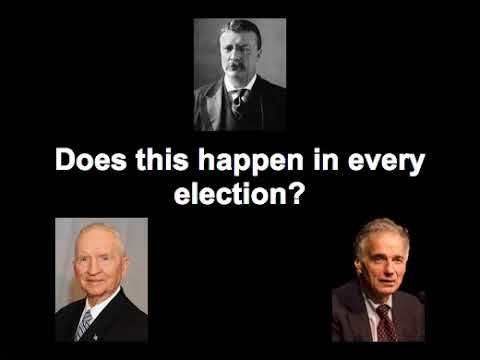
The Center for Election Science explains favorite betrayal in instant-runoff voting: in some elections, ranking your favorite first can cause your least favorite to win. It contrasts this with plurality voting's spoiler problem.
 24:26
The US electrical system is not 120V
3.1M views • 6 years ago
Technology Connections
Technology Connections explains that US household power is split-phase, with two 120V legs that combine to 240V for large appliances. It covers the breaker panel and how the system works.
 17:58
What P vs NP is actually about
253K views • 2 years ago
Polylog
Polylog explains how algorithms can be turned into circuits and encoded as satisfiability problems, which lets you effectively run them backwards. It uses this to motivate breaking RSA, general reductions to SAT, and what P vs NP is really asking.
 24:28
Euler's formula with introductory group theory
2.8M views • 9 years ago
3Blue1Brown
3Blue1Brown builds intuition for Euler's formula, e^(pi i) = -1, using the core ideas of group theory. It treats exponentiation geometrically as rotation and scaling instead of repeated multiplication.
 6:31
You Can Win the Presidency With 22% of the Vote
8.2M views • 15 years ago
CGP Grey
A short CGP Grey animation showing how the US electoral college lets a candidate win the presidency with as little as about 22 percent of the popular vote. It lays out the arithmetic of winning states by narrow margins.
 4:51
The UK Election Results Were the Worst in History
8.1M views • 11 years ago
CGP Grey
CGP Grey explains how the 2015 UK general election showed the flaws of first-past-the-post voting, with parties like UKIP winning many votes but few seats.
 18:28
w
3.7M views • 7 years ago
jan Misali
jan Misali traces the history of the letter W, including why it is called double u. The video is part of a series of deep dives into individual letters.
 4:12
How Wolves Change Rivers [REMASTERED HD] - George Monbiot
356K views • 4 years ago
Sustainable Human
A short narrated video describing how reintroducing wolves to Yellowstone triggered a trophic cascade that changed wildlife, vegetation and even river courses. This is a remastered HD version of George Monbiot's viral piece.
 15:28
The Braitenberg Vehicles
65K views • 10 years ago
Brian Douglas
Brian Douglas introduces Braitenberg vehicles, simple robots whose sensors are wired directly to motors yet show surprisingly lifelike behavior. He draws on Valentino Braitenberg's book Vehicles.
 8:58
Double Pendulums are Chaoticn't
4.3M views • 1 year ago
2swap
A short explainer from 2swap on the chaotic behavior of double pendulums. It examines how predictable the system is for some starting conditions and whether closed-form solutions exist.
 5:49
Can Japanese Actually Write Japanese Kanji?
5.5M views • 10 years ago
That Japanese Man Yuta
Yuta asks whether native Japanese speakers can actually write kanji by hand, showing that many struggle to recall characters from memory.
 18:39
This equation will change how you see the world (the logistic map)
17.1M views • 6 years ago
Veritasium
A Veritasium video on the logistic map, showing how a simple population equation leads to chaos and bifurcation. It connects the idea to convection, neuron firing and the Mandelbrot set, with interactive animations.