Can Japanese Actually Write Japanese Kanji?
That Japanese Man YutaCited 4× on HN, 2016-2024
5.5M views · 10 years ago · explainer · evergreen
Yuta asks whether native Japanese speakers can actually write kanji by hand, showing that many struggle to recall characters from memory.
Cited in language-learning threads as evidence that natives often cannot handwrite kanji.
 9:37
Can Japanese People Read Chinese? (Kanji)
That Japanese Man Yuta
691K views • 7 years ago
 12:20
Can Japanese People Read Chinese? (Mandarin, Simplified)
That Japanese Man Yuta
1.6M views • 6 years ago
 2:11
But we're speaking Japanese! 日本語喋ってるんだけど
helpmefindparents
4.3M views • 12 years ago
 5:25
Does the language you speak change how you think?
Tom Scott
1.6M views • 3 years ago
 4:31
why typing like this is sometimes okay.
Tom Scott
5.4M views • 7 years ago
 18:28
w
jan Misali
3.7M views • 7 years ago
 1:45
What Languages Sound Like To Foreigners
Sara Forsberg
22.6M views • 12 years ago
 8:26
Why don't subtitles match dubbing?
Tom Scott
2M views • 2 years ago
 1:06:46
Crockford on JavaScript - Section 8: Programming Style & Your Brain
YUI Library
111K views • 14 years ago
 6:46
The surprising pattern behind color names around the world
Vox
8.4M views • 9 years ago
 15:15
why Japan's internet is weirdly designed
Answer in Progress
5.2M views • 3 years ago
 15:25
Stephen Krashen on Language Acquisition
Mark Rounds
1.5M views • 16 years ago
 8:02
Conlang Critic Episode Twelve: Toki Pona
jan Misali
308K views • 9 years ago
 15:26
Stephen Krashen: Language Acquisition and Comprehensible Input
Tarek Hamza
186K views • 10 years ago
 38:55
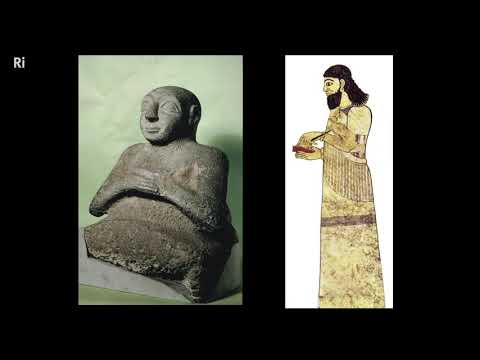
Cracking Ancient Codes: Cuneiform Writing - with Irving Finkel
The Royal Institution
2.8M views • 7 years ago
 19:37
Why is Japan So Weak in Software?
Asianometry
968K views • 2 years ago
 13:23
Interslavic Language | Will Bulgarian, Polish and Croatian understand a CONSTRUCTED LANGUAGE? | #1
Ecolinguist
1.5M views • 7 years ago
 1:42:09
Crockford on JavaScript - Volume 1: The Early Years
YUI Library
252K views • 15 years ago
 49:12
Why Koko (Probably) Couldn't Talk (Sorry) | The Deep Dive
Soup Emporium
3.8M views • 5 years ago
 6:34
Stephen Fry Kinetic Typography - Language
Built By Matt
3M views • 16 years ago
4 comments from Hacker News
I've thought about this a little bit and wonder if the result CJK readers have ended up with is the result of a few interesting historic quirks. Assuming that homophones are simply going to exist in the languages, there's probably other alternatives. For example, in the case of modern Korean readers, the Hanja can supposedly used to help clarify the meaning of a homophone where context doesn't provide clarity. But in practice, most Korean readers don't use Hanja enough to remember more than a small percentage of what they learn in school, so they work in effect as an index into a lookup table, where they look the Hanja up in a dictionary, find the definition written in Hangul, and use that to determine the meaning. Support Japanese was reformed to entirely use one or both Kana in the way that modern Koreans use mostly Hangul. Then Kanji would be used to help determine meaning in the same way. As most people wouldn't encounter Kanji with enough frequency and distribution to remember the bulk of them, only the most common would be remembered. These are unlikely to be the difficult to discern homophones as contextual clues would clarify. So the Kanji would again also end up as indexes for looking up standardized definitions. In modern Japanese, this doesn't happen because Kanji is still used with enough frequency and variety that most people sustain some level of memory about the system. The question is how well do they remember it? [1][2][3][4][5] 1 - ▶ this video 2 - link 3 - [LI
> Once they learn the 2000 joyo, pass N1, and probably do some tertiary education in Japan, then maybe they can choose to move that direction For the vast majority of people (including native speakers), knowing a few extra kanji outside of joyo brings very little benefit. Most natives get by just fine by having a very rough understanding of even joyo [1], thanks to smartphones and computers. Improving pitch accent, on the other hand, does change how you are perceived by natives [2], so it may be worth a try if your goal is to get closer to native speakers. [1] ▶ this video [2] link
Well, often they can't write these characters at all [1] (this video is for Japanese, but the situation must be similar with Chinese) [1] ▶ this video I can recognize more than a thousand of characters (thanks to Anki) but visualising/writing them is another matter entirely, and I would probably fail to write a large fraction of them. Just like with alphabetic characters, I memorize the "shape" of the character rather than its sequence of strokes. Only when the character is indistinct, or similar to other characters do I bother to remember which radicals it consists of. For example the character for "dream" (夢) has a very distinctive shape that is easy to recognize, so I wouldn't be able to write it because I never learned how. Now take the character 緑 (green). It looks similar to 線 (line), but lacks the radical 白 (white). Because green is not white, you see (not actually, it's just a memorization technique). But it also looks similar to 録 (recording). That's because the character for "green" has radical 糸 (thread), just like "line" character. Threads can be green, and they are also lines. But "recording" uses radical 金 (metal) in its place, because recorders are made from metal. So the only things I remember about 緑 is that it has 糸 and doesn't have 白. And thus, I still won't be able to write it.
I agree, I'd recommend learners to learn kana because you can learn it in a few weeks (as opposed to many years for kanji, and even after that many years, people - including natives - don't remember them very well). ▶ this video