writing systems
 47:25
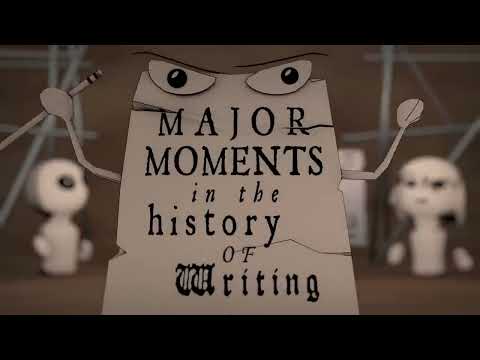
Thoth's Pill - an Animated History of Writing
1.3M views • 11 years ago
NativLang
NativLang's 47-minute animated documentary traces the birth and evolution of writing, from early cave marks to modern scripts. It presents the history of the world's writing systems as a story.
 38:55
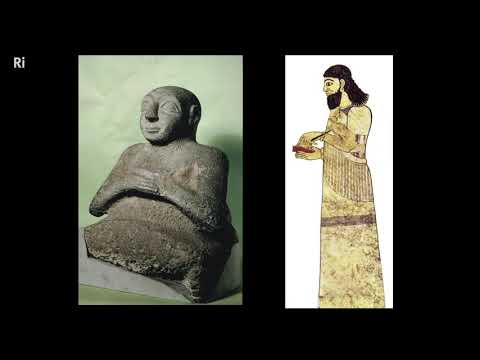
Cracking Ancient Codes: Cuneiform Writing - with Irving Finkel
2.8M views • 7 years ago
The Royal Institution
Irving Finkel of the British Museum lectures at the Royal Institution on the invention and decipherment of cuneiform writing in Mesopotamia, and why it is so hard to translate.
 9:37
Can Japanese People Read Chinese? (Kanji)
691K views • 7 years ago
That Japanese Man Yuta
Yuta, a Japanese YouTuber, explains whether Japanese speakers can read Chinese text. He shows how shared kanji let people guess meanings while the two languages remain completely different.
Topic match · Language & linguistics 1:21:52
LEADERSHIP LAB: The Craft of Writing Effectively
9.3M views • 12 years ago
UChicago Social Sciences
Larry McEnerney of the University of Chicago Writing Program gives a graduate-student session on writing effectively. His core idea is that readers care about value to them, not the writer's thinking process.
 1:16:55
LEADERSHIP LAB: Writing Beyond the Academy 1.23.15
1.7M views • 11 years ago
UChicago Social Sciences
Larry McEnerney of the University of Chicago Writing Program argues that good writing is defined by what readers value, not by rules or the writer's own ideas. He explains why academic habits fail outside academia and how to write so readers find the work valuable.
 1:22:45
Building Software Systems At Google and Lessons Learned
257K views • 15 years ago
Stanford
Jeff Dean of Google describes his experiences building Google's systems and how its infrastructure evolved over time. The Stanford talk covers search, scaling tipping points and lessons from building large-scale software.
 23:39
I sent robot forgeries to a handwriting expert
11.5M views • 3 years ago
Stuff Made Here
Stuff Made Here builds a handwriting robot and sends its output to a handwriting expert to see whether it can pass as forgery. It walks through the engineering trials and errors along the way.
 46:15
AWS re:Invent 2014 | (SPOT302) Under the Covers of AWS: Its Core Distributed Systems
10K views • 11 years ago
Amazon Web Services
An AWS re:Invent 2014 talk on the core distributed systems primitives behind AWS and Amazon.com, such as consensus, key-value stores and transactional logging. It describes how AWS builds large services from a few common building blocks.
 1:05:56
Lang NEXT 2014 Panel Systems Programming in 2014 and Beyond
3K views • 8 years ago
25msr
A panel from the Lang NEXT 2014 conference on systems programming in 2014 and beyond. Language designers including Bjarne Stroustrup and Rob Pike discuss the topic, including C++ header compile times.
 1:06:20
USENIX ATC '21/OSDI '21 Joint Keynote Address-It's Time for Operating Systems to Rediscover Hardware
46K views • 5 years ago
USENIX
Timothy Roscoe of ETH Zurich delivers the joint USENIX ATC/OSDI 2021 keynote arguing that operating systems must reckon with modern hardware, which is a heterogeneous collection of processors, firmware and coprocessors rather than a simple machine. It shows how much runs below and beside Linux.
 14:36
Distributed Systems 1.1: Introduction
382K views • 6 years ago
Martin Kleppmann
The first lecture in Martin Kleppmann's 8-lecture distributed systems series from the University of Cambridge undergraduate course. It introduces the subject, and accompanying lecture notes are available.
 36:58
"A (Not So Gentle) Introduction To Systems Programming In ATS" by Aditya Siram
26K views • 9 years ago
Strange Loop Conference
Aditya Siram introduces ATS, a statically typed ML-like language that compiles to C and offers type-safe pointer arithmetic and a full proof language. The Strange Loop talk shows off C interop, concurrency and verification features with non-trivial examples.
 7:53
How the US Postal Service reads terrible handwriting
7M views • 4 years ago
Tom Scott
Tom Scott visits the USPS Remote Encoding Center in Salt Lake City, where keyers decipher mail images machines cannot read. It shows the lengths taken to decode bad handwriting.
 42:45
RustConf 2017 - Closing Keynote: Safe Systems Software and the Future of Computing by Joe Duffy
2K views • 9 years ago
Confreaks
Joe Duffy's RustConf 2017 closing keynote on his experience at Microsoft building Midori, an operating system written in a Rust-like safe systems language. He covers the technical and cultural challenges of applying those lessons to Windows.
 19:10
Velocity NY 2013: Richard Cook, "Resilience In Complex Adaptive Systems"
47K views • 13 years ago
O'Reilly
Richard Cook's short Velocity 2013 talk on resilience in complex adaptive systems, arguing systems operate near the edge of failure and that the surprise is how rarely they fail. He presents a model of how pressures push systems toward failure boundaries.
 28:21
Velocity 2012: Richard Cook, "How Complex Systems Fail"
60K views • 14 years ago
O'Reilly
Dr. Richard Cook, a physician and patient safety researcher, presents his ideas on how complex systems fail, at Velocity 2012. He argues for designing for resiliency rather than trying to exhaustively handle every failure mode.
 42:20
Writing a Wayland Compositor in Zig - Isaac Freund
26K views • 6 years ago
Zig SHOWTIME
Isaac Freund, author of the River Wayland compositor, talks about writing a Wayland compositor in Zig. He covers why he chose Zig over C and Rust and how Zig can wrap a hairy C library.
 14:03
Simulating alternate voting systems
4.5M views • 6 years ago
Primer
Primer uses simulations to compare voting systems such as first-past-the-post, approval, ranked choice and others. It shows how each system behaves and can be manipulated, with links to further voting theory resources.
 7:27
Lamport on writing "Time, Clocks, and the Ordering of Events in a Distributed System"
24K views • 6 years ago
Turing Awardee Clips
A short clip from an ACM and Computer History Museum interview in which Leslie Lamport discusses writing his paper on time, clocks and the ordering of events. He explains its link to special relativity.
 18:28
w
3.7M views • 7 years ago
jan Misali
jan Misali traces the history of the letter W, including why it is called double u. The video is part of a series of deep dives into individual letters.
Topic match · Language & linguistics 4:05
Jake Thackray 'Molly Metcalfe'
201K views • 17 years ago
TallPiler
Jake Thackray performs the folk song Molly Metcalfe, which opens with an explanation of the traditional northern English sheep-counting system (yan, tan, tethera). It is a short, witty piece of British folk songwriting.
Topic match · Language & linguistics 12:20
Can Japanese People Read Chinese? (Mandarin, Simplified)
1.6M views • 6 years ago
That Japanese Man Yuta
Yuta, a Japanese YouTuber, tests how much simplified Chinese a Japanese person can read, working with a Mandarin speaker. The video shows where shared kanji help and where meanings differ.
Topic match · Language & linguistics 4:31
why typing like this is sometimes okay.
5.4M views • 7 years ago
Tom Scott
Tom Scott makes a short descriptivist argument that language keeps changing and that casual internet writing conventions, like lowercase typing and dropped full stops, are legitimate. It is part of his Language Files series, written with Gretchen McCulloch.
Topic match · Language & linguistics 5:49
Can Japanese Actually Write Japanese Kanji?
5.5M views • 10 years ago
That Japanese Man Yuta
Yuta asks whether native Japanese speakers can actually write kanji by hand, showing that many struggle to recall characters from memory.
Topic match · Language & linguistics 1:06:44
01 - Course Introduction & Relational Model (CMU Databases Systems / Fall 2019)
248K views • 7 years ago
CMU Database Group
The first lecture of Andy Pavlo's CMU 15-445 Intro to Database Systems (Fall 2019), covering course introduction and the relational model.
 1:01:59
TigerStyle! (Or How To Design Safer Systems in Less Time) by Joran Dirk Greef
87K views • 3 years ago
TigerBeetle
Joran Dirk Greef's Systems Distributed '23 talk on TigerStyle, the engineering methodology behind TigerBeetle. It covers designing safer systems in less time through up-front design, assertions, and deterministic simulation.
 1:00:07
CppCon 2017: Carl Cook “When a Microsecond Is an Eternity: High Performance Trading Systems in C++”
357K views • 9 years ago
CppCon
Optiver's Carl Cook explains how to build high-frequency trading systems in C++, where the critical path runs rarely but must be extremely fast. He covers techniques for low and predictable latency, including avoiding main memory and cache misses.
 1:01:27
ZFS: The Last Word in File Systems Part 1
19K views • 14 years ago
Deirdré Straughan
Jeff Bonwick and Bill Moore, the creators of ZFS, present 'ZFS: The Last Word in File Systems' at the 2008 SNIA Software Developers' Conference. They explain the design, including copy-on-write, checksumming and avoiding the write hole.
 1:01:06
Emacs For Writers
153K views • 11 years ago
thoughtbot
Science writer Jay Dixit explains how he uses Emacs as a non-programmer to write, edit and research more productively. He shows his plain-text writing workflow and what led him from tools like Scrivener to Emacs.
 1:01:17
RailsConf 2014 - Keynote: Writing Software by David Heinemeier Hansson
123K views • 12 years ago
Confreaks
David Heinemeier Hansson's RailsConf 2014 keynote argues that programming is closer to writing than to science, with clear code produced by iterating through drafts. It prioritizes clarity and craft over technical superiority.
 12:19
If Russ Ackoff had given a TED Talk...
306K views • 16 years ago
Steven Brant
A 1994 talk by systems thinker Russ Ackoff, who knew W. Edwards Deming, on continuous versus discontinuous improvement. It ends with an unexpected lesson.
 1:10:23
"Systems that run forever self-heal and scale" by Joe Armstrong (2013)
85K views • 5 years ago
Strange Loop Conference
Joe Armstrong's Strange Loop 2013 talk on building large scalable systems from small isolated parallel components. It covers detecting and correcting errors at run time, changing code while it runs, and how Erlang embodies these principles.
 1:09:18
Is It Time to Rewrite the Operating System in Rust?
310K views • 7 years ago
InfoQ
Bryan Cantrill's QCon SF 2019 talk asking whether operating systems should be rewritten in Rust. He draws on his systems experience to discuss C, memory safety and Rust's fit for system software.
 1:15:19
Types are like the Weather, Type Systems are like Weathermen - Matthias Felleisen
16K views • 10 years ago
ClojureTV
Matthias Felleisen's keynote uses weather prediction as an analogy for type systems, arguing they forecast problems so you can act on them. It draws on his experience developing Typed Racket.
 33:32
Condition Systems in an Exceptional Language - Chris Houser
16K views • 10 years ago
ClojureTV
Chris Houser's Clojure/conj talk on why Clojure's exceptions destroy information as the stack unwinds, unlike Common Lisp's condition system, which can resume from the error site. He surveys the existing libraries that approximate conditions, explains why they don't compose with each other, and considers what a better design would look like.
 5:02
Jerry Seinfeld Interview: How to Write a Joke | The New York Times
3.1M views • 13 years ago
The New York Times
In a New York Times interview, Jerry Seinfeld describes the anatomy of his Pop-Tart joke, still a work in progress, and shows his longhand writing process.
 1:19:35
Lecture 1: Introduction
921K views • 6 years ago
MIT 6.824: Distributed Systems
The opening lecture of MIT 6.824 Distributed Systems (Spring 2020), introducing the course and core challenges of distributed systems. It begins a playlist that goes on to cover Raft and other consensus papers in Go.
 40:20
"Testing Distributed Systems w/ Deterministic Simulation" by Will Wilson
55K views • 12 years ago
Strange Loop Conference
Will Wilson of FoundationDB explains how the team tested their distributed database using deterministic simulation. By running the whole system in a simulator with injected faults and reproducible seeds, they could find rare concurrency and network bugs.
 1:02:50
The Language of the System - Rich Hickey
174K views • 13 years ago
ClojureTV
Rich Hickey's 2013 talk applies language-design thinking to whole systems, covering names, queues, data, failure, and the interfaces between programs. It ends with a call to action for building systems holistically.
 1:55:54
[HOPE X] Elevator Hacking: From the Pit to the Penthouse
40K views • 12 years ago
themarimbaincident
A HOPE X talk giving an in-depth explanation of how elevators work, from their history in hacker culture to using their control systems to bypass building security. It covers features and abilities of elevators that most people never see.