data-oriented programming
 7:44
Handmade Hero | Getting rid of the OOP mindset
167K views • 9 years ago
vexe
A short clip of Casey Muratori from Handmade Hero explaining why he rejects the object-oriented mindset and how to move away from it. It is part rant, part programming philosophy.
Topic match · Software architecture & design 4:57
Rich Hickey rants about HttpServletRequest in 1080p: Death By Specificity from Clojure Made Simple
43K views • 6 years ago
Fred Overflow
A five-minute excerpt of Rich Hickey's Clojure Made Simple talk, with new slides, ranting about HttpServletRequest and specificity. He argues for using generic maps instead of many specific classes and getters.
Topic match · Software architecture & design 4:51
VisiData Lightning Demo at PyCascades 2018
41K views • 8 years ago
Saul Pwanson
A five-minute lightning demo of VisiData, a terminal tool for exploring and manipulating data. It uses two months of NYC 311 complaint data to drill down, plot points on a virtual map and save selected rows.
 14:48
Sonification & The Problem with Making Music from Data
259K views • 9 years ago
Tantacrul
Tantacrul examines sonification, the practice of turning data into sound or music, and critiques how scientists and musicians, including NASA and CERN projects, use it well and poorly.
 16:15
LGR Oddware - MiniDisc Data Storage: Sony MDH-10
623K views • 8 years ago
LGR
An LGR Oddware episode looking at Sony's MDH-10 MD Data drive from 1995, which used MiniDisc for computer storage years before Hi-MD. The host tries out the drive with its original drivers and software.
 17:26
Lecture 1 | Programming Paradigms (Stanford)
1.2M views • 18 years ago
Stanford
The first lecture of Stanford's CS107 Programming Paradigms, taught by Jerry Cain, giving an overview of the course. The course goes from C and assembly through C++, concurrency, Scheme and Python.
 10:20
Dev Deletes Entire Production Database, Chaos Ensues
3.6M views • 3 years ago
Kevin Fang
Kevin Fang comically retells GitLab's 2017 incident in which an engineer deleted the production database, based on the company's postmortems. It walks through the confusion and failed backups.
 15:05
Steve Yegge, "What Would You Do With Your Own Google?" - OSCON Data 2011
66K views • 15 years ago
O'Reilly
Steve Yegge's OSCON Data 2011 talk imagines what you could do with Google-scale storage and compute a decade later. He argues smart people should work on hard problems such as biology rather than cat pictures, and the talk ends with a moment many took as him quitting Google.
 4:00
Hitler reacts to functional programming
275K views • 7 years ago
Rymdkraftverk
A Downfall-style parody in which Hitler rages about functional programming concepts such as monads and Haskell. It runs about four minutes.
 5:13
A$AP Mob - Yamborghini High (Official Video) ft. Juicy J
180.4M views • 10 years ago
asapmobVEVO
The official music video for A$AP Mob's Yamborghini High featuring Juicy J, known for heavy datamoshing and glitch effects with hue shifting.
 15:20
John Carmack: Best programming setup and IDE | Lex Fridman Podcast Clips
960K views • 4 years ago
Lex Clips
A clip of John Carmack on the Lex Fridman podcast discussing his programming setup, why he favors debuggers and IDEs, and his puzzlement at developers who avoid them.
 6:22
Interactive programming Flappy Bird in ClojureScript
55K views • 12 years ago
Bruce Hauman
Bruce Hauman live-codes Flappy Bird in ClojureScript in about six minutes, using figwheel to hot-reload changes into the running game. The demo shows game behavior being changed interactively without restarting.
 9:43
A Sudoku Solver in APL
47K views • 14 years ago
Dyalog
A Dyalog demonstration of developing a Sudoku solver in APL, using an algorithm by Arthur Whitney with performance work by John Scholes. The narration steps through the array-oriented solution.
 6:31
The Known Universe by AMNH #datavisualization
17.3M views • 16 years ago
American Museum of Natural History
The American Museum of Natural History's film flies from the Himalayas out through the atmosphere and solar system to the afterglow of the Big Bang, using its Digital Universe Atlas four-dimensional map.
 4:56
Moving Atoms: Making The World's Smallest Movie
3M views • 13 years ago
IBM
A short IBM behind-the-scenes documentary on how researchers moved individual atoms to make the world's smallest movie. It introduces the scientists and their work on atomic memory and data storage.
 19:44
Mountain West Ruby 2012 Capability vs. Suitability by Gary Bernhardt
22K views • 14 years ago
Confreaks
Gary Bernhardt argues that software history moves in reactions to earlier tools, and that new tools are not simply better in every way. He distinguishes capability (what a tool allows) from suitability (what it fits), and warns against repeating past mistaken reactions.
Topic match · Software architecture & design 18:55
[JSConfUS 2013] Tom Occhino and Jordan Walke: JS Apps at Facebook
45K views • 13 years ago
JSConf
Tom Occhino and Jordan Walke present how Facebook builds JavaScript apps, in the talk where React was first publicly announced at JSConf US 2013.
Topic match · Software architecture & design 17:55
Building the Software 2 0 Stack (Andrej Karpathy)
73K views • 8 years ago
Databricks
Andrej Karpathy's Databricks talk on Software 2.0, the shift from human-written code to code produced by neural network training. It covers how developer work moves toward curating datasets, the advantages and challenges, and opportunities for new tooling.
 11:32
Depth-first search in APL
11K views • 12 years ago
Dyalog
John Scholes builds a depth-first tree-search operator step by step in a Dyalog APL session. It covers higher-order functions and runs the search on the N-Queens problem.
 15:03
Living Computation: Robust-first programming in ULAM
4K views • 11 years ago
Dave Ackley
Dave Ackley presents robust-first computing and the ULAM programming language for the Movable Feast Machine, a cellular-automata-like architecture. It was a short video for the Future Programming Workshop 2015.
 10:16
Hans Rosling: Global population growth, box by box
1.9M views • 16 years ago
TED
Hans Rosling's TED@Cannes talk uses boxes and animated data graphics to show how world population will grow to about 9 billion. He argues that raising living standards for the poorest is what reduces population growth.
 11:25
The Worst Typo I Ever Made
6.4M views • 6 years ago
Tom Scott
Tom Scott recounts the worst typo he ever made, a subtle mistake in code with destructive consequences at a previous job. It is a cautionary tale about irreversible operations.
 12:32
Protecting Privacy with MATH (Collab with the Census)
451K views • 7 years ago
minutephysics
minutephysics, in collaboration with the US Census Bureau, explains differential privacy and why the 2020 census adds noise to protect individuals' data. It walks through how statistics can leak private information.
 8:42
Google’s The Selfish Ledger (leaked internal video)
577K views • 8 years ago
intermission
Leaked internal Google X video, 'The Selfish Ledger', a speculative thought experiment about treating user data as a ledger that could guide and shape human behavior, including products sold to fill data gaps.
 4:44
Debt Metaphor
95K views • 17 years ago
Ward Cunningham
Ward Cunningham explains the history and intent of the debt metaphor, which he coined while refactoring the WyCash product. He says debt means code reflecting an incomplete understanding of the problem, not sloppy programming.
Topic match · Software architecture & design 4:48
Hans Rosling's 200 Countries, 200 Years, 4 Minutes - The Joy of Stats - BBC
11.5M views • 15 years ago
BBC
Hans Rosling uses augmented-reality animation to show 200 countries over 200 years in four minutes, built from 120,000 data points. It tracks life expectancy and income to show the world's development.
 18:50
Creating a Doom-style 3D engine in C
991K views • 11 years ago
Bisqwit
Bisqwit builds a Doom or Duke Nukem 3D style software-rendered 3D engine in C from scratch, supporting non-Euclidean geometry. It covers vector rotation and portal rendering with sped-up, tool-assisted coding.
 15:04
I made a NES emulator in 15 minutes
389K views • 14 years ago
Bisqwit
Bisqwit writes a NES emulator in C++ in about 15 minutes of tool-assisted, sped-up coding, narrated with captions. It shows an accurate emulator built with a compile-time generated 6502 instruction table. Part 2 covers compiling and running it.
 11:48
John Rauser keynote: "Statistics Without the Agonizing Pain" -- Strata + Hadoop 2014
61K views • 12 years ago
O'Reilly
John Rauser's Strata 2014 keynote argues that programmers can learn statistics quickly by simulating random processes and shuffling data. He explains p-values through resampling rather than formulas.
 4:14
Land of Lisp- The Music Video!
197K views • 16 years ago
lisperati
A playful music video promoting the book Land of Lisp, with a song about Lisp programming.
 8:07
Seymour Papert 1983
28K views • 19 years ago
Cynthia Solomon
An eight-minute excerpt of a 1983 video featuring Seymour Papert, creator of Logo, on children learning programming and abstract ideas through embodied play. It shows kids acting out the Logo turtle.
 10:36
Who Is Responsible For Climate Change? – Who Needs To Fix It?
11.7M views • 6 years ago
Kurzgesagt – In a Nutshell
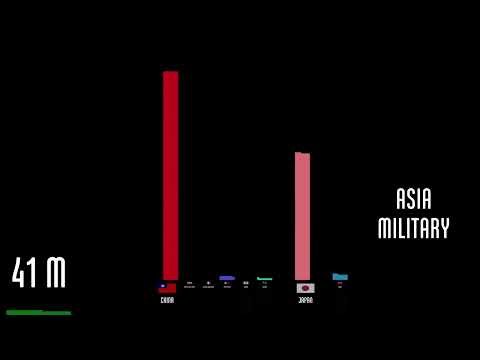
Kurzgesagt examines who is responsible for climate change, comparing historical, current and per-capita emissions by country. It argues that individual footprints are a distraction from larger responsibility.
 18:31
The Fallen of World War II
15.1M views • 10 years ago
Neil Halloran
Neil Halloran's animated, data-driven documentary visualizes the human cost of World War II and compares it with other wars and the trend toward fewer war deaths in recent decades.
 13:44
The Story of Another World on the Amiga | MVG
350K views • 4 years ago
Modern Vintage Gamer
Modern Vintage Gamer explains how Eric Chahi built Another World on the Amiga 500, using 2D polygons, rotoscoping and clever techniques to run well on a stock 7MHz machine.
 15:39
ShaderToy LiveCoding - The Drive Home - 1. Basic Setup
28K views • 9 years ago
The Art of Code
The first part of a ShaderToy live-coding series that lays the groundwork for The Drive Home, a rainy night-traffic shader. It covers basic setup and builds toward rain and bokeh effects.
 17:46
Why do Biden's votes not follow Benford's Law?
3.7M views • 5 years ago
Stand-up Maths
Matt Parker examines claims that Biden's 2020 vote counts violate Benford's Law, explaining the law and why it often does not apply to precinct-level election data.
 6:23
Simon Peyton Jones - Haskell is useless
385K views • 14 years ago
bunidanoable
A short clip of Simon Peyton Jones talking about the future of programming languages, saying Haskell is useless in the sense that pure programs cannot have effects, while mainstream languages are useful but unsafe. He describes languages converging, with ideas such as STM and LINQ moving between them.
 15:52
Geo Carncross: How to program computers (kos)
6K views • 11 years ago
Justin Cormack
A 2014 talk by Geo Carncross (geocar) demonstrating kOS, a minimalist operating system and programming environment built around the k language, with early screenshots.
 11:42
See how the rest of the world lives, organized by income | Anna Rosling Rönnlund
881K views • 8 years ago
TED
Anna Rosling Rönnlund presents Dollar Street, a project photographing homes in dozens of countries, from stoves to beds to toilets, and sorting them by income. She shows how data visualization can change how we see the world.
 11:54
Alternate Reality Kit by Randall Smith at Xerox PARC 1986 (VPRI-0131)
4K views • 10 years ago
Yoshiki Ohshima (大島芳樹)
A 12-minute demo of the Alternate Reality Kit, built by Randall Smith at Xerox PARC in 1986. It is a simulated physical world in which users manipulate objects and program by direct interaction.