deep modules
 4:17
The Hubble Ultra Deep Field in 3D
9.6M views • 17 years ago
Deep Astronomy
A short video built around an animation of the roughly 10,000 galaxies in the Hubble Ultra Deep Field, placed at their measured redshift distances. It gives a brief history of deep field images and ends with a 3D fly-through.
 18:40
But what is a neural network? | Deep learning chapter 1
25.1M views • 9 years ago
3Blue1Brown
3Blue1Brown's first chapter on deep learning explains what neurons and layers are and the math underlying a basic neural network, using handwritten digit recognition with visual animations.
 26:10
Attention in transformers, step-by-step | Deep Learning Chapter 6
4.8M views • 2 years ago
3Blue1Brown
3Blue1Brown's visual walkthrough of the attention mechanism inside transformers, covering self-attention, multiple heads and cross-attention. It is chapter 6 of his deep learning series.
 12:47
Backpropagation, intuitively | Deep Learning Chapter 3
6.4M views • 9 years ago
3Blue1Brown
3Blue1Brown's third deep learning chapter gives a visual, intuitive account of backpropagation and what happens to a neural network as it learns. A follow-up video covers the underlying calculus.
 27:14
Transformers, the tech behind LLMs | Deep Learning Chapter 5
11.6M views • 2 years ago
3Blue1Brown
3Blue1Brown's visual explanation of how transformers and GPT-style language models work, tracing data through tokens, embeddings and attention.
 20:33
Gradient descent, how neural networks learn | Deep Learning Chapter 2
9.7M views • 9 years ago
3Blue1Brown
3Blue1Brown's second neural network chapter explains cost functions and gradient descent, showing how a network learns by minimizing error during training.
 56:32
100%+ short interest in GameStop stock (GME) – fundamental & technical deep value analysis
1.8M views • 6 years ago
Roaring Kitty
Roaring Kitty's July 2020 analysis of GameStop, arguing a bullish deep-value case when the stock was about $4 and short interest exceeded 100%. It covers fundamentals, cash balance and technicals.
 10:18
Backpropagation calculus | Deep Learning Chapter 4
4M views • 9 years ago
3Blue1Brown
3Blue1Brown's chapter 4 on deep learning gives a more formal, symbol-based account of backpropagation calculus, connecting the intuition from the previous chapter to the math found in textbooks and code.
 26:02
Yellowstone Won't Explode And End Civilisation (Sorry) | The Deep Dive
7.8M views • 4 years ago
Soup Emporium
Soup Emporium's deep dive argues that Yellowstone is not a ticking timebomb. It goes through uplift and subsidence, earthquakes and what the caldera really is, to rebut supervolcano doom claims.
 1:03:31
4.5 Billion Years in 1 Hour
17.9M views • 2 years ago
Kurzgesagt – In a Nutshell
Kurzgesagt's hour-long animated film that compresses Earth's 4.5 billion year history into one hour, roughly a million years per second. It follows the evolution of life through to humanity's tiny final stretch.
 24:52
AlphaFold - The Most Useful Thing AI Has Ever Done
11M views • 1 year ago
Veritasium
A Veritasium video on AlphaFold, DeepMind's protein structure prediction system, and the protein design work it enabled. It features interviews with John Jumper and with David Baker's protein design group and explains why predicting protein folding matters.
 15:37
Alpha Zero's "Immortal Zugzwang Game" against Stockfish
1.7M views • 8 years ago
agadmator's Chess Channel
agadmator walks through a game in which DeepMind's AlphaZero beat Stockfish, ending in a famous zugzwang that leaves the engine helpless. He gives commentary on the moves.
 18:14
We Solved Nuclear Waste Decades Ago
4.5M views • 4 years ago
Kyle Hill
Kyle Hill explains what nuclear waste actually is and how it is stored, arguing that the problem was effectively solved decades ago. It covers solid shielded waste and deep geological storage.
 28:39
AMD Ryzen Eco Mode Deep-Dive & Benchmarks on R9 7950X (Zen 4)
422K views • 4 years ago
Gamers Nexus
Gamers Nexus benchmarks the Ryzen 9 7950X in its BIOS Eco Mode presets (65W, 105W and stock 170W). It measures the performance cost against the power and heat savings.
 34:39
Gay Frogs: A Deep Dive
2.2M views • 6 years ago
Oki's Weird Stories
A long video essay on the claim that chemicals such as atrazine are feminizing frogs. It covers the science, the EPA and the role of chemical companies.
 13:04
VACNET Anti-cheat
574K views • 8 years ago
3kliksphilip
3kliksphilip summarizes Valve's GDC talk on VACNet, a deep-learning system that flags CS:GO cheaters and feeds the Overwatch review queue. It covers Trust Factor, VAC, and how the data is collected and analyzed.
 27:07
Attention Is All You Need
814K views • 8 years ago
Yannic Kilcher
Yannic Kilcher walks through the Attention Is All You Need paper, which introduced the Transformer, a sequence model based solely on attention without recurrence or convolutions. He reviews the architecture and the paper's translation results.
 18:28
w
3.7M views • 7 years ago
jan Misali
jan Misali traces the history of the letter W, including why it is called double u. The video is part of a series of deep dives into individual letters.
 24:07
AI can't cross this line and we don't know why.
2.5M views • 2 years ago
Welch Labs
A Welch Labs explainer on neural scaling laws and the compute-efficient frontier, asking why model loss seems to hit a line it cannot cross. It draws an analogy to an ideal gas law for AI.
 10:19
What Fossils Will We Leave Behind in 65 Million Years?
321K views • 7 years ago
Curious Droid
Curious Droid asks what traces human civilization would leave in the geological record 65 million years from now. It considers how thin the fossil record of humanity might be.
 5:26
Neural Network Learns The Physics of Fluids and Smoke | Two Minute Papers #118
209K views • 9 years ago
Two Minute Papers
Two Minute Papers covers a paper on speeding up fluid and smoke simulation with convolutional networks. It contrasts the approach with earlier regression forest methods.
 24:39
SM64 - Watch for Rolling Rocks - 0.5x A Presses (Commentated) [OUTDATED]
5.5M views • 10 years ago
pannenkoek2012
Pannenkoek2012's commentated tool-assisted Super Mario 64 run collecting the Watch for Rolling Rocks star with half an A press, using parallel universes and QPU movement. The video is marked outdated in favor of a newer version.
 12:46
The Speed of Light is NOT About Light
7.1M views • 11 years ago
PBS Space Time
PBS Space Time argues that the speed of light is better understood as the speed of causality, the universal limit on how fast cause and effect propagate. Light travels at that speed because it is massless, but the limit itself is a property of spacetime.
 18:20
FIXING the ENTIRE SM64 Source Code (INSANE N64 performance)
3.2M views • 4 years ago
Kaze Emanuar
Kaze Emanuar explains how he rewrote and optimized the Super Mario 64 source code so it runs far faster on real N64 hardware. He covers performance bottlenecks and fixes in detail for his ROM hacks.
 50:09
Old pinball machines are amazingly complex
3.5M views • 3 years ago
Technology Connections
Technology Connections takes a long, detailed look at how a 1970s electromechanical pinball machine works, from relays to stepper motors and mechanical logic. It is the first part of a series.
 8:25
Akira Kurosawa - Composing Movement
10.8M views • 11 years ago
Every Frame a Painting
An Every Frame a Painting video essay on how Akira Kurosawa used movement, weather and composition to tell stories. It draws on clips and interviews with other filmmakers.
 46:33
Heat Pumps are Not Hard: Here's what it will take to start pumping
1.2M views • 4 years ago
Technology Connections
Technology Connections' long closing video in his heat pump series, arguing that adopting heat pumps is well within reach. It explains how they work and what it takes to start using them.
 13:02
Noether's Theorem and The Symmetries of Reality
1.1M views • 8 years ago
PBS Space Time
PBS Space Time explains Noether's theorem: conservation laws such as energy and momentum are consequences of deeper symmetries. It also covers why those laws hold only under certain conditions.
 35:33
How does Computer Memory Work? 💻🛠
5.5M views • 4 years ago
Branch Education
A 36-minute animated deep dive from Branch Education into how DRAM works. It shows how memory connects to the CPU and how billions of bits are stored in nanoscale capacitor cells. It also covers why DRAM sits between SSDs and the processor.
 20:57
Atari's Quadrascan Explained
239K views • 5 years ago
Retro Game Mechanics Explained
Retro Game Mechanics Explained dissects how Atari's Quadrascan vector displays and vector generator hardware drew games like Asteroids and Tempest.
 8:45
Plastic Recycling is an Actual Scam | Climate Town
1.9M views • 5 years ago
Climate Town
Climate Town gives a comedic, fast-paced account of how the plastics industry promoted recycling, including the resin-code recycling symbol, while knowing most plastic could not be economically recycled. It points viewers to the Frontline documentary Plastic Wars for a deeper treatment.
 38:31
The $200M Machine that Prints Microchips: The EUV Photolithography System
2.4M views • 1 year ago
Branch Education
Branch Education's animated deep dive into ASML's EUV photolithography machine and how it prints nanometer-scale transistors onto chips. It covers the system's components and the process of chip manufacturing.
 17:52
Training AI Without Writing A Reward Function, with Reward Modelling
259K views • 6 years ago
Robert Miles AI Safety
Robert Miles explains reward modelling, in which an AI learns what humans want from their preference comparisons instead of a hand-written reward function. He walks through the 2017 paper on deep reinforcement learning from human preferences.
 22:36
Computer Scientist Explains One Concept in 5 Levels of Difficulty | WIRED
7.2M views • 4 years ago
WIRED
WIRED has UCLA professor Amit Sahai explain zero-knowledge proofs to a child, a teen, a college student, a grad student and an expert. Each round goes deeper into the cryptography and why it matters.
 10:48
The True Nature of Matter and Mass | Space Time | PBS Digital Studios
1.8M views • 10 years ago
PBS Space Time
A PBS Space Time episode asking what matter, mass, and energy really are, starting with inertial versus gravitational mass and what mass-energy equivalence means.
 18:04
How the Higgs Mechanism Give Things Mass
1.9M views • 4 years ago
PBS Space Time
A PBS Space Time episode on how the Higgs mechanism gives particles mass, prompted by Fermilab's heavier-than-expected W boson measurement. It goes beyond the usual pop-science treatment without heavy math.
 55:00
The Closest Thing We Have to Alien Technology
64.9M views • 10 months ago
Veritasium
Veritasium explains how ASML's EUV lithography machines make the most advanced computer chips, covering the engineering of the light source, mirrors and the supply chain around them. It is a long-form explainer on the world's most complex commercial machine.
 22:13
what did you do
1.5M views • 11 months ago
Noodle
Noodle explores how retro pixel art was designed for CRT displays and why games look different on LCDs, with input from pixel artists and CRT researchers.
 14:25
Do Events Inside Black Holes Happen?
3.2M views • 11 years ago
PBS Space Time
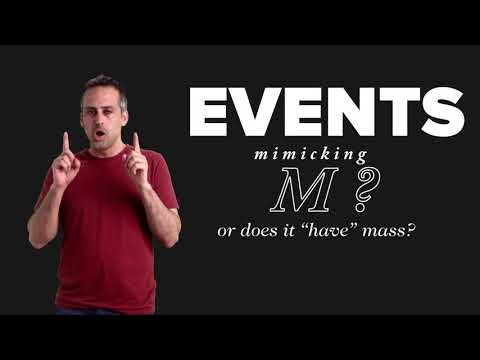
A PBS Space Time episode asking what black holes really are and whether events can happen inside them. It covers event horizons, time dilation and common misconceptions about black holes.
 1:00:26
Why Starting A Rocket Engine Is So Hard!
2.3M views • 3 years ago
Everyday Astronaut
Tim Dodd's hour-long deep dive on how rocket engines start, from solid motors to liquid engines. It covers thermal conditioning, spin-up, ignition methods, starting in space, and a step-by-step RS-25 startup.