design
 4:44
Debt Metaphor
95K views • 17 years ago
Ward Cunningham
Ward Cunningham explains the history and intent of the debt metaphor, which he coined while refactoring the WyCash product. He says debt means code reflecting an incomplete understanding of the problem, not sloppy programming.
Topic match · Software architecture & design 4:17
The Hubble Ultra Deep Field in 3D
9.6M views • 17 years ago
Deep Astronomy
A short video built around an animation of the roughly 10,000 galaxies in the Hubble Ultra Deep Field, placed at their measured redshift distances. It gives a brief history of deep field images and ends with a 3D fly-through.
Topic match · Data visualization & information design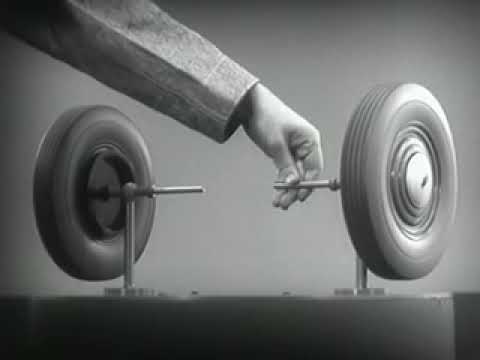 9:31
Around The Corner - How Differential Steering Works (1937)
22.3M views • 17 years ago
US Auto Industry
A 1937 GM-produced film explaining how the automobile differential lets wheels turn at different speeds around a corner. It uses clear animations and cutaway demonstrations to build the idea from first principles.
Topic match · Mechanical & precision engineering 7:02
Traffic Waves
1M views • 18 years ago
wbeaty
A short video from the trafficwaves.org site showing how traffic jams and standing waves form, including the fight between cheaters and blockers at an exit-lane backup. It also touches on how individual driving behavior affects the flow.
Topic match · Transit, cities & urban planning 2:27
What keeps a train on the track?
191K views • 17 years ago
BoreMeScience
A short clip of Richard Feynman explaining how a train stays on its tracks, through the conical shape of wheels and how it handles curves without differentials.
Topic match · Transit, cities & urban planning 2:27
Feynman: How the train stays on the track FUN TO IMAGINE 7
820K views • 18 years ago
Christopher Sykes
A short clip from the 1983 BBC series Fun to Imagine in which Richard Feynman explains how a train stays on the track. He covers the geometry of tapered wheels that steer the train back toward the center of the rails.
Topic match · Transit, cities & urban planning