election reform
 4:27
The Voting System That Should Replace Every Election
4.7M views • 15 years ago
CGP Grey
A short CGP Grey explainer on the alternative vote (instant runoff voting) versus first past the post, made around the 2011 UK referendum. It shows how ranked ballots are tallied and why they avoid spoiler effects.
 4:51
The UK Election Results Were the Worst in History
8.1M views • 11 years ago
CGP Grey
CGP Grey explains how the 2015 UK general election showed the flaws of first-past-the-post voting, with parties like UKIP winning many votes but few seats.
 18:16
Do these scatter plots reveal fraudulent vote-switching in Michigan?
906K views • 5 years ago
Stand-up Maths
Matt Parker of Stand-up Maths examines scatter plots that were claimed to show fraudulent vote-switching in Michigan's 2020 election. He recreates the analysis and shows that the pattern arises from comparing percentages across different bases, not from fraud.
 4:29
The Voting System That Gives You Two Votes
3.1M views • 15 years ago
CGP Grey
CGP Grey explains Mixed-Member Proportional representation, the system used in New Zealand where voters get two votes. It covers how it differs from first-past-the-post.
 26:48
Algorithmic Redistricting: Elections made-to-order
584K views • 5 years ago
AlphaPhoenix
AlphaPhoenix uses Monte Carlo simulation and annealing-style methods to draw North Carolina congressional district maps, both gerrymandered and fair. He focuses on the fascinating computational problem rather than the politics.
 6:23
How We Should Vote (Range Voting)
43K views • 10 years ago
Undefined Behavior
A six-minute explainer from Undefined Behavior on range (score) voting. It follows an earlier video on Arrow's Theorem and shows how range voting seems to satisfy the criteria Arrow's Theorem says no ranked system can.
 19:55
Why was Biden's win calculated to be ONE IN A QUADRILLION?
1.3M views • 5 years ago
Stand-up Maths
Matt Parker of Stand-up Maths examines the Texas Supreme Court filing claiming Biden's 2020 win had a one-in-a-quadrillion chance. He walks through why the statistical argument is flawed.
 3:38
The Shortest-Splitline Algorithm: a Gerrymandering Solution [Bonus Video]
692K views • 15 years ago
CGP Grey
A short CGP Grey bonus video explaining the shortest-splitline algorithm, which draws electoral districts by repeatedly splitting a state along its shortest dividing line while balancing population. It is offered as a neutral, algorithmic fix for gerrymandering.
 6:31
Why Your Vote Doesn't Count
7.9M views • 15 years ago
CGP Grey
CGP Grey explains first-past-the-post voting and why it pushes elections toward two dominant parties. It is the first in his series on electoral systems.
 17:46
Why do Biden's votes not follow Benford's Law?
3.7M views • 5 years ago
Stand-up Maths
Matt Parker examines claims that Biden's 2020 vote counts violate Benford's Law, explaining the law and why it often does not apply to precinct-level election data.
 9:40
Why American public transit is so bad | 2020 Election
6.7M views • 6 years ago
Vox
A Vox explainer from the 2020 election series on why American public transit is so poor. It traces the effect of the interstate highway system on cities and the resulting car dependence.
 12:01
Why Electronic Voting Is Still A Bad Idea
5.1M views • 6 years ago
Tom Scott
Tom Scott explains why electronic voting is a bad idea. Elections must be trusted by everyone and attacks on software scale in ways attacks on paper do not, so open source or blockchain fixes do not solve it.
 6:47
The Voting System That's Actually Too Good for Politicians to Allow
10.4M views • 12 years ago
CGP Grey
CGP Grey explains the Single Transferable Vote, a proportional ranked-ballot system, and why politicians have little incentive to adopt it. It is a short animated explainer of how multi-winner ranked voting works.
 8:34
Was YOUR vote counted? (feat. homomorphic encryption) - Numberphile
198K views • 10 years ago
Numberphile
Numberphile interviews cryptographer Ron Rivest about end-to-end verifiable voting. He explains how homomorphic encryption and receipts let a voter confirm their ballot was counted without being able to prove how they voted to anyone else.
 6:18
Animated Voting Methods
16K views • 9 years ago
Unify The Vote
An animated simulation comparing single-winner voting methods such as plurality, instant runoff and STAR. Colored regions show which candidate wins as a randomized electorate shifts across a two-dimensional political space, building on Ka-Ping Yee's earlier diagrams.
 27:13
The Longest Year in Human History (46 B.C.E.)
7.4M views • 7 years ago
Historia Civilis
Historia Civilis tells the story of 46 BCE, the 445-day year in which Julius Caesar reformed the Roman calendar. It covers the political context, including the civil war, Cato and Cicero.
 5:29
How to Fix America's Corrupt Political System
479K views • 10 years ago
RepresentUs
A short RepresentUs explainer on how money corrupts American politics and what an anti-corruption act could do about it. It covers lobbying, super PACs and campaign finance, and pitches the group's proposed reforms. The video was later superseded by an updated version.
 18:08
What Eating the Rich Did For Japan
2.8M views • 5 years ago
Asianometry
Asianometry traces how the Japanese zaibatsu families grew into vast industrial combines and how postwar reforms abruptly broke up their wealth and control.
 3:01
Inequality: Why are the rich getting richer?
130K views • 13 years ago
Positive Money UK
A three-minute Positive Money UK explainer arguing that the commercial banking system, where banks create most money as debt, redistributes income from the bottom 90 percent to the top 10 percent through interest.
 3:35
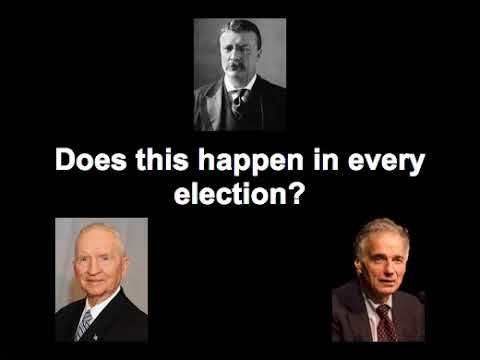
How our voting system (and IRV) betrays your favourite candidate
35K views • 12 years ago
The Center for Election Science
The Center for Election Science explains favorite betrayal in instant-runoff voting: in some elections, ranking your favorite first can cause your least favorite to win. It contrasts this with plurality voting's spoiler problem.
 8:21
Why Electronic Voting is a BAD Idea - Computerphile
2.3M views • 11 years ago
Computerphile
Tom Scott explains for Computerphile why electronic voting is a bad idea, arguing that paper ballots are transparent, auditable and hard to tamper with at scale. He covers why moving voting to phones, tablets or computers undermines trust and verifiability.
 6:31
You Can Win the Presidency With 22% of the Vote
8.2M views • 15 years ago
CGP Grey
A short CGP Grey animation showing how the US electoral college lets a candidate win the presidency with as little as about 22 percent of the popular vote. It lays out the arithmetic of winning states by narrow margins.
 5:33
Adam Ruins Everything - The Truth About the McDonald's Coffee Lawsuit
978K views • 9 years ago
truTV
An Adam Ruins Everything segment on the real facts of the McDonald's hot coffee lawsuit, covering the severity of the burns and the corporate PR campaign that painted it as frivolous.
 7:55
Is the EU Democratic? Does Your Vote Matter?
5.6M views • 7 years ago
Kurzgesagt – In a Nutshell
Kurzgesagt explains how the European Union is governed, how its officials are elected or appointed, and whether a citizen's vote actually matters.
 14:03
Simulating alternate voting systems
4.5M views • 6 years ago
Primer
Primer uses simulations to compare voting systems such as first-past-the-post, approval, ranked choice and others. It shows how each system behaves and can be manipulated, with links to further voting theory resources.
 17:17
The Longest-Running Evolution Experiment
7M views • 5 years ago
Veritasium
Veritasium visits Richard Lenski's lab to explain the decades-long E. coli evolution experiment, which asks how repeatable evolution is and shows bacteria evolving to use a new food source.
 12:22
Is Most Published Research Wrong?
6.2M views • 10 years ago
Veritasium
Veritasium explains why a large share of published research findings may be false, covering p-values, p-hacking, publication bias and low replication rates. It draws on John Ioannidis's well-known paper and describes reforms such as preregistration.
 8:10
The Houses that Can't be Built in America - The Missing Middle
2.9M views • 5 years ago
Not Just Bikes
Not Just Bikes explains missing middle housing, such as duplexes, townhouses and small apartment buildings. The video argues that zoning in the US and Canada has made these options almost illegal.
 4:30
Watching This Video Disqualifies You From Jury Duty for Life
21.2M views • 12 years ago
CGP Grey
CGP Grey explains jury nullification, a juror's power to acquit despite the law, and why mentioning it can get you struck from jury selection.
 23:03
The Universe is Hostile to Computers
26.5M views • 5 years ago
Veritasium
Veritasium explains how cosmic rays and other particles flip bits in computer memory, with examples including a Belgian election count error, plane incidents and game glitches. It is inspired by a RadioLab episode on bit flips.