enter sandman
 29:05
Datacenters Behaving Like Acoustic Weapons
1.8M views • 8 months ago
Benn Jordan
Benn Jordan investigates infrasound and low-frequency noise from data centers, including xAI's Colossus and a crypto mine, and reports his own experiments on the effects. The video covers the health and community impacts on nearby residents.
 14:32
Orbital Data Centers Yes or No
18K views • 1 year ago
Eager Space
Eager Space examines the practicality of putting data centers in orbit, walking through three scenarios with cost calculations and the launch cost reductions that would be required.
 28:11
Why Everyone Is Talking About Data Centers In Space
408K views • 10 months ago
Scott Manley
Scott Manley examines why SpaceX, Google and others are looking at orbital data centers. He walks through the economics, heat rejection and solar power arguments, with links to the Lumen/Starcloud and Google Suncatcher papers.
 24:30
Is It Really Impossible To Cool A Datacenter In Space?
1.1M views • 7 months ago
Scott Manley
Scott Manley explains the thermal balance of spacecraft and how a satellite could be configured to radiate away the heat from datacenter-scale computing in space. His rough numbers suggest it is feasible.
 16:37
Does It Make Sense To Put Data Centers In Space? Can They Really Cost Less To Operate?
502K views • 2 years ago
Scott Manley
Scott Manley analyzes the idea of putting data centers in orbit, prompted by Lumen Orbit's funding. He examines the claimed advantage of constant solar power against launch cost, cooling and mass.
 3:04
mRNA Translation (Advanced)
1.5M views • 16 years ago
DNA Learning Center
A short animation from the DNA Learning Center showing how mRNA carries a gene's message to the ribosome, where tRNA and codons are used to assemble amino acids into a protein.
 3:35
How our voting system (and IRV) betrays your favourite candidate
35K views • 12 years ago
The Center for Election Science
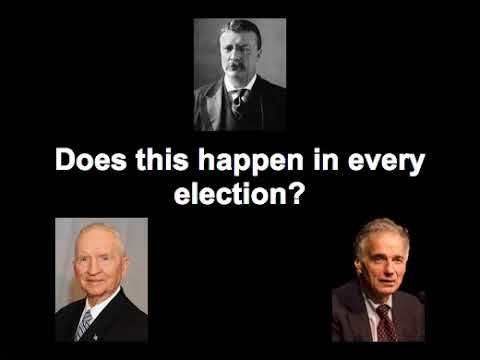
The Center for Election Science explains favorite betrayal in instant-runoff voting: in some elections, ranking your favorite first can cause your least favorite to win. It contrasts this with plurality voting's spoiler problem.
 23:33
Why Do Mainframes Still Exist? What's Inside One? 40TB, 200+ Cores, AI, and more!
1.2M views • 3 years ago
Dave's Garage
Dave Plummer tours the IBM z16 mainframe from design through factory assembly, test lab, accelerators and water cooling. He explains why mainframes still exist and what makes them reliable.
 23:47
Bed Bugs- What You've Been Told is Totally False
83.8M views • 3 years ago
Mark Rober
Mark Rober digs into bed bugs, testing popular beliefs about where they come from and how to get rid of them. It mixes entertaining experiments with research-based advice on what works and what does not.
 12:23
Typesetters in the '80s - Computerphile
105K views • 12 years ago
Computerphile
Professor Brailsford of the University of Nottingham describes how the university set out to print its own mathematics exam papers in the 1980s. The story centers on getting a Mergenthaler Linotron 202 typesetter to work with their own software.
 1:13:50
The Continuity of Splines
1.9M views • 3 years ago
Freya Holmér
Freya Holmer's 74-minute video essay on splines, covering Bezier curves, B-splines, derivatives and the different levels of continuity (C0, C1, C2), built with custom animation tools. She notes she did not cover non-uniform splines.
 4:48
Hans Rosling's 200 Countries, 200 Years, 4 Minutes - The Joy of Stats - BBC
11.5M views • 15 years ago
BBC
Hans Rosling uses augmented-reality animation to show 200 countries over 200 years in four minutes, built from 120,000 data points. It tracks life expectancy and income to show the world's development.
 12:44
We Were Taught to Call Death a Blessing
11.9M views • 8 years ago
CGP Grey
CGP Grey narrates an animated adaptation of Nick Bostrom's Fable of the Dragon-Tyrant. The story uses a dragon that demands a daily toll of lives as a metaphor for aging and society's acceptance of death.
 43:43
Principles for Dealing with the Changing World Order by Ray Dalio
232.4M views • 4 years ago
Principles by Ray Dalio
An animated 44-minute summary of Ray Dalio's book Principles for Dealing with the Changing World Order. It lays out the Big Cycle of rising and declining nations, covering debt cycles, internal conflict, and shifts in global power over the past 500 years.
 2:23
Music and Life - Alan Watts
2.6M views • 19 years ago
seandulac
A two-minute animation of an Alan Watts talk arguing that life is like music: it is meant to be danced to in the moment, not rushed toward a final goal. It is a short, accessible take on living in the present.
 6:59
The Problem With Facebook
3.1M views • 12 years ago
2veritasium
Veritasium's Derek Muller argues that Facebook's business model works against pages and creators, because it charges them to reach the audiences they built. He explains how filtering and paid promotion undermine the value of likes.
 6:24
You Need a Theme, Not a Goal
5.5M views • 6 years ago
CGP Grey
CGP Grey argues for picking a theme for the year or season instead of setting goals or new year's resolutions. He explains how a theme gives direction without a pass/fail target.
 12:08
Why Some Diseases Only Traveled One Direction
13.9M views • 10 years ago
CGP Grey
CGP Grey explains why European diseases devastated the Americas while few deadly diseases traveled the other way. He ties it to livestock domestication, dense cities, and the ideas of Guns, Germs and Steel.
 12:22
Is Most Published Research Wrong?
6.2M views • 10 years ago
Veritasium
Veritasium explains why a large share of published research findings may be false, covering p-values, p-hacking, publication bias and low replication rates. It draws on John Ioannidis's well-known paper and describes reforms such as preregistration.
 17:20
The Extreme Engineering of ASML’s EUV Light Source
698K views • 4 years ago
Asianometry
Asianometry explains the EUV light source inside ASML's lithography machines, where lasers hit falling tin droplets twice to produce 13.5 nm light. It walks through the engineering of the droplet generator, the pre-pulse and main laser, and the plasma that results.
 21:03
Why Heat Pumps are Immensely Important Right Now
1.4M views • 4 years ago
Technology Connections
Technology Connections explains why heat pumps matter right now, covering their efficiency, how they hold up in cold weather and the energy savings over burning fuel. It follows his earlier explainer on how they work.
 14:35
Why Japan Looks the Way it Does: Zoning
639K views • 5 years ago
Life Where I'm From
A video explaining why Japanese cities look the way they do, through Japan's national tiered zoning system that permits mixed use and flexible development. It compares this approach with more restrictive zoning elsewhere.
 27:19
Once you understand game theory, you understand the world.
26.5M views • 2 years ago
Veritasium
Veritasium explores the Prisoner's Dilemma and Axelrod's tournaments, showing why tit-for-tat and forgiving strategies win in repeated games. It extends the ideas to cooperation in evolution and conflict.
 12:46
The Speed of Light is NOT About Light
7.1M views • 11 years ago
PBS Space Time
PBS Space Time argues that the speed of light is better understood as the speed of causality, the universal limit on how fast cause and effect propagate. Light travels at that speed because it is massless, but the limit itself is a property of spacetime.
 23:11
Eating less Meat won't save the Planet. Here's Why
5.8M views • 5 years ago
Joseph Everett - WIL
Joseph Everett, with Dr. Frank Mitloehner, argues that eating less meat will not do much for the climate. He covers beef's water footprint, land and feed use, and methane.
 12:50
How close is nuclear fusion power?
764K views • 5 years ago
Sabine Hossenfelder
Sabine Hossenfelder explains how close nuclear fusion really is to break-even, and why headlines about ITER and lab milestones are misleading. She distinguishes plasma gain (Q plasma) from whole-system gain (Q total) and shows the latter is still far below one.
 6:24
Wealth Inequality in America
26.7M views • 13 years ago
politizane
A short infographic video on the distribution of wealth in America, contrasting what people believe, what they consider ideal, and the actual numbers. It highlights how top-heavy US wealth is.
 5:43
The EU Has Orbits, and the UK Fell Out of All of Them
0 views • 7 years ago
CGP Grey
CGP Grey's six-minute explainer of the relationships the UK could have with the EU, based on Barnier's slide, shown as orbits of different closeness. It explains why the UK's red lines ruled out the closer options.
 4:27
The Voting System That Should Replace Every Election
4.7M views • 15 years ago
CGP Grey
A short CGP Grey explainer on the alternative vote (instant runoff voting) versus first past the post, made around the 2011 UK referendum. It shows how ranked ballots are tallied and why they avoid spoiler effects.
 23:16
The Machinery Of Freedom: Illustrated summary
164K views • 14 years ago
bitbutter
An illustrated 23-minute summary of David Friedman's talk based on The Machinery of Freedom. It describes how law, police and courts could work as market services in a stateless society, covering private law, polycentric law and objections.
 34:00
Math's Fundamental Flaw
30.8M views • 5 years ago
Veritasium
Veritasium's explainer on Godel's incompleteness theorems and the limits of mathematical proof, tracing set theory, Hilbert's program and the road to Turing and modern computing.
 6:08
Immigration, World Poverty and Gumballs
6.8M views • 16 years ago
NumbersUSA
Roy Beck's short gumball presentation using World Bank and Census data to argue that letting people immigrate to the US cannot solve world poverty because the numbers are so large. It is made by NumbersUSA, an immigration-restriction advocacy group.
 24:14
The Banach–Tarski Paradox
49.1M views • 11 years ago
Vsauce
Vsauce's roughly 24 minute explainer on the Banach-Tarski paradox, building from infinity and set theory to the decomposition of a sphere into pieces that form two spheres.
 4:58
You Actually Share Your Brain With a Silent Stranger
20.2M views • 10 years ago
CGP Grey
CGP Grey explains split-brain patients, where severing the corpus callosum lets the two hemispheres act independently. He uses this to explore the idea of two minds in one head.
 11:38
The Economics of Airline Class
12.2M views • 9 years ago
Wendover Productions
Wendover Productions explains how airlines make money from different cabin classes and why premium seats matter so much to profits. It also touches on how this shaped decisions such as the decline of supersonic travel.
 10:36
Why Would AI Want to do Bad Things? Instrumental Convergence
274K views • 8 years ago
Robert Miles AI Safety
Robert Miles explains instrumental convergence: why an AGI with almost any goal would tend to pursue sub-goals like self-preservation and resource acquisition. It builds on Omohundro's basic AI drives and his orthogonality thesis video.
 8:21
Why Electronic Voting is a BAD Idea - Computerphile
2.3M views • 11 years ago
Computerphile
Tom Scott explains for Computerphile why electronic voting is a bad idea, arguing that paper ballots are transparent, auditable and hard to tamper with at scale. He covers why moving voting to phones, tablets or computers undermines trust and verifiability.
 11:33
A new way to visualize General Relativity
3.6M views • 6 years ago
ScienceClic English
ScienceClic explains why the rubber sheet analogy for general relativity is misleading and offers a new visualization that includes the curvature of time and shows gravity as motion through curved spacetime.
 4:19
How Special Relativity Makes Magnets Work
4M views • 13 years ago
Veritasium
Veritasium explains magnetism as a consequence of special relativity. Length contraction of moving charges makes a current in a wire attract or repel a nearby moving charge.
 3:39
(1/4) Intro/History: Introducing a 100-year-old mechanical computer
476K views • 11 years ago
engineerguy
The first of four short videos from Bill Hammack (engineerguy) introducing and giving the history of a 100-year-old mechanical computer, Michelson's harmonic analyzer. The series goes on to explain Fourier synthesis, analysis and operation of the machine.