expert systems
 17:59
The Expert Myth
16M views • 4 years ago
Veritasium
Veritasium examines which experts have real expertise, drawing on chess research and work by Klein and Kahneman. It explains that expertise comes from pattern recognition built through deliberate practice in valid, feedback-rich environments.
 14:03
Simulating alternate voting systems
4.5M views • 6 years ago
Primer
Primer uses simulations to compare voting systems such as first-past-the-post, approval, ranked choice and others. It shows how each system behaves and can be manipulated, with links to further voting theory resources.
 14:06
Testing 432 Hz Frequencies (and temperaments)
4M views • 7 years ago
Adam Neely
Adam Neely tests the claims for tuning to A=432 Hz by trying the unusual tuning systems that its proponents' numerology requires. He compares how they sound against standard tuning and temperaments.
 9:07
Which key is the saddest?
1.3M views • 9 years ago
Adam Neely
Musician Adam Neely examines whether certain keys sound sadder than others, looking at the history of tuning systems and temperaments and at how instrument timbre shapes the emotional character we hear. It draws on historical aesthetics writing and audio examples.
 27:36
Why Western Designs Fail in Developing Countries
1.8M views • 2 years ago
Design Theory
A design essay on why products designed in Western contexts often fail when deployed in developing countries. It covers expert blindness and cultural assumptions, with examples such as malaria nets and the One Laptop Per Child project.
 19:27
Quantum Computing Expert Explains One Concept in 5 Levels of Difficulty | WIRED
8M views • 8 years ago
WIRED
IBM's Dr. Talia Gershon explains quantum computing to five people of increasing expertise: a child, teen, college student, grad student and professional. The WIRED series format moves from simple analogies to technical detail.
 6:31
Why Your Vote Doesn't Count
7.9M views • 15 years ago
CGP Grey
CGP Grey explains first-past-the-post voting and why it pushes elections toward two dominant parties. It is the first in his series on electoral systems.
 6:18
Animated Voting Methods
16K views • 9 years ago
Unify The Vote
An animated simulation comparing single-winner voting methods such as plurality, instant runoff and STAR. Colored regions show which candidate wins as a randomized electorate shifts across a two-dimensional political space, building on Ka-Ping Yee's earlier diagrams.
 14:25
China is erasing its border with Hong Kong
14.8M views • 8 years ago
Vox
A Vox Borders episode with Johnny Harris explaining how China is gradually erasing the line between mainland China and Hong Kong since the 1997 handover. It describes the one country, two systems arrangement and its expiration date.
 14:18
Accent Expert Gives a Tour of U.S. Accents - (Part 2) | WIRED
2.7M views • 5 years ago
WIRED
Dialect coach Erik Singer tours a range of accents across North America with linguists in Part 2 of WIRED's accent series. It covers regional distinctions such as Southern Mississippi, Miami and Utah English.
 16:00
The Iroquois Confederacy
1.5M views • 8 years ago
Historia Civilis
Historia Civilis explains the origins and governing system of the Iroquois (Haudenosaunee) Confederacy. It covers the Great Law and the league's surprisingly intricate legal and political structure.
 21:33
Accent Expert Gives a Tour of U.S. Accents - (Part One) | WIRED
9.6M views • 5 years ago
WIRED
Dialect coach Erik Singer and several linguists tour distinct accents across English-speaking North America. It is the first part of a WIRED series on US accents.
 6:23
How We Should Vote (Range Voting)
43K views • 10 years ago
Undefined Behavior
A six-minute explainer from Undefined Behavior on range (score) voting. It follows an earlier video on Arrow's Theorem and shows how range voting seems to satisfy the criteria Arrow's Theorem says no ranked system can.
 9:37
Can Japanese People Read Chinese? (Kanji)
691K views • 7 years ago
That Japanese Man Yuta
Yuta, a Japanese YouTuber, explains whether Japanese speakers can read Chinese text. He shows how shared kanji let people guess meanings while the two languages remain completely different.
 16:41
Movie Accent Expert Breaks Down 32 Actors' Accents | WIRED
15.8M views • 9 years ago
WIRED
Dialect coach Erik Singer analyzes how accurate the accents are of 32 well-known actors, including Brad Pitt and Will Smith, in WIRED's breakdown.
 23:34
Why Democracy Is Mathematically Impossible
10.1M views • 2 years ago
Veritasium
Veritasium explains why no voting system can be perfectly fair, drawing on Arrow's theorem and the work of Eric Maskin. It looks at problems with systems like first-past-the-post and ranked-choice voting.
 15:12
JPEG DCT, Discrete Cosine Transform (JPEG Pt2)- Computerphile
697K views • 11 years ago
Computerphile
Mike Pound explains the discrete cosine transform and how it underpins JPEG compression. It is part two of Computerphile's JPEG series.
Topic match · Computer vision, speech & NLP 18:31
Fourier Optics used for Optical Pattern Recognition
103K views • 6 years ago
Huygens Optics
Huygens Optics explains the Fourier transform and shows how a lens performs one optically. A DLP projector is used as a Fourier filter to do simple pattern recognition on lithographic character patterns.
Topic match · Computer vision, speech & NLP 35:49
Breaking The Creepy AI in Police Cameras
3.8M views • 1 year ago
Benn Jordan
Benn Jordan explains how Flock Safety's license plate cameras log and share vehicle locations, and explores how adversarial AI can defeat them. It covers weak security and the surveillance risks of private police-camera networks.
Topic match · Computer vision, speech & NLP 17:40
3D Gaussian Splatting! - Computerphile
273K views • 2 years ago
Computerphile
A Computerphile video in which Dr Mike Pound and PhD student Lewis Stuart explain 3D Gaussian splatting, a quick technique that turns photos of a scene into a 3D model without much compute. It includes a demo and compares the approach to NeRFs.
Topic match · Computer vision, speech & NLP 20:39
AI Language Models & Transformers - Computerphile
354K views • 7 years ago
Computerphile
Rob Miles explains on Computerphile how language models generate plausible text and how transformers improved on recurrent networks, with a look at what comes next.
Topic match · Computer vision, speech & NLP 19:29
Glitch Tokens - Computerphile
353K views • 3 years ago
Computerphile
Rob Miles explains "glitch" tokens, odd strings in large language model vocabularies that make the model produce gibberish. He covers how they likely arise from tokenizer training data, such as Reddit usernames, that never appeared in the model's own training.
Topic match · Computer vision, speech & NLP 14:20
Reveal Invisible Motion With This Clever Video Trick
2.8M views • 6 years ago
Steve Mould
Steve Mould explains motion amplification and video magnification, techniques that find tiny changes in video invisible to the eye and exaggerate them. He covers the MIT research and industrial uses such as diagnosing vibrating machinery.
Topic match · Computer vision, speech & NLP 8:35
Tesla Autopilot Crashes into Motorcycle Riders - Why?
1.1M views • 4 years ago
FortNine
FortNine looks at why Tesla Autopilot has rear-ended motorcyclists, speculating that the vision system misreads motorcycle taillights as a distant car. It argues that radar and other sensors would help.
Topic match · Computer vision, speech & NLP 6:47
The Voting System That's Actually Too Good for Politicians to Allow
10.4M views • 12 years ago
CGP Grey
CGP Grey explains the Single Transferable Vote, a proportional ranked-ballot system, and why politicians have little incentive to adopt it. It is a short animated explainer of how multi-winner ranked voting works.
 4:29
The Voting System That Gives You Two Votes
3.1M views • 15 years ago
CGP Grey
CGP Grey explains Mixed-Member Proportional representation, the system used in New Zealand where voters get two votes. It covers how it differs from first-past-the-post.
 29:34
How Do Nuclear Submarines Make Oxygen?- Smarter Every Day 251
10.4M views • 5 years ago
SmarterEveryDay
A Smarter Every Day episode from aboard a nuclear submarine on how the crew makes breathable air. It covers oxygen generation from seawater, oxygen candles and CO2 scrubbing with amine.
 18:01
a better way to count
1.5M views • 8 years ago
jan Misali
jan Misali presents an humorous but earnest case for counting in base 6 (seximal) instead of base 10 or 12, comparing the arithmetic advantages of each.
 3:35
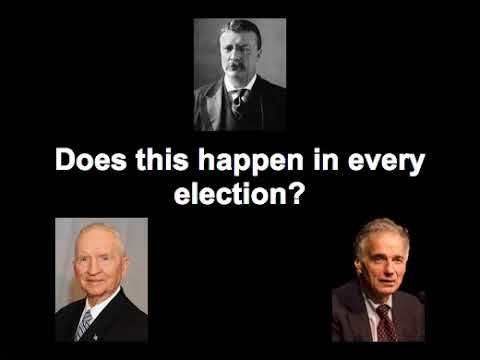
How our voting system (and IRV) betrays your favourite candidate
35K views • 12 years ago
The Center for Election Science
The Center for Election Science explains favorite betrayal in instant-runoff voting: in some elections, ranking your favorite first can cause your least favorite to win. It contrasts this with plurality voting's spoiler problem.
 24:26
The US electrical system is not 120V
3.1M views • 6 years ago
Technology Connections
Technology Connections explains that US household power is split-phase, with two 120V legs that combine to 240V for large appliances. It covers the breaker panel and how the system works.
 6:31
You Can Win the Presidency With 22% of the Vote
8.2M views • 15 years ago
CGP Grey
A short CGP Grey animation showing how the US electoral college lets a candidate win the presidency with as little as about 22 percent of the popular vote. It lays out the arithmetic of winning states by narrow margins.
 4:51
The UK Election Results Were the Worst in History
8.1M views • 11 years ago
CGP Grey
CGP Grey explains how the 2015 UK general election showed the flaws of first-past-the-post voting, with parties like UKIP winning many votes but few seats.
 18:28
w
3.7M views • 7 years ago
jan Misali
jan Misali traces the history of the letter W, including why it is called double u. The video is part of a series of deep dives into individual letters.
 4:12
How Wolves Change Rivers [REMASTERED HD] - George Monbiot
356K views • 4 years ago
Sustainable Human
A short narrated video describing how reintroducing wolves to Yellowstone triggered a trophic cascade that changed wildlife, vegetation and even river courses. This is a remastered HD version of George Monbiot's viral piece.
 15:28
The Braitenberg Vehicles
65K views • 10 years ago
Brian Douglas
Brian Douglas introduces Braitenberg vehicles, simple robots whose sensors are wired directly to motors yet show surprisingly lifelike behavior. He draws on Valentino Braitenberg's book Vehicles.
 8:58
Double Pendulums are Chaoticn't
4.3M views • 1 year ago
2swap
A short explainer from 2swap on the chaotic behavior of double pendulums. It examines how predictable the system is for some starting conditions and whether closed-form solutions exist.
 5:49
Can Japanese Actually Write Japanese Kanji?
5.5M views • 10 years ago
That Japanese Man Yuta
Yuta asks whether native Japanese speakers can actually write kanji by hand, showing that many struggle to recall characters from memory.
 17:34
What Everyone Gets Wrong About Gravity
15.6M views • 6 years ago
Veritasium
Veritasium explains, with expert input, that in general relativity gravity is not a force and objects follow straight paths through curved spacetime, including why standing on the ground means you are accelerating.
 11:22
Most People Don't Know How Bikes Work
24.9M views • 4 years ago
Veritasium
Veritasium explains why bicycles are stable, arguing that gyroscopic effects are not the answer. The video shows countersteering and an experiment where riders blocked from steering the opposite way cannot turn.
 6:17
Why Cars Rarely Crash into Buildings in the Netherlands
1M views • 6 years ago
Not Just Bikes
Not Just Bikes explains why cars rarely crash into buildings in the Netherlands, attributing it to street design that forgives mistakes and to systematic crash investigation. It contrasts this with North American acceptance of such crashes.