feynman
 7:07
Feynman: What things really are like FUN TO IMAGINE 1
747K views • 17 years ago
Christopher Sykes
A clip from the 1983 BBC series Fun to Imagine in which Richard Feynman explains heat as the jiggling of atoms and how we perceive it as hot and cold.
 2:27
Feynman: How the train stays on the track FUN TO IMAGINE 7
820K views • 18 years ago
Christopher Sykes
A short clip from the 1983 BBC series Fun to Imagine in which Richard Feynman explains how a train stays on the track. He covers the geometry of tapered wheels that steer the train back toward the center of the rails.
 28:34
But why would light "slow down"? | Visualizing Feynman's lecture on the refractive index
2.9M views • 2 years ago
3Blue1Brown
3Blue1Brown visualizes Feynman's lecture on the refractive index, explaining why light appears to slow down in glass and why the effect depends on color. It builds the idea from waves produced by oscillating charges in the material.
 5:55
Richard Feynman talks about light
1.8M views • 19 years ago
sdfhsfh
A PBS clip in which Richard Feynman explains the strange nature of light and electromagnetic radiation. He conveys how little of it we actually see and how radio waves are present everywhere.
 3:16
Feynman: Mirrors FUN TO IMAGINE 6
600K views • 18 years ago
Christopher Sykes
Richard Feynman, in a clip from the BBC series Fun to Imagine, takes on the puzzle of why mirrors seem to swap left and right but not top and bottom.
 2:27
What keeps a train on the track?
191K views • 17 years ago
BoreMeScience
A short clip of Richard Feynman explaining how a train stays on its tracks, through the conical shape of wheels and how it handles curves without differentials.
Topic match · Fundamental physics 12:04
Why Being Delusional is a Superpower
15.2M views • 6 years ago
Veritasium
Veritasium examines the role of luck in success, with simulations and examples showing how small advantages and chance can compound. It argues that top outcomes are disproportionately luck-driven while still crediting effort.
Topic match · Scientific method & science communication 12:22
Is Most Published Research Wrong?
6.2M views • 10 years ago
Veritasium
Veritasium explains why a large share of published research findings may be false, covering p-values, p-hacking, publication bias and low replication rates. It draws on John Ioannidis's well-known paper and describes reforms such as preregistration.
Topic match · Scientific method & science communication 12:46
The Speed of Light is NOT About Light
7.1M views • 11 years ago
PBS Space Time
PBS Space Time argues that the speed of light is better understood as the speed of causality, the universal limit on how fast cause and effect propagate. Light travels at that speed because it is massless, but the limit itself is a property of spacetime.
Topic match · Fundamental physics 19:05
Why No One Has Measured The Speed Of Light
24.3M views • 6 years ago
Veritasium
Veritasium explains why the one-way speed of light has never been measured, only the round-trip speed, since measuring it requires synchronized clocks that assume the answer. It explores the implications for relativity.
Topic match · Fundamental physics 12:09
I promise this story about microwaves is interesting.
9M views • 5 years ago
Tom Scott
Tom Scott investigates the claim that the microwave was invented to heat hamsters, and interviews James Lovelock about freezing and microwave-thawing hamsters in the 1950s. It traces early magnetron uses beyond radar.
Topic match · Scientific method & science communication 18:31
The LED Traffic Light and the Danger of "But Sometimes!"
4.2M views • 8 years ago
Technology Connections
Technology Connections explains how LED traffic lights, which do not melt snow, drew complaints and were blamed for accidents. He uses it to illustrate the 'but sometimes' fallacy against new technology.
Topic match · Scientific method & science communication 11:33
A new way to visualize General Relativity
3.6M views • 6 years ago
ScienceClic English
ScienceClic explains why the rubber sheet analogy for general relativity is misleading and offers a new visualization that includes the curvature of time and shows gravity as motion through curved spacetime.
Topic match · Fundamental physics 4:19
How Special Relativity Makes Magnets Work
4M views • 13 years ago
Veritasium
Veritasium explains magnetism as a consequence of special relativity. Length contraction of moving charges makes a current in a wire attract or repel a nearby moving charge.
Topic match · Fundamental physics 20:58
The Epidemic of Fake Disease
2.4M views • 6 years ago
Medlife Crisis
A Medlife Crisis video by cardiologist Rohin Francis on overdiagnosis and over-screening. It explains how detecting more disease does not necessarily mean saving more lives, and covers harms such as unnecessary treatment.
Topic match · Scientific method & science communication 14:48
The Biggest Misconception About Electricity
28.2M views • 4 years ago
Veritasium
Veritasium argues that electric energy is carried by fields around the wires rather than by electrons moving through them, using a thought experiment with a large circuit.
Topic match · Fundamental physics 14:27
The Biggest Myth In Education
15.5M views • 5 years ago
Veritasium
Veritasium debunks the idea of learning styles, such as being a visual learner, with an interview with Daniel Willingham and a memory experiment. It argues that a multimodal approach helps everyone.
Topic match · Scientific method & science communication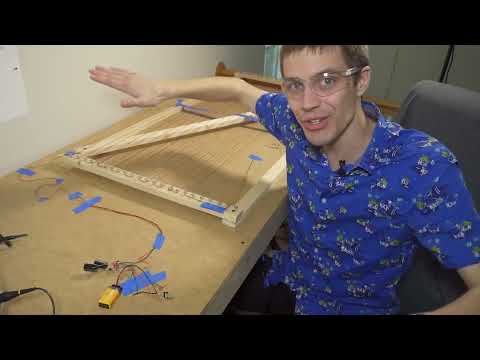 26:29
Watch electricity hit a fork in the road at half a billion frames per second
3M views • 2 years ago
AlphaPhoenix
AlphaPhoenix uses a custom high-speed measurement setup to watch voltage waves travel down wires and split at a fork. It answers how electricity knows where to go and how quickly that process happens.
Topic match · Fundamental physics 2:54
Explained: New Navy UFO Videos
284K views • 6 years ago
Mick West
Mick West explains the three Navy UFO videos (FLIR, GIMBAL and GOFAST) released in 2020, giving mundane explanations such as a distant plane and camera artifacts. He notes the videos were not new and had been circulating since 2017.
Topic match · Scientific method & science communication 11:54
Building a Cathedral without Science or Mathematics: The Engineering Method Explained
1.1M views • 3 years ago
engineerguy
Bill Hammack of engineerguy explains how medieval engineers designed stone cathedrals using rules of thumb, with no science, mathematics or literacy. He uses it to define the engineering method.
Topic match · Scientific method & science communication 21:42
Future Computers Will Be Radically Different (Analog Computing)
13.2M views • 4 years ago
Veritasium
Veritasium explains why analog computing may suit AI workloads, covering old analog computers, The Analog Thing and Mythic's analog chips that use flash memory for neural network inference. It argues digital hardware is hitting limits.
Topic match · Scientific method & science communication 17:34
What Everyone Gets Wrong About Gravity
15.6M views • 6 years ago
Veritasium
Veritasium explains, with expert input, that in general relativity gravity is not a force and objects follow straight paths through curved spacetime, including why standing on the ground means you are accelerating.
Topic match · Fundamental physics 7:23
How Trees Bend the Laws of Physics
5M views • 14 years ago
Veritasium
Veritasium explains how trees lift water from roots to the top of tall trunks, using transpiration pull and the negative pressure that liquid water can sustain. It explains why trees do not need pumps or valves.
Topic match · Fundamental physics 13:02
Noether's Theorem and The Symmetries of Reality
1.1M views • 8 years ago
PBS Space Time
PBS Space Time explains Noether's theorem: conservation laws such as energy and momentum are consequences of deeper symmetries. It also covers why those laws hold only under certain conditions.
Topic match · Fundamental physics 11:44
World's Roundest Object!
38.5M views • 13 years ago
Veritasium
Veritasium explains the effort to redefine the kilogram, which was still defined by a physical artifact, and how a near-perfect silicon sphere from the Avogadro project helps. It also covers the history of the unit's odd naming.
Topic match · Fundamental physics 11:22
Most People Don't Know How Bikes Work
24.9M views • 4 years ago
Veritasium
Veritasium explains why bicycles are stable, arguing that gyroscopic effects are not the answer. The video shows countersteering and an experiment where riders blocked from steering the opposite way cannot turn.
Topic match · Fundamental physics 27:15
The Most Misunderstood Concept in Physics
31.5M views • 3 years ago
Veritasium
Veritasium's explainer on entropy, presented as one of physics' most important and least understood concepts. It uses examples such as heat engines and the sun's energy flowing through the Earth.
Topic match · Fundamental physics 6:42
Carl Sagan - Cosmos - Eratosthenes
3M views • 17 years ago
carlsagandotcom
A short clip from Carl Sagan's Cosmos in which he explains how Eratosthenes measured the circumference of the Earth using shadows in two Egyptian cities. It is a clear, visual account of an ancient scientific feat.
Topic match · Scientific method & science communication 15:29
How Time Becomes Space Inside a Black Hole | Space Time
2.5M views • 9 years ago
PBS Space Time
A PBS Space Time episode explaining how space and time swap roles inside a black hole's event horizon. It is part of the channel's black hole series.
Topic match · Fundamental physics 43:48
dark matter is not a theory
750K views • 3 years ago
Angela Collier
Physicist Angela Collier argues that dark matter is not a theory but a set of observations, covering rotation curves, the CMB and why modified gravity struggles to explain them.
Topic match · Scientific method & science communication 6:51
Your Mass is NOT From the Higgs Boson
3.4M views • 13 years ago
Veritasium
Veritasium explains that the Higgs boson accounts for only a small fraction of everyday mass. Most of a proton's mass comes from the energy of the gluon field binding its quarks.
Topic match · Scientific method & science communication 30:48
A New Way to Achieve Nuclear Fusion: Helion
8.4M views • 3 years ago
Real Engineering
Real Engineering's Brian McManus explains Helion's approach to nuclear fusion: colliding two plasma rings, compressing them magnetically, and capturing energy directly from the changing magnetic flux rather than boiling water. It covers why this pulsed design sidesteps problems of tokamaks and laser fusion.
Topic match · Fundamental physics 11:54
Tested: Where Does The Tone Come From In An Electric Guitar?
2.9M views • 4 years ago
Jim Lill
Guitarist Jim Lill methodically tests what in an electric guitar affects its tone, swapping parts on a partscaster and even trying a 2x4 body. He finds that wood and construction matter far less than people assume.
Topic match · Scientific method & science communication 9:19
How to Understand What Black Holes Look Like
11M views • 7 years ago
Veritasium
Veritasium explains what a black hole should look like, using J.P. Luminet's 1979 work and a cardboard 3D model to show how light bends around it. It was made just as the first black hole image was released.
Topic match · Fundamental physics 44:13
Doctor Dissects the Wim Hof Method - Cold Hard Science Analysis
1.8M views • 7 years ago
Medlife Crisis
A cardiologist runs a detailed, skeptical review of the Wim Hof Method, covering the research on cold exposure and breathing techniques. It also teaches how to read scientific statistics critically.
Topic match · Scientific method & science communication 26:08
Did SARS-Cov-2 start in a Chinese lab?
182K views • 6 years ago
potholer54
Science journalist potholer54 examines the claim that SARS-CoV-2 came from a Wuhan lab, tracing the sources behind it and the weaknesses in the evidence.
Topic match · Scientific method & science communication 18:32
The world depends on a collection of strange items. They're not cheap
12.6M views • 3 years ago
Veritasium
Veritasium visits NIST to explain Standard Reference Materials, the carefully characterized items such as peanut butter used to calibrate instruments and keep measurements consistent. It covers why they exist and why they are expensive.
Topic match · Scientific method & science communication 9:49
How We're Redefining the kg
2.8M views • 9 years ago
Veritasium
Veritasium explains why the kilogram is being redefined in terms of Planck's constant rather than a physical metal artifact. It visits NIST to show the Kibble balance and why measuring mass precisely is hard.
Topic match · Fundamental physics 10:48
The True Nature of Matter and Mass | Space Time | PBS Digital Studios
1.8M views • 10 years ago
PBS Space Time
A PBS Space Time episode asking what matter, mass, and energy really are, starting with inertial versus gravitational mass and what mass-energy equivalence means.
Topic match · Fundamental physics 26:33
The Most Underrated Algorithm
10.8M views • 4 years ago
Veritasium
Veritasium tells the story of the Fast Fourier Transform, from its use in detecting nuclear tests to Cold War politics, and how it could have changed the arms race. It includes a short, intuitive explanation of what the Fourier transform does.
Topic match · Scientific method & science communication