floating point
 9:16
Floating Point Numbers - Computerphile
2.5M views • 12 years ago
Computerphile
Tom Scott explains for Computerphile how floating point numbers work, why moving the binary point is fast, and why it handles money badly.
 55:02
GradIEEEnt half decent: The hidden power of imprecise lines
391K views • 3 years ago
suckerpinch
Tom 7 (suckerpinch) delivers a long, comedic digression on gradient descent and floating-point imprecision. He shows how rounding behavior can supply the nonlinearity needed to build a neural network.
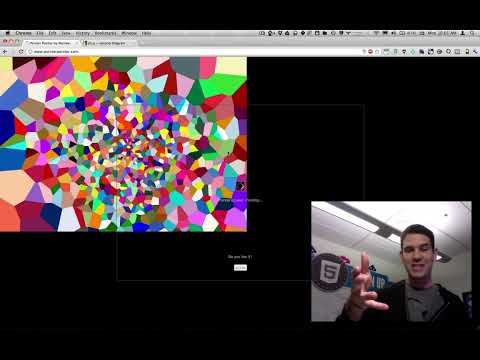 3:45
pointerpointer.com's use of voronoi, canvas, and javascript
40K views • 14 years ago
Paul Irish
Paul Irish explains how pointerpointer.com works. It uses a hidden canvas of colored Voronoi regions to look up which photo matches the cursor position.
 11:11
Old-fashioned rice cookers are extremely clever
3.2M views • 6 years ago
Technology Connections
Technology Connections explains how old-fashioned non-electronic rice cookers work, using a magnet and spring switch tripped by the Curie point. It shows the thermodynamics and magnetism behind a simple appliance.
 10:51
Is olive oil safe at high heat? Does it taste bad?
1.9M views • 6 years ago
Adam Ragusea
Adam Ragusea examines whether olive oil is unsafe for high-heat cooking and whether it tastes bad when heated. He cites studies showing it is among the most stable cooking oils and that smoke-point worries are overblown.
 16:45
How Airlines Quietly Became Banks
7.4M views • 4 years ago
Wendover Productions
A Wendover Productions explainer arguing that major airlines make much of their profit from loyalty programs and co-branded credit cards rather than flying. It frames airlines as quasi-banks that sell points in bulk, using United's pandemic-era loan as a hook.
 20:08
Fast Inverse Square Root — A Quake III Algorithm
6M views • 5 years ago
Nemean
A walkthrough of the Quake III fast inverse square root, explaining where the constant 0x5f3759df comes from. It covers IEEE 754 floats, the bit hack that approximates a logarithm, and a Newton's method refinement.
 6:00
Super Pointy Sprint Missile - 0 to Mach 10 in 15 Seconds - 100Gs & 6000°F
459K views • 6 years ago
Dark Footage
A short video on the US Sprint anti-ballistic missile, which accelerated to around Mach 10 in seconds under extreme g-forces and heat. It includes striking launch footage and a brief development history.
 7:37
Should We Colonize Venus Instead of Mars?
4.8M views • 11 years ago
PBS Space Time
A PBS Space Time episode asking whether Venus would be a better colonization target than Mars. It covers Venus's habitable altitudes, floating balloon habitats, and the term surfacism.
 29:02
Colonizing Venus
731K views • 9 years ago
Isaac Arthur
Isaac Arthur examines options for colonizing Venus, from vast floating habitats in the temperate upper atmosphere to full terraforming of the planet. It is a long-form speculative futurism episode in his solar system colonization series.
 8:35
The Big Short (2015) - Jared Vennett's Pitch to Front Point Partners (Jenga Blocks Scene) [HD 1080p]
17.9M views • 9 years ago
Extractor
A scene from The Big Short in which Jared Vennett pitches credit default swaps on mortgage bonds to a hedge fund team, using a Jenga tower to illustrate collateralized debt obligations.
 14:11
We WILL Fix Climate Change!
12.3M views • 4 years ago
Kurzgesagt – In a Nutshell
Kurzgesagt's animated take on climate change argues that, despite alarming headlines, there are real reasons for hope as technology, policy and public attitudes shift. It surveys trends and solutions while acknowledging the scale of the problem.
 4:08
e^(iπ) in 3.14 minutes, using dynamics | DE5
3.4M views • 7 years ago
3Blue1Brown
A short 3Blue1Brown video explaining Euler's formula e^(i*pi) = -1 through dynamics, treating velocity as the thing that moves a point to a new position. It builds geometric intuition for why an exponent with i produces rotation.
 11:33
Light Waves Visualized using Photon Sieves.
69K views • 6 years ago
Huygens Optics
Huygens Optics shows how DIY photon sieves shape a laser's wave front, explaining how they differ from zone plates and how aperture count affects the focal point, with time-resolved visualizations of the diffraction.
 2:58
First Follower: Leadership Lessons from Dancing Guy
8.8M views • 16 years ago
Derek Sivers
Derek Sivers annotates a short clip of a lone dancer at a festival, showing how a first follower turns a ridiculous act into a movement. He draws out lessons about leadership and making it easy to follow.
 7:55
Is the EU Democratic? Does Your Vote Matter?
5.6M views • 7 years ago
Kurzgesagt – In a Nutshell
Kurzgesagt explains how the European Union is governed, how its officials are elected or appointed, and whether a citizen's vote actually matters.
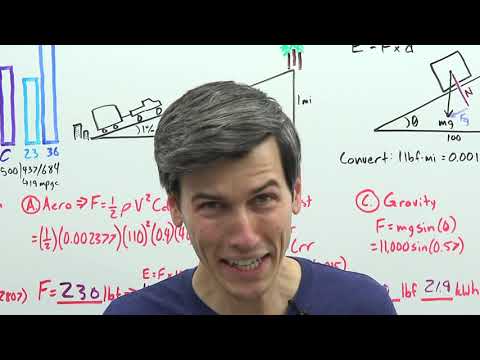 18:02
Why Teslas Are Bad At Towing (Today)
768K views • 6 years ago
Engineering Explained
Engineering Explained uses physics to show why today's electric cars, including Teslas, are poor at towing, pointing to battery energy density and weight. It examines Cybertruck and F-150 towing claims.
 4:48
Hans Rosling's 200 Countries, 200 Years, 4 Minutes - The Joy of Stats - BBC
11.5M views • 15 years ago
BBC
Hans Rosling uses augmented-reality animation to show 200 countries over 200 years in four minutes, built from 120,000 data points. It tracks life expectancy and income to show the world's development.
 9:39
Why American Cities Are Broke - The Growth Ponzi Scheme [ST03]
3.8M views • 5 years ago
Not Just Bikes
Not Just Bikes explains the Strong Towns argument that car-dependent American suburbs cost more to maintain than they generate in taxes. It describes the growth Ponzi scheme that props up municipal finances.
 12:08
Why Some Diseases Only Traveled One Direction
13.9M views • 10 years ago
CGP Grey
CGP Grey explains why European diseases devastated the Americas while few deadly diseases traveled the other way. He ties it to livestock domestication, dense cities, and the ideas of Guns, Germs and Steel.
 17:20
The Extreme Engineering of ASML’s EUV Light Source
698K views • 4 years ago
Asianometry
Asianometry explains the EUV light source inside ASML's lithography machines, where lasers hit falling tin droplets twice to produce 13.5 nm light. It walks through the engineering of the droplet generator, the pre-pulse and main laser, and the plasma that results.
 23:11
Eating less Meat won't save the Planet. Here's Why
5.8M views • 5 years ago
Joseph Everett - WIL
Joseph Everett, with Dr. Frank Mitloehner, argues that eating less meat will not do much for the climate. He covers beef's water footprint, land and feed use, and methane.
 5:32
The Truth about American Cities - Part 1 - Strong Towns [ST01]
858K views • 6 years ago
Not Just Bikes
The first video in Not Just Bikes' Strong Towns series explains the financial instability of North American cities, based on Strong Towns research. It argues that low-density suburban growth costs more to maintain than it brings in.
 5:48
Most Cities Got More Democratic. This One Didn't.
6.1M views • 14 years ago
CGP Grey
CGP Grey explains the City of London's unusual governance, including the Lord Mayor, guilds, and how it differs from the rest of London.
 10:03
The determinant | Chapter 6, Essence of linear algebra
5M views • 10 years ago
3Blue1Brown
A 10-minute 3Blue1Brown chapter explaining the determinant as the factor by which a linear transformation scales area or volume. It builds the idea geometrically with animations before any formulas.
 6:08
Immigration, World Poverty and Gumballs
6.8M views • 16 years ago
NumbersUSA
Roy Beck's short gumball presentation using World Bank and Census data to argue that letting people immigrate to the US cannot solve world poverty because the numbers are so large. It is made by NumbersUSA, an immigration-restriction advocacy group.
 21:36
Fractals are typically not self-similar
4.6M views • 9 years ago
3Blue1Brown
3Blue1Brown explains fractal dimension and shows why many fractals are not strictly self-similar. Self-similarity turns out to be a special case of the broader idea of fractional dimension.
 20:58
The Epidemic of Fake Disease
2.4M views • 6 years ago
Medlife Crisis
A Medlife Crisis video by cardiologist Rohin Francis on overdiagnosis and over-screening. It explains how detecting more disease does not necessarily mean saving more lives, and covers harms such as unnecessary treatment.
 21:15
The REAL Possibility of Mapping Alien Planets!
778K views • 4 years ago
PBS Space Time
PBS Space Time explains the proposal to use the Sun's gravity as a giant lens, sending a train of small light-sail spacecraft to the focal point roughly 550 AU out. It covers how such a telescope could image exoplanets in surprising detail and the engineering challenges involved.
 11:46
Zipline - How Rwanda Built A Drone Delivery Service
1.6M views • 7 years ago
Real Engineering
Real Engineering explains how Zipline built a drone delivery network for medical supplies in Rwanda. It covers the fixed-wing drones, catapult launch, parachute drop and the logistics behind the service.
 50:09
Old pinball machines are amazingly complex
3.5M views • 3 years ago
Technology Connections
Technology Connections takes a long, detailed look at how a 1970s electromechanical pinball machine works, from relays to stepper motors and mechanical logic. It is the first part of a series.
 29:35
The IOU Machine: How Currency Is Created | Hidden Secrets of Money Ep. 4
11.1M views • 13 years ago
GoldSilver
Episode 4 of Mike Maloney's Hidden Secrets of Money, explaining how currency is created through a chain of IOUs among the Treasury, banks and the Federal Reserve. It covers bonds, Fed checks, debt, taxes and fractional reserve lending, from a gold-and-silver advocate's viewpoint.
 23:12
Simulating an epidemic
5.2M views • 6 years ago
3Blue1Brown
3Blue1Brown builds toy SIR models to simulate how an epidemic spreads and tests scenarios like social distancing, travel restrictions, central gathering places and quarantine. It was made during the early COVID-19 outbreak.
 29:55
The Collapse of The American Dream Explained in Animation
11M views • 15 years ago
doctordude
A 30-minute animated film explaining how money, banking and the Federal Reserve work and arguing that the American economy is heading for collapse. It is opinionated and has a strong point of view.
 21:32
Alexander Pope Wrote a 35-Page Takedown of a Historian
10.3M views • 5 years ago
CGP Grey
CGP Grey tells the story of Alexander Pope's long takedown of a historian, Thomas Hearne, framed around the quirks of library books and archival research. It is a funny, digressive video essay about literary feuds and tracking down original sources.
 15:09
Mouse Cursor History (and why I made my own)
3M views • 8 years ago
Posy
Posy gives a short history of the computer mouse cursor, from early straight pointers to the tilted arrow, comparing Apple and Windows designs. He then explains why he designed his own cursor set and offers it as a free download.
 10:08
Big Plane vs Little Plane (The Economics of Long-Haul Flights)
4.3M views • 10 years ago
Wendover Productions
Wendover Productions explains why Boeing's efficient 787 beat Airbus's giant A380, contrasting hub-and-spoke with point-to-point routes. It covers the economics of long-haul flights.
 36:29
Drip Coffee Makers — super simple, super cheap
4.7M views • 4 years ago
Technology Connections
Technology Connections explains how the simple American drip coffee maker works, including the bimetal valve and bubble-pump heating, and compares the original Mr. Coffee with modern machines.
 21:25
Gimbal UFO - A New Analysis
208K views • 4 years ago
Mick West
Mick West analyzes the Navy's Gimbal UFO video and gives four checkable observations suggesting it is an infrared glare that appears to rotate because the camera rotates while tracking. He argues the object is likely a hot craft hidden behind the glare.
 13:02
Noether's Theorem and The Symmetries of Reality
1.1M views • 8 years ago
PBS Space Time
PBS Space Time explains Noether's theorem: conservation laws such as energy and momentum are consequences of deeper symmetries. It also covers why those laws hold only under certain conditions.