github actions
 13:29
Infinite fractions and the most irrational number
658K views • 10 years ago
Mathologer
Mathologer uses continued fractions to show why the golden ratio is the most irrational number, comparing it with root 2, e and pi and pointing to where this shows up in nature.
 41:08
"Transactions: myths, surprises and opportunities" by Martin Kleppmann
84K views • 11 years ago
Strange Loop Conference
Martin Kleppmann's Strange Loop talk on database transactions, covering why they were dropped by NoSQL, their reputation for being slow, and newer algorithms that make serializable transactions perform and scale. It touches on consistency, linearizability and the CAP theorem.
 59:53
CppCon 2019: Chandler Carruth “There Are No Zero-cost Abstractions”
147K views • 7 years ago
CppCon
Chandler Carruth argues in a CppCon 2019 talk that C++ has no truly zero-cost abstractions. Using examples like unique_ptr, ABI constraints and compile-time costs, he shows that abstractions cost runtime, compile time or human effort.
 43:00
Tree-sitter: a new parsing system for programming tools - GitHub Universe 2017
24K views • 8 years ago
GitHub
Max Brunsfeld of GitHub presents Tree-sitter, a parsing system for programming tools that supports incremental, error-tolerant parsing. He demos its integration into GitHub.com and Atom for syntax highlighting and code navigation.
 15:13
The Golden Ratio (why it is so irrational) - Numberphile
3.9M views • 8 years ago
Numberphile
Numberphile's Ben Sparks shows why the golden ratio is the most irrational number, using seeds, continued fractions and rational approximations. He also explains why plants use it for spacing leaves and seeds.
 1:22:12
Introduction to Git with Scott Chacon of GitHub
396K views • 15 years ago
InfoQ
Scott Chacon introduces Git by showing what happens under the hood for basic commands: staging, committing, data storage, branching, merging and pushing. He contrasts it with Subversion and shows history viewing with log.
 34:13
The Addictive Cost Of Predatory Videogame Monetization (The Jimquisition)
1.3M views • 7 years ago
Stephanie Sterling
A Jimquisition episode examining the human cost of predatory videogame monetization, focusing on loot boxes and microtransactions. It features testimonials from people harmed by gambling-style game mechanics.
 0:23
Carl Sagan: If you wish to make an apple pie from scratch, you must first invent the universe.
323K views • 16 years ago
pkrumins
A very short clip of Carl Sagan saying that to make an apple pie from scratch you must first invent the universe. It illustrates how everything depends on a chain of prior things.
 2:00:10
Oral History of Bjarne Stroustrup
75K views • 11 years ago
Computer History Museum
A two-hour Computer History Museum oral history interview with Bjarne Stroustrup, conducted by Paul McJones in 2015. It covers his youth, education at Aarhus and Cambridge, his career at Bell Labs and elsewhere, and the design and evolution of C++.
 9:55
Everyone is Wrong About Mexican Coke (Even @johnnyharris)
1.2M views • 1 year ago
Reactions
ACS Reactions investigates why Mexican Coke, supposedly cane sugar sweetened, tested as having glucose and fructose, explaining that sucrose breaks down in acidic soda.
 41:50
Two decades of Git: A conversation with creator Linus Torvalds
548K views • 1 year ago
GitHub
GitHub interviews Linus Torvalds on twenty years of Git, from its creation in about ten days as a Linux kernel tool to its role in modern software development. He discusses technical decisions, community contributions and the project's philosophy.
 21:19
Manufactured Discontent and Fortnite
1.7M views • 7 years ago
Folding Ideas
Dan Olson of Folding Ideas critiques Fortnite's monetization, arguing it uses manufactured discontent, such as shop design and skins, to push spending. The video dissects the psychological techniques behind the game's business model.
 1:06:44
Programming is terrible—Lessons learned from a life wasted. EMF2012
1.7M views • 13 years ago
tef ebooks
Tef's EMF 2012 talk on lessons from a career in programming, a candid and humorous look at why programming is so often terrible. Slides and a draft script are available online.
 8:11
Glitter Bomb 1.0 vs Porch Pirates
95.3M views • 7 years ago
Mark Rober
Mark Rober builds a glitter-bomb booby-trapped package to take revenge on porch pirates, filming the thieves' reactions. Some reactions were later acknowledged as partially staged.
 24:59
High speed camera reveals why sodium explodes!
484K views • 11 years ago
Thunderf00t
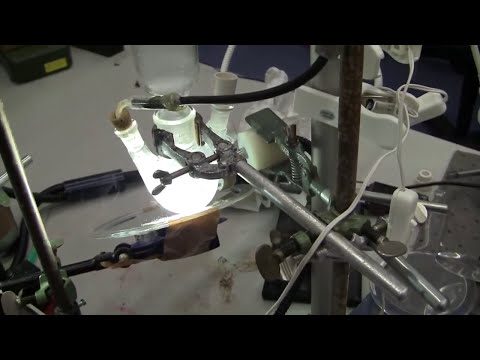
Thunderf00t presents high-speed camera footage of alkali metals such as sodium and NaK reacting with water. The footage shows that the explosion is not caused by hydrogen ignition, as the usual explanation says. It is a Coulomb explosion driven by electrons leaving the metal.
 37:34
Linux Kernel Development, Greg Kroah-Hartman - Git Merge 2016
72K views • 9 years ago
GitHub
Greg Kroah-Hartman's Git Merge 2016 talk on how the Linux kernel is developed, how fast it moves, and how git and email workflows keep it manageable. He is the stable kernel maintainer.
 47:18
The Tragedy of systemd
1.3M views • 7 years ago
linux.conf.au
FreeBSD developer Benno Rice traces the history of init and bootstrap systems at linux.conf.au 2019 to explain why systemd was seen as necessary and why it provokes such strong reactions. He also discusses why change is scary.
 59:56
AWS re:Invent 2018: Amazon DynamoDB Deep Dive: Advanced Design Patterns for DynamoDB (DAT401)
468K views • 7 years ago
Amazon Web Services
Rick Houlihan's AWS re:Invent 2018 deep dive on advanced DynamoDB design patterns. It covers index overloading, GSI sharding, composite keys, graph processing and transactions.
 1:19:52
CppCon 2016: Jason Turner “Rich Code for Tiny Computers: A Simple Commodore 64 Game in C++17”
264K views • 10 years ago
CppCon
Jason Turner's CppCon 2016 talk builds a simple Commodore 64 game using C++17, showing how constexpr and const let a modern compiler produce tight 6502 code. He walks through assembly output to show abstractions being optimized away.
 1:01:39
"Simple Made Easy" - Rich Hickey (2011)
434K views • 5 years ago
ClojureTV
Rich Hickey's Strange Loop 2011 keynote separates 'simple' (not intertwined) from 'easy' (familiar or near at hand) and argues that software complexity comes from complecting things. It offers a vocabulary for judging designs and abstractions.
 39:21
Functional Composition - Chris Ford
31K views • 13 years ago
ClojureTV
Chris Ford builds up from a single sine wave through layered abstractions to a Bach canon, using Clojure and the Overtone audio environment. The talk shows music theory as a natural fit for functional programming.
 18:53
Toward Rational, Authentic Food Choices | Melanie Joy | TEDxMünchen
911K views • 11 years ago
TEDx Talks
Psychologist Melanie Joy's TEDxMunchen talk introduces carnism, the invisible belief system that conditions people to eat some animals but not others, and how it shapes reactions to food choices.
 2:32:39
Clojure Concurrency - Rich Hickey
73K views • 13 years ago
ClojureTV
Rich Hickey's long presentation on Clojure and concurrency covers locking and immutability, then goes in depth on refs, transactions and agents. It ends with a multithreaded ant colony simulation demo.
 35:32
Cheng Lou - On the Spectrum of Abstraction at react-europe 2016
63K views • 10 years ago
ReactEurope
Cheng Lou's react-europe 2016 talk lays out a mental framework for thinking about abstraction levels in JavaScript tooling, from Angular and Grunt to Webpack and React. It uses that framework to reason about the cost of abstractions and how to choose between competing solutions.
 52:38
A JVM Does That?
80K views • 15 years ago
Google TechTalks
Cliff Click of Azul Systems asks what a JVM is supposed to do, in a Google Tech Talk from 2011. He covers the services a JVM provides, such as garbage collection and compilation, and the messy reality beneath the abstractions.
 17:55
Municipal Violations: Last Week Tonight with John Oliver (HBO)
11.5M views • 11 years ago
LastWeekTonight
John Oliver's Last Week Tonight segment on municipal violations. It shows how small fines and fees escalate for people who cannot pay and how private probation and ticket revenue can ruin lives.
 17:50
Blockchain 101 - A Visual Demo
3.3M views • 10 years ago
Anders Brownworth
Anders Brownworth gives a basic visual introduction to blockchain using an interactive web demo, covering SHA256 hashes, blocks, chains, distribution, tokens and coinbase transactions.
 25:01
Dan Abramov The wet codebase
27K views • 5 years ago
eswarnichtsmehrfrei
Dan Abramov's talk on the wet codebase, using visualizations to show how removing all duplication too early produces wrong abstractions that are hard to unwind.
 42:44
Armin Ronacher - A Python for Future Generations
6K views • 9 years ago
EuroPython Conference
Armin Ronacher's EuroPython 2017 keynote examining how the CPython interpreter's leaky abstractions affect language design and how Python could evolve, drawing on JavaScript and Rust experience.
 19:25
New computers don't speed up old code
187K views • 1 year ago
Matthias random stuff
Matthias Wandel tests old and new code on a range of PCs, including a new mini PC, to measure how much faster modern hardware really is. He also shows optimization techniques such as branchless code, with benchmark programs on GitHub.
 16:04
Redoing Make - Haskell from Scratch #1
57K views • 13 years ago
jekor
The first episode of a screencast series building djb's redo build system from scratch in Haskell. It explains the purpose of redo, writes initial code and sets up a GitHub repository.
 55:59
Jailbreaking the Simulation with George Hotz | SXSW 2019
573K views • 7 years ago
SXSW
George Hotz gives a SXSW 2019 talk on the idea that we live in a simulation and asks what actions would be available from inside it. He takes a hacker's view of whether it could be escaped.
 47:52
“What is Success?” by Evan Czaplicki
31K views • 8 years ago
Elm Europe
Elm creator Evan Czaplicki's 2018 Elm Europe talk on how to define success for an open source project and language community. It argues against judging projects by GitHub activity and touches on community expectations.
 27:58
GraphQL: The Documentary
603K views • 7 years ago
CultRepo
A documentary on how GraphQL came to be at Facebook, featuring its co-creators Lee Byron, Dan Schafer and Nick Schrock. It covers the problems it solved and its adoption at companies like Twitter, Airbnb and GitHub.
 15:53
Quantum Field Theory visualized
2.7M views • 6 years ago
ScienceClic English
ScienceClic gives a 15-minute animated introduction to quantum field theory, covering fields, spin, conserved quantities, the standard model and interactions.
 19:44
Mountain West Ruby 2012 Capability vs. Suitability by Gary Bernhardt
22K views • 14 years ago
Confreaks
Gary Bernhardt argues that software history moves in reactions to earlier tools, and that new tools are not simply better in every way. He distinguishes capability (what a tool allows) from suitability (what it fits), and warns against repeating past mistaken reactions.
 10:33
Testing if 60 minutes of silence drives you crazy
32.8M views • 12 years ago
Veritasium
Veritasium's Derek Muller spends an hour in a silent, dark anechoic chamber at BYU to test the claim that 45 minutes is the most anyone can bear. He reports on his experience and other people's reactions.
 1:02:51
Unconscious Bias @ Work | Google Ventures
393K views • 12 years ago
GV (Google Ventures)
A Google Ventures talk on how unconscious biases shape product decisions, hiring and workplace interactions. It draws on research, including work by Google scientists, on how to counter them.
 22:10
Why Don't You Want To Do Anything After Binging 4 Hours of YouTube Videos...
2.3M views • 3 years ago
HealthyGamerGG
Dr. K of HealthyGamerGG explains why people feel unmotivated and unable to start tasks after hours of YouTube or similar distractions. He frames it as a result of how social media is designed to capture attention, and says not to blame yourself.
 3:30
First Techno (Kraftwerk 1970)
8.5M views • 11 years ago
PhineasFreakers
The earliest existing concert video of Kraftwerk, from a 1970 performance shortly after the band formed. It shows the band in its original setup and the audience's reactions.