global network
 8:14
The Lightning Network Explained (Litecoin/Bitcoin)
119K views • 9 years ago
Franklyn
An 8-minute explainer on the Lightning Network and how it relates to Segwit, Bitcoin and Litecoin. It covers how off-chain payment channels route payments to scale blockchain transactions.
 18:40
But what is a neural network? | Deep learning chapter 1
25.1M views • 9 years ago
3Blue1Brown
3Blue1Brown's first chapter on deep learning explains what neurons and layers are and the math underlying a basic neural network, using handwritten digit recognition with visual animations.
 5:26
Neural Network Learns The Physics of Fluids and Smoke | Two Minute Papers #118
209K views • 9 years ago
Two Minute Papers
Two Minute Papers covers a paper on speeding up fluid and smoke simulation with convolutional networks. It contrasts the approach with earlier regression forest methods.
 21:33
A CONSERVATIVE solution to global warming (Part 1)
278K views • 8 years ago
potholer54
Potholer54 presents the climate science case and a market-oriented, conservative-friendly approach to addressing global warming, with sources listed. It is part one of a two-part series.
 20:33
Gradient descent, how neural networks learn | Deep Learning Chapter 2
9.7M views • 9 years ago
3Blue1Brown
3Blue1Brown's second neural network chapter explains cost functions and gradient descent, showing how a network learns by minimizing error during training.
 6:50
13 Misconceptions About Global Warming
5.9M views • 12 years ago
Veritasium
Veritasium debunks common climate change myths in under seven minutes, with references to NASA and published research. Topics include CO2 sources, sea ice and 1970s predictions of cooling.
 10:15
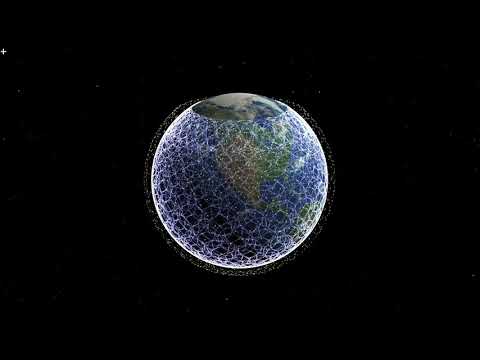
Using ground relays with Starlink
506K views • 6 years ago
Mark Handley
Mark Handley of UCL explains, with simulation visualizations, how early Starlink satellites without inter-satellite links could still give low-latency wide-area communication by hopping via ground relays. He shows it can beat fibre on many long paths.
 55:02
GradIEEEnt half decent: The hidden power of imprecise lines
391K views • 3 years ago
suckerpinch
Tom 7 (suckerpinch) delivers a long, comedic digression on gradient descent and floating-point imprecision. He shows how rounding behavior can supply the nonlinearity needed to build a neural network.
 4:48
Hans Rosling's 200 Countries, 200 Years, 4 Minutes - The Joy of Stats - BBC
11.5M views • 15 years ago
BBC
Hans Rosling uses augmented-reality animation to show 200 countries over 200 years in four minutes, built from 120,000 data points. It tracks life expectancy and income to show the world's development.
 21:42
Future Computers Will Be Radically Different (Analog Computing)
13.2M views • 4 years ago
Veritasium
Veritasium explains why analog computing may suit AI workloads, covering old analog computers, The Analog Thing and Mythic's analog chips that use flash memory for neural network inference. It argues digital hardware is hitting limits.
 16:21
The Ranks of Global Billionaires: Not All Billionaires Are Made Equal
2M views • 6 years ago
Economics Explained
An Economics Explained video on the different kinds of billionaires, from founders to oligarchs. It explains how wealth is held in illiquid stock and why diversification is a problem for some.
 12:47
Backpropagation, intuitively | Deep Learning Chapter 3
6.4M views • 9 years ago
3Blue1Brown
3Blue1Brown's third deep learning chapter gives a visual, intuitive account of backpropagation and what happens to a neural network as it learns. A follow-up video covers the underlying calculus.
 6:47
Starlink revisions, Nov 2018
173K views • 8 years ago
Mark Handley
Mark Handley of UCL looks at how SpaceX's November 2018 revisions to the Starlink constellation affect network behavior. The video visualizes the orbits and routing and estimates latencies, building on his earlier video and research paper.
 40:45
Exclusive: Metro Exodus Enhanced Edition Analysis - The First Triple-A Game Built Around Ray Tracing
915K views • 5 years ago
Digital Foundry
Digital Foundry's Alex Battaglia analyzes Metro Exodus Enhanced Edition, the first AAA game built around ray tracing. It covers the new global illumination, emissive lighting, DLSS and performance on AMD and Nvidia hardware.
 8:25
Large Language Models from scratch
375K views • 4 years ago
Graphics in 5 Minutes
A short cartoon explaining how language models like ChatGPT work, from autocomplete and conditional probabilities to neural networks, gradient descent and backpropagation. It shows how networks act as universal function approximators.
 18:14
The US Military’s Massive Global Transportation System
3.2M views • 4 years ago
Wendover Productions
Wendover Productions explains how the US military moves people and materiel worldwide, including prepositioned equipment, sealift and airlift. It shows the scale of the logistics system behind US force projection.
 10:18
Backpropagation calculus | Deep Learning Chapter 4
4M views • 9 years ago
3Blue1Brown
3Blue1Brown's chapter 4 on deep learning gives a more formal, symbol-based account of backpropagation calculus, connecting the intuition from the previous chapter to the math found in textbooks and code.
 5:50
You Need to Be Bored. Here's Why.
17.9M views • 1 year ago
Harvard Business Review
Harvard professor Arthur Brooks explains why boredom is useful rather than something to avoid. He describes how a wandering mind engages the brain's default mode network, which supports creativity and curiosity, and suggests it may protect against depression.
 7:15
A Selfish Argument for Making the World a Better Place – Egoistic Altruism
11.4M views • 8 years ago
Kurzgesagt – In a Nutshell
Kurzgesagt makes a selfish case for improving the world, arguing that helping people far away raises prosperity and innovation for everyone, including yourself. The animated video frames this as egoistic altruism and positive-sum cooperation.
 10:42
1. Climate Change -- the scientific debate
530K views • 18 years ago
potholer54
The first video in potholer54's climate series, giving a basic look at how climate scientists infer that man-made carbon gases are changing the climate. It is a short explainer meant to present the scientific evidence plainly.
 24:07
AI can't cross this line and we don't know why.
2.5M views • 2 years ago
Welch Labs
A Welch Labs explainer on neural scaling laws and the compute-efficient frontier, asking why model loss seems to hit a line it cannot cross. It draws an analogy to an ideal gas law for AI.
 28:09
How does Starlink Satellite Internet Work?📡☄🖥
9.9M views • 4 years ago
Branch Education
Branch Education explains how Starlink works, from the ground dish and satellites to phased-array beam steering and data routing. Animations cover how a beam stays connected to a satellite moving at 27,000 km/h.
 21:37
I wasn't worried about climate change. Now I am.
2.5M views • 2 years ago
Sabine Hossenfelder
Sabine Hossenfelder explains climate sensitivity and why recent observations suggest climate models may have underestimated warming. She says this changed her view on how worried to be.
 11:00
International Diversification
221K views • 3 years ago
Ben Felix
Ben Felix rebuts common arguments for holding only US stocks, such as past outperformance and international revenue exposure. He supports the case for international diversification with cited academic research.
 2:26
Milton Friedman - I, Pencil
802K views • 14 years ago
Free To Choose Network
A two-minute clip in which Milton Friedman uses a humble pencil to show how thousands of strangers across many countries cooperate, without central direction, to make a simple product. It is a short visual version of the 'I, Pencil' essay's argument about free markets and dispersed knowledge.
 17:39
The EV Detroit is Dying to Benchmark - BYD Seagull
319K views • 2 years ago
Autoline Network
Autoline's John McElroy and Caresoft president Terry Woychowski look at the BYD Seagull, an electric hatchback that sells in China for about $11,500. Woychowski points out the cost-saving design and manufacturing choices, and McElroy takes it for a short test drive.
 43:43
Principles for Dealing with the Changing World Order by Ray Dalio
232.4M views • 4 years ago
Principles by Ray Dalio
An animated 44-minute summary of Ray Dalio's book Principles for Dealing with the Changing World Order. It lays out the Big Cycle of rising and declining nations, covering debt cycles, internal conflict, and shifts in global power over the past 500 years.
 6:08
Immigration, World Poverty and Gumballs
6.8M views • 16 years ago
NumbersUSA
Roy Beck's short gumball presentation using World Bank and Census data to argue that letting people immigrate to the US cannot solve world poverty because the numbers are so large. It is made by NumbersUSA, an immigration-restriction advocacy group.
 11:46
Zipline - How Rwanda Built A Drone Delivery Service
1.6M views • 7 years ago
Real Engineering
Real Engineering explains how Zipline built a drone delivery network for medical supplies in Rwanda. It covers the fixed-wing drones, catapult launch, parachute drop and the logistics behind the service.
 19:07
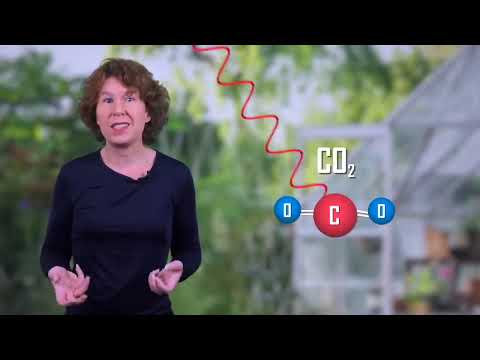
I Misunderstood the Greenhouse Effect. Here's How It Works.
989K views • 3 years ago
Sabine Hossenfelder
Sabine Hossenfelder explains how the greenhouse effect actually works, given that infrared is mostly absorbed low in the atmosphere already. She walks through why more CO2 still warms the surface.
 35:49
Breaking The Creepy AI in Police Cameras
3.8M views • 1 year ago
Benn Jordan
Benn Jordan explains how Flock Safety's license plate cameras log and share vehicle locations, and explores how adversarial AI can defeat them. It covers weak security and the surveillance risks of private police-camera networks.
 12:13
Why China Is so Good at Building Railways
8.7M views • 7 years ago
Wendover Productions
A Wendover Productions explainer on how China built the world's largest high-speed rail network so quickly and why its rail strategy differs from America's. It covers politics, social benefits and the economics of unprofitable lines.
 10:48
How The Immune System ACTUALLY Works – IMMUNE
26.2M views • 5 years ago
Kurzgesagt – In a Nutshell
A Kurzgesagt animation giving a big-picture tour of the human immune system, its organs, transport network, and the cells it produces every day. It accompanies their IMMUNE book.
 20:39
AI Language Models & Transformers - Computerphile
354K views • 7 years ago
Computerphile
Rob Miles explains on Computerphile how language models generate plausible text and how transformers improved on recurrent networks, with a look at what comes next.
 4:17
AI Learns Noise Filtering For Photorealistic Videos | Two Minute Papers #215
65K views • 8 years ago
Two Minute Papers
A Two Minute Papers episode on NVIDIA's recurrent denoising autoencoder, which cleans up noisy Monte Carlo path-traced image sequences. It shows how a neural network can produce usable renders from very few samples.
 5:31
The hidden background noise that can catch criminals
5.8M views • 4 years ago
Tom Scott
Tom Scott explains Electrical Network Frequency analysis, where hum from the power grid in a recording is matched against grid logs to date and place it. He talks to a researcher and sets them a challenge.
 9:40
Why American public transit is so bad | 2020 Election
6.7M views • 6 years ago
Vox
A Vox explainer from the 2020 election series on why American public transit is so poor. It traces the effect of the interstate highway system on cities and the resulting car dependence.
 4:12
Correlation CAN Imply Causation! | Statistics Misconceptions
744K views • 9 years ago
minutephysics
A four-minute minutephysics video arguing that causal models and causal networks let statistics infer causation from correlation. It touches on Reichenbach's principle, common causes, feedback and quantum causal discovery.
 2:42
Power of the Market - The Pencil
551K views • 18 years ago
LibertyPen
A three-minute excerpt from Milton Friedman's Free to Choose in which he uses a pencil to show that no single person knows how to make it. He argues that the free market coordinates countless strangers peacefully.
 5:50
The city of golf carts
1.8M views • 7 years ago
Tom Scott
Tom Scott visits Peachtree City, Georgia, which has about a hundred miles of dedicated golf cart paths that serve as an alternative to driving. He explains how the network works as a quasi-transit system that keeps cars off the roads.