gpu computing
 3:29:25
THE NVIDIA AI GPU BLACK MARKET | Investigating Smuggling, Corruption, & Governments
3.5M views • 1 year ago
Gamers Nexus
A Gamers Nexus investigative documentary on the black market for Nvidia AI GPUs, following smugglers, middlemen, and buyers, including reporting from China. It examines how export-restricted chips reach their users.
 54:35
"An approach to computing and sustainability inspired from permaculture" by Devine Lu Linvega
19K views • 3 years ago
Strange Loop Conference
Devine Lu Linvega of Hundred Rabbits talks about low-power, offline computing, esoteric languages and the Uxn virtual machine, informed by years of sailing the Pacific. The talk frames computing sustainability through a permaculture lens.
 10:58
DON'T Buy a Used Mining GPU! - $h!t Manufacturers Say
3.7M views • 5 years ago
Linus Tech Tips
Linus Tech Tips looks at whether buying a used GPU that was previously used for crypto mining is a good idea, as miners prepare to sell off cards. The video discusses how mining affects wear on cards and what to watch for.
 1:00:26
Colossus - The Greatest Secret in the History of Computing
1M views • 6 years ago
The Centre for Computing History
Chris Shore of the Centre for Computing History explains how Colossus was built, how it worked, and how it affected the course of World War II. It is an hour-long museum lecture on the codebreaking computer.
 21:42
Future Computers Will Be Radically Different (Analog Computing)
13.2M views • 4 years ago
Veritasium
Veritasium explains why analog computing may suit AI workloads, covering old analog computers, The Analog Thing and Mythic's analog chips that use flash memory for neural network inference. It argues digital hardware is hitting limits.
 43:13
Erik Jansson - GPU driven Rendering with Mesh Shaders in Alan Wake 2
29K views • 2 years ago
Digital Dragons
A Remedy engineer explains how Alan Wake 2 moved to a GPU-driven rendering pipeline built on mesh shaders, culling and rendering meshlets for dense vegetation on PS5 and Xbox Series consoles.
 19:25
Flex 170 GPU from Intel - Subscription Free GPU Accelerated VDI on Proxmox 8.1
176K views • 2 years ago
Level1Techs
Level1Techs' Wendell shows Intel's Flex 170 GPU providing GPU-accelerated virtual desktops on Proxmox 8.1 without subscription licensing, using SR-IOV, and demonstrates many desktop instances running at once.
 27:10
Growing Living Rat Neurons To Play... DOOM? | Part 1
4.5M views • 3 years ago
The Thought Emporium
The Thought Emporium grows living rat neurons on an electrode array and tries to train them to play Doom. It is part of a series on biological computing.
 48:13
RIP Windows: Linux GPU Gaming Benchmarks on Bazzite
1.1M views • 11 months ago
Gamers Nexus
Gamers Nexus benchmarks GPU gaming performance on Linux using the Bazzite OS, an exploratory first step toward establishing a Linux testing methodology. It compares results against Windows and notes where Linux still falls short.
 2:39:15
Jim Keller: The Future of Computing, AI, Life, and Consciousness | Lex Fridman Podcast #162
1.3M views • 5 years ago
Lex Fridman
Lex Fridman interviews chip architect Jim Keller about the future of computing, AI, life and consciousness. Topics include CPU design, branch prediction and why imperfect designs often win.
 49:48
2023 LLVM Dev Mtg - Mojo 🔥: A system programming language for heterogenous computing
61K views • 2 years ago
LLVM
A 2023 LLVM Developers' Meeting keynote by Abdul Dakkak, Chris Lattner and Jeff Niu introducing Mojo, a Python-family systems language built on MLIR and LLVM for heterogeneous computing.
 3:28:54
COLLAPSE of Personal Computing | Investigation Into the Destruction of Ownership
3.2M views • 5 months ago
Gamers Nexus
A roughly 3.5-hour Gamers Nexus investigation into rising PC component prices, driven largely by AI data-center demand for memory and other hardware. It draws on interviews with industry figures to argue that personal computing and ownership are being eroded.
 52:59
Introducing Nx - José Valim | Lambda Days 2021
26K views • 5 years ago
Code Sync
Jose Valim introduces Nx, the project bringing numerical computing to Elixir, covering multi-dimensional tensors, automatic differentiation and JIT compilation to CPU and GPU.
 18:57
Why the Soviet Computer Failed
4.2M views • 4 years ago
Asianometry
An Asianometry explainer on why the Soviet Union, once a leading computing power, fell far behind the US in computers by the 1980s. It traces the gap from the 1960s onward despite strong state support for science.
 2:42:41
Chris Lattner: The Future of Computing and Programming Languages | Lex Fridman Podcast #131
594K views • 6 years ago
Lex Fridman
Lex Fridman's long interview with Chris Lattner, creator of LLVM and Swift, covering the future of computing and programming languages. It touches on compilers, hardware, and his work at Apple, Tesla, Google and SiFive.
 46:56
IBM Computing Cheese Cutter [Restoration]
3.6M views • 5 years ago
Hand Tool Rescue
A 47-minute restoration of a 1920s IBM computing cheese cutter, a machine with parts patented between 1901 and 1907. The video covers the restoration work and explains why it is a computing cheese cutter.
 5:33:21
George Hotz | Programming | can tinygrad whisper? | AMD Rant | Giving up on AMD | Speech to Text
95K views • 3 years ago
george hotz archive
A long George Hotz live-stream from June 2023 in which he works on tinygrad and rants about AMD's drivers, ultimately declaring he is giving up on AMD. It also touches on hardware and compiler topics.
 18:31
Fourier Optics used for Optical Pattern Recognition
103K views • 6 years ago
Huygens Optics
Huygens Optics explains the Fourier transform and shows how a lens performs one optically. A DLP projector is used as a Fourier filter to do simple pattern recognition on lithographic character patterns.
 20:13
The Most Powerful Computers You've Never Heard Of
13.7M views • 4 years ago
Veritasium
Veritasium traces analog computers from the Antikythera mechanism and Kelvin's tide-predicting machines to fire control and modern analog approaches. It explains how these machines computed continuously rather than digitally.
 57:05
Keynote: Begin...End?
9K views • 5 years ago
David Beazley
David Beazley's PyData Global 2021 keynote, an oral history of early scientific Python. He tells how Python ended up running on a Connection Machine supercomputer at Los Alamos.
 29:51
Refterm v2 - Resource usage, binary splat, glyph sizing, and more
68K views • 5 years ago
Molly Rocket
Casey Muratori follows up his refterm proof-of-concept, a GPU-based terminal renderer, with a second part covering memory usage, glyph sizing and correct Unicode and VT handling. It is built to show that a terminal can be fast and correct without heroic effort.
 2:58:24
The Death of Affordable Computing | Tariffs Impact & Investigation
2.3M views • 1 year ago
Gamers Nexus
A long Gamers Nexus investigation into how volatile US tariffs affect the computer hardware industry. It interviews manufacturers and sellers about costs, margins and why moving production to the US is hard.
 55:20
Makepad: Designing modern UIs with Rust - Rik Arends - RustNL 2023
60K views • 3 years ago
RustNL
Rik Arends presents Makepad, a Rust UI framework, at RustNL 2023. The talk covers designing modern, GPU-fast UIs with Rust and includes live-coded demos of an IDE and a synthesizer.
 1:05:28
HC2023-K2: Hardware for Deep Learning
15K views • 3 years ago
hotchipsvideos
Bill Dally of NVIDIA gives a Hot Chips 2023 keynote on the challenges of building hardware for deep learning. He traces how GPUs have been adapted for machine learning, especially training.
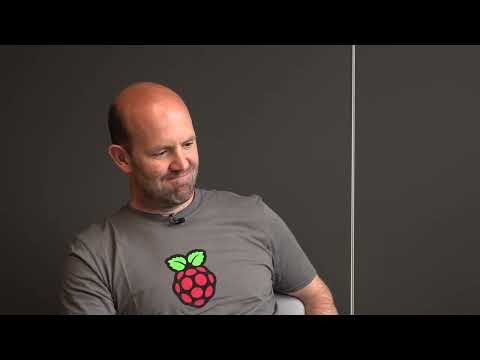 37:45
He started a computing REVOLUTION—then the shortage hit
224K views • 3 years ago
Jeff Geerling
Jeff Geerling interviews Raspberry Pi co-founder Eben Upton about the Pi shortage, the RP2040, RISC-V, the Sony investment and the origin of the name.
 4:52
Freespin
148K views • 5 years ago
Matthias Kramm
Freespin is a demo that runs on a Commodore 1541 floppy drive. It makes sound by vibrating the drive head and video by toggling the serial bus lines, and it keeps running after the C64 that booted it is disconnected.
 1:43:10
Brian Kernighan: UNIX, C, AWK, AMPL, and Go Programming | Lex Fridman Podcast #109
766K views • 6 years ago
Lex Fridman
Lex Fridman interviews Brian Kernighan, co-author of The C Programming Language and co-creator of AWK and AMPL. They discuss Unix, C, Go and his memoir on the history of Unix.
 20:11
Apple Vision Pro Impressions!
18.2M views • 3 years ago
Marques Brownlee
Marques Brownlee shares his hands-on impressions of Apple's $3500 Vision Pro headset after trying it. He covers the spatial computing experience, eye tracking, and how it compares to other devices.
 56:54
Change w/ Jim Keller
61K views • 3 years ago
Tenstorrent
Jim Keller, CTO of Tenstorrent, gives a keynote at Stanford's System X conference on change, understanding and the future of computing. He touches on Moore's Law, how far transistors are from physical limits, and ideas like DNA origami.
 59:20
Rendering Tiny Glades With Entirely Too Much Ray Marching
108K views • 1 year ago
Graphics Programming Conference
A Graphics Programming Conference talk on how the game Tiny Glade renders meadows, trees and player-built castles. It covers real-time global illumination, tilt-shift depth of field, stable shadows with continuous time of day, ray marching and GPU-driven rendering on old hardware.
 50:06
Protected KVM on Arm64: A Technical Deep Dive - Quentin Perret, Google
6K views • 4 years ago
The Linux Foundation
Quentin Perret of Google gives a technical deep dive into protected KVM (pKVM) on Arm64, a confidential computing approach for CPUs without hardware extensions. It explains how the nVHE hypervisor manages stage-2 MMU access control to protect guest memory.
 37:43
Doom The Way it Was Meant to Be Played - v1.1 Multi-monitor
1.2M views • 3 years ago
Tech Tangents
Tech Tangents sets up original Doom's three-screen multi-monitor mode, which required a separate networked computer for each monitor. The video covers the hardware and setup work and the result.
 1:10:00
A Deep Dive into Nanite Virtualized Geometry
278K views • 5 years ago
SIGGRAPH Advances in Real-Time Rendering
Brian Karis's SIGGRAPH 2021 talk explains how Unreal Engine 5's Nanite virtualized geometry works. It covers mesh import, the data structures, streaming, decompression, culling, software and hardware rasterization, and shading.
 16:33
Using a 1930 Teletype as a Linux Terminal
1.6M views • 6 years ago
CuriousMarc
CuriousMarc connects a restored 1930 Model 15 Teletype to a Linux machine and uses it as a terminal, after commenters requested it. The video shows the challenges of linking a 5-bit mechanical device to a modern OS.
 1:04:19
"We Really Don't Know How to Compute!" - Gerald Sussman (2011)
96K views • 5 years ago
Strange Loop Conference
Gerald Sussman's 2011 Strange Loop keynote argues we still do not know how to compute, comparing biological systems with how we program machines. It touches on propagators, constraint programming and robustness.
 29:06
The REAL Story On Why Space Cadet Pinball Was Removed (ft. Windows on Itanium)
1.2M views • 5 years ago
NCommander
NCommander investigates why Space Cadet Pinball disappeared from Windows Vista, building on Raymond Chen's explanation about 64-bit incompatibility. He tests it on 64-bit Windows including Itanium and walks through the debugging.
 23:33
Why Do Mainframes Still Exist? What's Inside One? 40TB, 200+ Cores, AI, and more!
1.2M views • 3 years ago
Dave's Garage
Dave Plummer tours the IBM z16 mainframe from design through factory assembly, test lab, accelerators and water cooling. He explains why mainframes still exist and what makes them reliable.
 10:17
Razor1911
90K views • 7 months ago
Dubmood
Razor 1911's eponymous demo celebrating 40 years of the group, which won first place at the Revision 2026 demo competition and the public's choice award. It is a retrospective of keygen and warez scene culture with chiptune music.
 7:47
This AI actually WORKS!!! - NVIDIA RTX Voice
1.8M views • 6 years ago
ShortCircuit
A ShortCircuit (Linus Tech Tips) review of Nvidia's RTX Voice, which uses GPU-based neural networks to remove background noise from microphone audio. It demonstrates how well the filtering works.
 28:12
Shawn Douglas - Nanoscale Instruments for Visualizing Small Proteins & Bret Victor - Dynamicland
20K views • 4 years ago
Foresight Institute
A Foresight Institute workshop video with two talks: Shawn Douglas on nanoscale instruments for visualizing small proteins, and Bret Victor on Dynamicland. Victor's part shows biomolecular design built in his Realtalk system with physical objects.