gpu computing
 42:13
Clojure is Not Afraid of the GPU - Dragan Djuric
7K views • 9 years ago
ClojureTV
Dragan Djuric presents Clojure libraries for GPU and numerical computing, including ClojureCL, ClojureCUDA and Neanderthal. He shows how a dynamic REPL workflow can be combined with low-level hardware acceleration for machine learning and data science.
 46:37
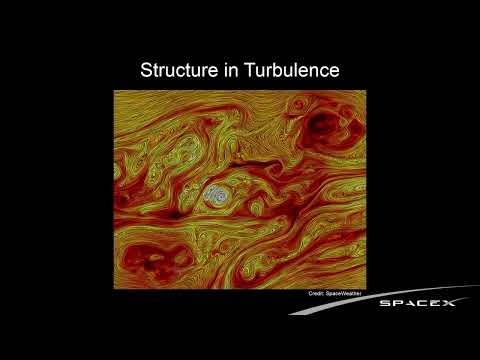
GPUs to Mars: Full-Scale Simulation of SpaceX's Mars Rocket Engine
126K views • 11 years ago
insideHPC Report
SpaceX engineers present at NVIDIA's GPU Technology Conference on a multi-physics code that simulates the full-scale Raptor methane engine. It covers GPU-based turbulent combustion modeling with adaptive grids and wavelet compression.
 54:35
"An approach to computing and sustainability inspired from permaculture" by Devine Lu Linvega
19K views • 3 years ago
Strange Loop Conference
Devine Lu Linvega of Hundred Rabbits talks about low-power, offline computing, esoteric languages and the Uxn virtual machine, informed by years of sailing the Pacific. The talk frames computing sustainability through a permaculture lens.
 27:13
Robust-first computing: Demon Horde Sort (full version)
14K views • 13 years ago
Dave Ackley
Dave Ackley demonstrates the Demon Horde Sort, an inherently robust sorting machine running in his Movable Feast Machine simulator. This is the uncut version with all details and side thoughts.
 25:23
The Computer Programme (1): It's Happening Now (Introduction to Computing)
84K views • 14 years ago
Jesús Zafra (Lobogris)
The first episode of the BBC's 1982 television series The Computer Programme, introducing home computing to a general audience. It surveys mainframes, early personal computers such as the BBC Micro and Commodore PET, and the changing computer market of the time.
 21:42
Future Computers Will Be Radically Different (Analog Computing)
13.2M views • 4 years ago
Veritasium
Veritasium explains why analog computing may suit AI workloads, covering old analog computers, The Analog Thing and Mythic's analog chips that use flash memory for neural network inference. It argues digital hardware is hitting limits.
 43:13
Erik Jansson - GPU driven Rendering with Mesh Shaders in Alan Wake 2
29K views • 2 years ago
Digital Dragons
A Remedy engineer explains how Alan Wake 2 moved to a GPU-driven rendering pipeline built on mesh shaders, culling and rendering meshlets for dense vegetation on PS5 and Xbox Series consoles.
 27:10
Growing Living Rat Neurons To Play... DOOM? | Part 1
4.5M views • 3 years ago
The Thought Emporium
The Thought Emporium grows living rat neurons on an electrode array and tries to train them to play Doom. It is part of a series on biological computing.
 48:13
RIP Windows: Linux GPU Gaming Benchmarks on Bazzite
1.1M views • 11 months ago
Gamers Nexus
Gamers Nexus benchmarks GPU gaming performance on Linux using the Bazzite OS, an exploratory first step toward establishing a Linux testing methodology. It compares results against Windows and notes where Linux still falls short.
 25:48
Ted Nelson struggles with uncomprehending radio interviewer, 1979
19K views • 9 years ago
TheTedNelson
A 1979 CBC radio interview in which Ted Nelson tries to explain how computers could serve as tools for thinking and visualizing. The interviewer keeps failing to grasp the idea, and Nelson patiently answers again and again.
 51:07
Alan Kay, 2015: Power of Simplicity
145K views • 11 years ago
Kenneth Friedman
Alan Kay's 2015 talk on the power of simplicity, arguing that systems become simpler by building on more sophisticated fundamental building blocks and that big research horizons drove invention at Xerox PARC. It ranges across computing, tools and scaling software.
 27:49
My old BBC Micro system
70K views • 9 years ago
mikeselectricstuff
Mike of mikeselectricstuff shows his heavily modified old BBC Micro system in a 28-minute tour of 8-bit hardware archaeology.
 49:48
2023 LLVM Dev Mtg - Mojo 🔥: A system programming language for heterogenous computing
61K views • 2 years ago
LLVM
A 2023 LLVM Developers' Meeting keynote by Abdul Dakkak, Chris Lattner and Jeff Niu introducing Mojo, a Python-family systems language built on MLIR and LLVM for heterogeneous computing.
 52:59
Introducing Nx - José Valim | Lambda Days 2021
26K views • 5 years ago
Code Sync
Jose Valim introduces Nx, the project bringing numerical computing to Elixir, covering multi-dimensional tensors, automatic differentiation and JIT compilation to CPU and GPU.
 46:56
IBM Computing Cheese Cutter [Restoration]
3.6M views • 5 years ago
Hand Tool Rescue
A 47-minute restoration of a 1920s IBM computing cheese cutter, a machine with parts patented between 1901 and 1907. The video covers the restoration work and explains why it is a computing cheese cutter.
 32:56
Bret Victor The Future of Programming
305K views • 13 years ago
Joey Reid
Bret Victor's DBX 2013 talk, delivered in the guise of a 1973 IBM engineer with an overhead projector. It surveys forgotten ideas from 1960s and early 70s computing and warns against assuming you know what you're doing.
 48:42
James Burke Connections, Ep. 4 "Faith in Numbers"
225K views • 7 years ago
DRS_Education
Episode 4 of James Burke's Connections series, tracing how commercialism, climate change and the Black Death shaped the move to the Renaissance. It follows threads through waterpower, the printing press, the Jacquard loom and the Hollerith punch card toward modern computing.
 20:13
The Most Powerful Computers You've Never Heard Of
13.7M views • 4 years ago
Veritasium
Veritasium traces analog computers from the Antikythera mechanism and Kelvin's tide-predicting machines to fire control and modern analog approaches. It explains how these machines computed continuously rather than digitally.
 43:57
Civilizations at the End of Time: Iron Stars
2.1M views • 9 years ago
Isaac Arthur
An Isaac Arthur episode on civilizations in the far future, past the Black Hole Era. It covers iron stars, Boltzmann brains, reversible computing and the idea of reversing entropy.
 49:36
Joe Armstrong - Keynote: The Forgotten Ideas in Computer Science - Code BEAM SF 2018
40K views • 8 years ago
Code Sync
Erlang co-creator Joe Armstrong's Code BEAM SF 2018 keynote revisits good ideas from the history of computing that were dropped, and asks which should be revived. It also touches on Erlang and Elixir.
 57:05
Keynote: Begin...End?
9K views • 5 years ago
David Beazley
David Beazley's PyData Global 2021 keynote, an oral history of early scientific Python. He tells how Python ended up running on a Connection Machine supercomputer at Los Alamos.
 29:51
Refterm v2 - Resource usage, binary splat, glyph sizing, and more
68K views • 5 years ago
Molly Rocket
Casey Muratori follows up his refterm proof-of-concept, a GPU-based terminal renderer, with a second part covering memory usage, glyph sizing and correct Unicode and VT handling. It is built to show that a terminal can be fast and correct without heroic effort.
 28:00
APL demonstration 1975
111K views • 13 years ago
Imperial College London
A 1975 live demonstration of the APL language by Imperial College professor Bob Spence, showing a REPL on a modified typewriter terminal and APL's appeal to non-programmers.
 40:05
"Uptime 15,364 days - The Computers of Voyager" by Aaron Cummings
349K views • 7 years ago
Strange Loop Conference
A Strange Loop 2019 talk by Aaron Cummings on the computing systems aboard Voyager 1 and 2, which control the spacecraft and record and return data decades after launch in 1977.
 47:57
Here I Stand, at Age 80
25K views • 9 years ago
TheTedNelson
Ted Nelson, the originator of hypertext and Project Xanadu, gives a personal account at age 80 of his ideals, his career, and how a poor career plan led to discoveries and adventures. It works as an alternative history of personal computing and hypertext.
 55:20
Makepad: Designing modern UIs with Rust - Rik Arends - RustNL 2023
60K views • 3 years ago
RustNL
Rik Arends presents Makepad, a Rust UI framework, at RustNL 2023. The talk covers designing modern, GPU-fast UIs with Rust and includes live-coded demos of an IDE and a synthesizer.
 37:45
He started a computing REVOLUTION—then the shortage hit
224K views • 3 years ago
Jeff Geerling
Jeff Geerling interviews Raspberry Pi co-founder Eben Upton about the Pi shortage, the RP2040, RISC-V, the Sony investment and the origin of the name.
 22:24
Lyle Bickley explains the PDP-1 (and we play the original Spacewar!)
431K views • 9 years ago
CuriousMarc
Lyle Bickley of the PDP-1 restoration team tours the 1959 DEC machine at the Computer History Museum and plays the original Spacewar! He covers its graphics display and the MIT student programs written for it.
 42:45
RustConf 2017 - Closing Keynote: Safe Systems Software and the Future of Computing by Joe Duffy
2K views • 9 years ago
Confreaks
Joe Duffy's RustConf 2017 closing keynote on his experience at Microsoft building Midori, an operating system written in a Rust-like safe systems language. He covers the technical and cultural challenges of applying those lessons to Windows.
 20:38
Alan Kay: A powerful idea about teaching ideas
51K views • 18 years ago
TED
Alan Kay's TED talk on teaching ideas, in which he argues the world is not what it seems and shows children learning through programming and building their own lessons with Etoys/Squeak.
 23:41
The IBM 1401 compiles and runs FORTRAN II
1.4M views • 8 years ago
CuriousMarc
CuriousMarc and colleagues at the Computer History Museum try to compile and run a FORTRAN II program on a 1959 IBM 1401. The machine has only 16k of memory and a CPU not meant for scientific work, so success is far from guaranteed.
 20:11
Apple Vision Pro Impressions!
18.2M views • 3 years ago
Marques Brownlee
Marques Brownlee shares his hands-on impressions of Apple's $3500 Vision Pro headset after trying it. He covers the spatial computing experience, eye tracking, and how it compares to other devices.
 23:32
Industrial Strength High Performance RISC V Processors For Energy Efficient Computing
8K views • 8 years ago
RISC-V International
David Ditzel of Esperanto Technologies presents their massively parallel, energy-efficient RISC-V processors at the 7th RISC-V Workshop in 2017. It covers the high-performance many-core design aimed at machine learning.
 56:54
Change w/ Jim Keller
61K views • 3 years ago
Tenstorrent
Jim Keller, CTO of Tenstorrent, gives a keynote at Stanford's System X conference on change, understanding and the future of computing. He touches on Moore's Law, how far transistors are from physical limits, and ideas like DNA origami.
 59:20
Rendering Tiny Glades With Entirely Too Much Ray Marching
108K views • 1 year ago
Graphics Programming Conference
A Graphics Programming Conference talk on how the game Tiny Glade renders meadows, trees and player-built castles. It covers real-time global illumination, tilt-shift depth of field, stable shadows with continuous time of day, ray marching and GPU-driven rendering on old hardware.
 50:06
Protected KVM on Arm64: A Technical Deep Dive - Quentin Perret, Google
6K views • 4 years ago
The Linux Foundation
Quentin Perret of Google gives a technical deep dive into protected KVM (pKVM) on Arm64, a confidential computing approach for CPUs without hardware extensions. It explains how the nVHE hypervisor manages stage-2 MMU access control to protect guest memory.
 26:47
The Computer Chronicles - The Internet (1993)
544K views • 13 years ago
The Computer Chronicles
A 1993 episode of The Computer Chronicles on the early Internet, with guests including Howard Rheingold discussing online community. It is a window into how the internet was seen and what hardware was in use at the time.
 37:43
Doom The Way it Was Meant to Be Played - v1.1 Multi-monitor
1.2M views • 3 years ago
Tech Tangents
Tech Tangents sets up original Doom's three-screen multi-monitor mode, which required a separate networked computer for each monitor. The video covers the hardware and setup work and the result.
 41:53
Mechanical Computer (All Parts) - Basic Mechanisms In Fire Control Computers
483K views • 15 years ago
Excelsior10000
A 1953 US Navy training film explaining the basic mechanisms in mechanical fire control computers aboard ships. It shows how gears, differentials and cams solved mathematical problems in permanent mechanical form.
 42:43
"Propositions as Types" by Philip Wadler
143K views • 11 years ago
Strange Loop Conference
Philip Wadler's Strange Loop talk on Propositions as Types, the link between logic and computation (the Curry-Howard correspondence). He traces its history through Church, Godel and Turing and shows how it shaped theorem provers and programming languages.