ground effect
 16:30
"NO CGI" is really just INVISIBLE CGI - 1
1.5M views • 3 years ago
The Movie Rabbit Hole
VFX supervisor Jonas Ussing examines what studios mean by "no CGI", showing how much invisible CGI hides behind practical-effects marketing. It is the first part of a multi-part series that includes analysis of doctored behind-the-scenes footage.
 28:04
Ground Source / Geothermal Heat Pumps and Other Info
1.2M views • 5 years ago
Technology Connections
A Technology Connections video on how ground-source (geothermal) heat pumps work and why they hold efficiency in winter. It also covers related heat pump information, and the description notes air-source heat pumps have since improved.
 19:07
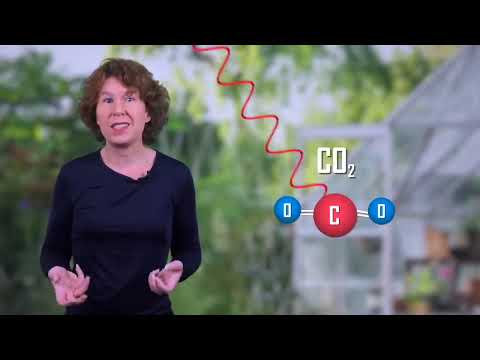
I Misunderstood the Greenhouse Effect. Here's How It Works.
989K views • 3 years ago
Sabine Hossenfelder
Sabine Hossenfelder explains how the greenhouse effect actually works, given that infrared is mostly absorbed low in the atmosphere already. She walks through why more CO2 still warms the surface.
 10:15
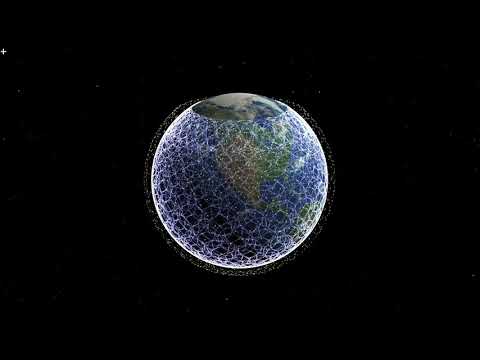
Using ground relays with Starlink
506K views • 6 years ago
Mark Handley
Mark Handley of UCL explains, with simulation visualizations, how early Starlink satellites without inter-satellite links could still give low-latency wide-area communication by hopping via ground relays. He shows it can beat fibre on many long paths.
 10:45
Back to the Future | VFXcool (1/2)
2.2M views • 9 years ago
Captain Disillusion
Captain Disillusion explains the visual effects behind the Back to the Future trilogy. He covers ILM's motion-control, computer-controlled camera work and clever pre-CGI tricks.
 9:33
Avoiding Negative Side Effects: Concrete Problems in AI Safety part 1
161K views • 9 years ago
Robert Miles AI Safety
Robert Miles introduces the first of several videos on the paper 'Concrete Problems in AI Safety', focusing on how AI systems can cause accidental negative side effects. It explains the problem in accessible terms.
 3:54
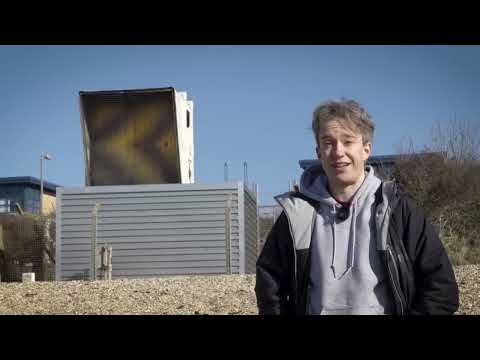
The moiré effect lights that guide ships home
3.1M views • 8 years ago
Tom Scott
Tom Scott investigates moire-effect beacons, called Inogon leading marks, a Swedish invention from the 1980s that shows different patterns depending on the viewer's position. He visits one used to mark an undersea cable and tracks down its history.
 2:28
Lies on the London Underground
4.6M views • 13 years ago
Tom Scott
Tom Scott and Matt Parker investigate some of the small deceptions and oddities of the London Underground, such as misleading signage and map distortions.
 13:54
All Tube Stations Have Fifteen Floors
1.2M views • 8 years ago
Geoff Marshall
Geoff Marshall explains a running gag about London Underground stair signs claiming that the climb equals 15 floors, regardless of how many steps there actually are.
 22:40
This 30-Year-Old Terminator VFX BLEW OUR MINDS!
10.6M views • 5 years ago
Corridor Crew
Corridor Crew dive into the visual effects of Terminator 2 and try recreating the T-1000 bars scene with modern tools. They explain how the original effects were achieved.
 7:38
Does Hot Water Freeze Faster Than Cold Water?
5M views • 9 years ago
Sciencium
Sciencium examines the Mpemba effect, the claim that hot water freezes faster than cold water. It walks through experiments and a published paper questioning the effect.
 4:27
The Voting System That Should Replace Every Election
4.7M views • 15 years ago
CGP Grey
A short CGP Grey explainer on the alternative vote (instant runoff voting) versus first past the post, made around the 2011 UK referendum. It shows how ranked ballots are tallied and why they avoid spoiler effects.
 11:22
Most People Don't Know How Bikes Work
24.9M views • 4 years ago
Veritasium
Veritasium explains why bicycles are stable, arguing that gyroscopic effects are not the answer. The video shows countersteering and an experiment where riders blocked from steering the opposite way cannot turn.
 3:35
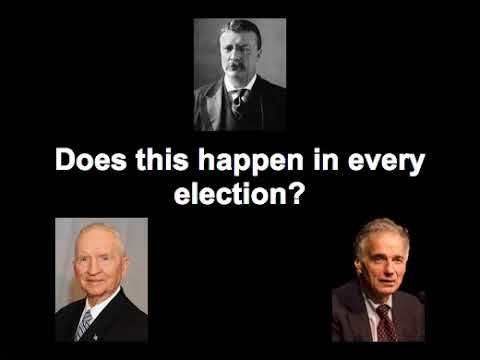
How our voting system (and IRV) betrays your favourite candidate
35K views • 12 years ago
The Center for Election Science
The Center for Election Science explains favorite betrayal in instant-runoff voting: in some elections, ranking your favorite first can cause your least favorite to win. It contrasts this with plurality voting's spoiler problem.
 8:04
Khan Academy and the Effectiveness of Science Videos
1.7M views • 15 years ago
Veritasium
Veritasium examines research suggesting science explainer videos like Khan Academy's make students feel they understand while tests show they have not learned, because misconceptions go unaddressed. It suggests how to partly fix this.
 5:31
The hidden background noise that can catch criminals
5.8M views • 4 years ago
Tom Scott
Tom Scott explains Electrical Network Frequency analysis, where hum from the power grid in a recording is matched against grid logs to date and place it. He talks to a researcher and sets them a challenge.
 15:27
Can The Human Body Handle Rotating Artificial Gravity?
3M views • 5 years ago
Scott Manley
Scott Manley surveys the research on whether people can adapt to rotating artificial gravity, from early Soviet centrifuge tests to modern studies. He concludes it is an engineering problem and discusses Coriolis effects and station radius.
 19:19
Was Penrose Right? NEW EVIDENCE For Quantum Effects In The Brain
1.1M views • 2 years ago
PBS Space Time
PBS Space Time examines Roger Penrose's idea that consciousness arises from quantum processes in the brain, and reviews new evidence about microtubules. It ends with an estimate of what replicating consciousness would demand.
 14:49
The Bizarre Behavior of Rotating Bodies
14M views • 7 years ago
Veritasium
Veritasium explains the Dzhanibekov effect, also called the tennis racket theorem, where a spinning object flips unexpectedly about its intermediate axis. The video gives an intuitive account of the underlying rotational dynamics, drawing on Terry Tao's explanation and the original papers.
 10:44
P vs. NP and the Computational Complexity Zoo
3.7M views • 12 years ago
hackerdashery
An 11-minute animated introduction to P vs. NP and the wider landscape of complexity classes, inspired by the Complexity Zoo wiki. It assumes no background in computer science.
 13:36
Chinese Invisibility Cloak Hoax DESTROYED!!!
6.8M views • 8 years ago
Captain Disillusion
Captain Disillusion debunks a viral Chinese invisibility cloak video while parodying popular educational channels. Along the way he explains chroma keying and green screen techniques.
 7:00
CD / Color
2.9M views • 6 years ago
Captain Disillusion
Captain Disillusion's comedic, fast-paced explainer on how color works in cameras, displays and video. It covers the biology of color perception and what it means for screens.
 13:09
Moon Landings Faked? Filmmaker Says Not!
1.4M views • 13 years ago
VideoFromSpace
A filmmaker explains why the Apollo moon landing footage could not have been faked in a studio, based on the video and film technology of the late 1960s. He walks through the limits of cameras, frame rates and effects of the era.
 3:57
How Do Bikes Stay Up?
1.7M views • 11 years ago
minutephysics
A short minutephysics video explaining why bicycles stay upright. It looks at gyroscopic precession, head angle and centre of mass, and shows that bikes self-steer toward the direction they lean.
 6:18
The artificial gravity lab
7.2M views • 7 years ago
Tom Scott
Tom Scott tours the rotating room artificial gravity facility at Brandeis University's Graybiel lab. It shows how humans cope with rotation-based gravity and the odd effects such as Coriolis forces.
 12:46
The Speed of Light is NOT About Light
7.1M views • 11 years ago
PBS Space Time
PBS Space Time argues that the speed of light is better understood as the speed of causality, the universal limit on how fast cause and effect propagate. Light travels at that speed because it is massless, but the limit itself is a property of spacetime.
 35:07
These Stupid Trucks are Literally Killing Us
7.3M views • 3 years ago
Not Just Bikes
Not Just Bikes explains how SUVs and light trucks have grown in size and share of US sales, and why that is dangerous for pedestrians, cyclists and city life. He covers the regulatory loopholes, such as fuel economy rules and the chicken tax, that favored them.
 12:50
Fasting vs. Eating Less: What's the Difference? (Science of Fasting)
13.2M views • 9 years ago
Joseph Everett - WIL
A short explainer on the physiological differences between fasting and simply eating less. It covers ketosis, ghrelin and hunger waves, and the hormonal effects of fasting.
 28:34
But why would light "slow down"? | Visualizing Feynman's lecture on the refractive index
2.9M views • 2 years ago
3Blue1Brown
3Blue1Brown visualizes Feynman's lecture on the refractive index, explaining why light appears to slow down in glass and why the effect depends on color. It builds the idea from waves produced by oscillating charges in the material.
 17:34
What Everyone Gets Wrong About Gravity
15.6M views • 6 years ago
Veritasium
Veritasium explains, with expert input, that in general relativity gravity is not a force and objects follow straight paths through curved spacetime, including why standing on the ground means you are accelerating.
 10:16
Suburbia is Subsidized: Here's the Math [ST07]
1.5M views • 4 years ago
Not Just Bikes
Not Just Bikes explains, using Urban3's property-tax analysis, why car-dependent suburbs generate less tax revenue than they cost to maintain, so dense urban cores effectively subsidize them. It is part of a Strong Towns series.
 29:05
Datacenters Behaving Like Acoustic Weapons
1.8M views • 8 months ago
Benn Jordan
Benn Jordan investigates infrasound and low-frequency noise from data centers, including xAI's Colossus and a crypto mine, and reports his own experiments on the effects. The video covers the health and community impacts on nearby residents.
 27:07
Attention Is All You Need
814K views • 8 years ago
Yannic Kilcher
Yannic Kilcher walks through the Attention Is All You Need paper, which introduced the Transformer, a sequence model based solely on attention without recurrence or convolutions. He reviews the architecture and the paper's translation results.
 34:32
Colonizing Mars
819K views • 9 years ago
Isaac Arthur
Isaac Arthur's in-depth look at what it would take to settle and eventually terraform Mars. He covers the challenges and the scale of the work needed to make it a home for humanity.
 9:06
Vancouver Never Plays Itself
2.2M views • 11 years ago
Every Frame a Painting
A video essay from Every Frame a Painting about Vancouver, a major film production city that almost never appears onscreen as itself. It shows clips of films and TV shot there that pass the city off as somewhere else.
 4:38
The Only Safe Phone Is One Even the Police Can't Unlock
4.1M views • 10 years ago
CGP Grey
A five-minute CGP Grey explainer arguing that a phone is effectively an extension of your mind, and that any backdoor or master key into encrypted devices will inevitably be abused or leaked. It frames the encryption debate as locks that are either unbreakable or absent.
 8:00
Edgar Wright - How to Do Visual Comedy
11.4M views • 12 years ago
Every Frame a Painting
An Every Frame a Painting video essay analysing how Edgar Wright creates visual comedy through framing, camera movement, editing, sound effects and music.
 17:58
What P vs NP is actually about
253K views • 2 years ago
Polylog
Polylog explains how algorithms can be turned into circuits and encoded as satisfiability problems, which lets you effectively run them backwards. It uses this to motivate breaking RSA, general reductions to SAT, and what P vs NP is really asking.
 12:24
Am I still lactose tolerant? - Lactose Gene Therapy Update
765K views • 6 years ago
The Thought Emporium
The Thought Emporium's update on the home-brewed gene therapy he took to cure his lactose intolerance. It reports how the effect held up over two years and what future versions might look like.
 25:21
Old car headlights were all the same — which was a fairly bright idea
2.5M views • 4 years ago
Technology Connections
Technology Connections explains why American cars all had the same standardized sealed-beam headlights until 1957. It covers the regulations behind the design and the effect on night visibility.