language
 1:42:47
23. Language
1.2M views • 15 years ago
Stanford
Robert Sapolsky's Stanford lecture on language, comparing human and animal communication, ape language projects like Koko and Kanzi, and how language is acquired. It is part of his human behavioral biology course.
 1:00:06
Computer Science - Brian Kernighan on successful language design
332K views • 10 years ago
University of Nottingham
Brian Kernighan gives a talk at the University of Nottingham on how to succeed in language design without really trying. He draws on his experience with awk and other languages.
 15:25
Stephen Krashen on Language Acquisition
1.5M views • 16 years ago
Mark Rounds
A 15-minute clip of linguist Stephen Krashen discussing language acquisition, drawn from the 1980s. It presents his input hypothesis and the distinction between acquisition and learning.
 15:26
Stephen Krashen: Language Acquisition and Comprehensible Input
186K views • 10 years ago
Tarek Hamza
A lecture from the 1980s by linguist Stephen Krashen on how people acquire language. He explains his comprehensible input hypothesis for second-language acquisition.
 1:14:32
Building Your Own Dynamic Language
21K views • 18 years ago
Stanford
Ian Piumarta's 2007 Stanford EE380 lecture on building a dynamic programming environment from the ground up, from the Viewpoints Research Institute's work. It covers the design of a language and system with a recursive design, parsing through code generation, and the COLA architecture.
 10:54
RSA ANIMATE: Language as a Window into Human Nature
1.6M views • 15 years ago
Royal Society of Arts
An RSA Animate in which Steven Pinker explains how the mind builds infinite meanings from finite language, and why people often speak indirectly. It covers ambiguity, politeness and mutual knowledge, including the emperor's new clothes example.
 1:11:41
Lecture 1 | Natural Language Processing with Deep Learning
820K views • 9 years ago
Stanford University School of Engineering
The first lecture of Stanford's Natural Language Processing with Deep Learning course, taught by Chris Manning and Richard Socher. It introduces NLP and word vectors, including SVD, skip-gram, CBOW, negative sampling and word2vec.
 1:42:09
Crockford on JavaScript - Volume 1: The Early Years
252K views • 15 years ago
YUI Library
Douglas Crockford's first Yahoo lecture puts JavaScript in historical context. He traces the language's structure and quirks back through the early decades of computer science and programming language history.
Topic match · Programming language design 58:58
George Lakoff: Moral Politics
201K views • 18 years ago
University of California Television (UCTV)
Cognitive scientist George Lakoff lectures on how political debates are framed through language and metaphors tied to values, and on the moral worldviews behind progressive and conservative politics. It was given in 2005 at UC San Diego.
Topic match · Language & linguistics 1:04:16
Simon Peyton-Jones: Escape from the ivory tower: the Haskell journey
170K views • 9 years ago
Churchill College, University of Cambridge
Simon Peyton Jones gives Churchill College's annual computer science lecture on Haskell's birth and evolution. He covers the most influential ideas, from laziness to monads and type system evolution, plus current developments and guesses about the future.
Topic match · Programming language design 51:32
Great Impractical Ideas in Computer Science: PowerPoint Programming
2.2M views • 7 years ago
Tom Wildenhain
Tom Wildenhain's guest lecture for CMU's Esoteric Programming Languages course shows that PowerPoint transitions and slides are Turing complete without macros, building up to a mind-bending fractal ending.
Topic match · Programming language design 47:15
Will AI outsmart human intelligence? - with 'Godfather of AI' Geoffrey Hinton
878K views • 1 year ago
The Royal Institution
Geoffrey Hinton's 2025 Royal Institution Discourse on what AI has learned from biological intelligence and how it might surpass it. He explains neural networks and argues that human language use resembles what backpropagation-trained networks do.
Topic match · LLMs & generative AI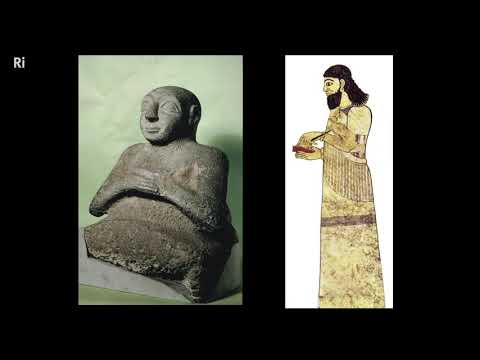 38:55
Cracking Ancient Codes: Cuneiform Writing - with Irving Finkel
2.8M views • 7 years ago
The Royal Institution
Irving Finkel of the British Museum lectures at the Royal Institution on the invention and decipherment of cuneiform writing in Mesopotamia, and why it is so hard to translate.
Topic match · Language & linguistics 34:10
Anders Hejlsberg on Modern Compiler Construction
25K views • 9 years ago
Kasper
Anders Hejlsberg whiteboards how compilers are taught versus how modern ones are actually built. He explains the shift to compilers as services with incremental, error-tolerant, IDE-oriented design, as in Roslyn and TypeScript.
Topic match · Compilers, interpreters & program analysis 1:02:57
Peter Norvig - The Unreasonable Effectiveness of Data
74K views • 15 years ago
UBC Computer Science
Peter Norvig's UBC distinguished lecture on how massive amounts of simple data, such as for language modeling, can yield understanding that hand-built models could not.
Topic match · Computer vision, speech & NLP 56:27
In Search of Tomorrow
18K views • 10 years ago
Berkeley Institute for Data Science (BIDS)
Chris Granger, creator of Light Table and the Eve language, gives a Berkeley data science lecture on what computation and programming might look like in ten years. He covers the path that led to Eve and ends with demos.
Topic match · Programming language design 1:33:37
Adventure with Types in Haskell - Simon Peyton Jones (Lecture 1)
69K views • 12 years ago
jasonofthel33t
Simon Peyton Jones's first lecture on types in Haskell from the Oregon Programming Languages Summer School 2013. It covers type classes and how they relate to OOP, subtyping and polymorphism.
Topic match · Programming language design 3:31:24
Deep Dive into LLMs like ChatGPT
10.2M views • 1 year ago
Andrej Karpathy
Andrej Karpathy's three-hour-plus general-audience deep dive into how ChatGPT-style LLMs are built, covering the full training stack from pretraining to post-training. It also gives mental models for their quirks, like hallucination, and how to use them well.
Topic match · LLMs & generative AI 2:25:52
The spelled-out intro to neural networks and backpropagation: building micrograd
4.4M views • 4 years ago
Andrej Karpathy
Andrej Karpathy's first Neural Networks: Zero to Hero lecture, which builds micrograd, a tiny autograd engine, from scratch in Python. It explains backpropagation and neural network training step by step, assuming only basic Python and some high-school calculus.
Topic match · Python, Ruby & scripting languages 1:12:56
Lecture 1A | MIT 6.001 Structure and Interpretation, 1986
995K views • 17 years ago
MIT OpenCourseWare
The first lecture of MIT's 1986 6.001 Structure and Interpretation of Computer Programs, given by Harold Abelson, introducing Lisp and the idea of computer science as the study of process.
Topic match · Programming language design 58:19
Irving Finkel | The Ark Before Noah: A Great Adventure
5.1M views • 10 years ago
The Institute for the Study of Ancient Cultures
Irving Finkel of the British Museum tells how a 4,000-year-old cuneiform tablet came to him for examination. It revealed the oldest known account of Noah's Ark and led to a book and a documentary.
Topic match · Language & linguistics 1:45:38
The Unanswered Question 1973 1 Musical Phonology Bernstein Norton
742K views • 12 years ago
cagin
Leonard Bernstein's 1973 Norton Lectures at Harvard, starting with Musical Phonology. He draws analogies between music and linguistics, including references to Chomsky.
Topic match · Language & linguistics 4:13:49
Jorge Luis Borges: This Craft of Verse Lectures - thepostarchive
159K views • 9 years ago
thepostarchive
The six Norton Lectures Jorge Luis Borges gave in 1967-68, titled This Craft of Verse, on topics including the riddle of poetry, metaphor, storytelling, translation and a poet's creed. The recording runs over four hours.
Topic match · Language & linguistics 17:26
Lecture 1 | Programming Paradigms (Stanford)
1.2M views • 18 years ago
Stanford
The first lecture of Stanford's CS107 Programming Paradigms, taught by Jerry Cain, giving an overview of the course. The course goes from C and assembly through C++, concurrency, Scheme and Python.
Topic match · Programming language design 1:09:24
Effective ML
30K views • 10 years ago
Jane Street
Yaron Minsky of Jane Street gave this talk to Harvard's OCaml-based CS51 class in 2010. It collects advice on being an effective ML programmer in an industrial setting.
Topic match · Programming language design 49:47
Lecture 1 | Programming Methodology (Stanford)
2.6M views • 18 years ago
Stanford
First lecture of Stanford's CS106A Programming Methodology by Mehran Sahami, giving a course overview and starting on programming. The course teaches software engineering principles using Java.
Topic match · Python, Ruby & scripting languages 52:54
Rust at speed — building a fast concurrent database
225K views • 7 years ago
Jon Gjengset
A guest lecture Jon Gjengset gave at Two Sigma on using Rust for large, high-performance systems. It covers why Rust suits such projects, the Noria research database, a concurrent data structure used in it, and practical experience.
Topic match · C, C++, Rust, Go & systems languages 1:00:34
1. Introduction, Finite Automata, Regular Expressions
626K views • 5 years ago
MIT OpenCourseWare
The first lecture of Michael Sipser's MIT 18.404J Theory of Computation course, covering course mechanics, finite automata, regular languages and regular expressions. It proves closure of regular languages under union and begins concatenation.
 2:13:35
Let's build the GPT Tokenizer
1.3M views • 2 years ago
Andrej Karpathy
Andrej Karpathy builds the GPT tokenizer from scratch, implementing byte pair encoding along with encode and decode. He shows how many odd LLM behaviors trace back to tokenization, and covers Unicode byte encodings along the way.
Topic match · LLMs & generative AI 48:32
Sparks of AGI: early experiments with GPT-4
1.8M views • 3 years ago
Sebastien Bubeck
Sebastien Bubeck presents the Sparks of AGI paper at MIT, showing early experiments with GPT-4 across many domains and asking whether artificial intelligence has arrived. It includes the TikZ unicorn example.
Topic match · LLMs & generative AI 28:48
LSTM is dead. Long Live Transformers!
540K views • 6 years ago
Seattle Applied Deep Learning
Leo Dirac explains how transformer models have replaced LSTMs in NLP. He gives background from bag of words through RNNs and LSTMs, then a technical deep dive into multi-headed self-attention and positional encoding, with sample code.
Topic match · LLMs & generative AI 39:43
Do we need Attention? - Linear RNNs and State Space Models (SSMs) for NLP
35K views • 3 years ago
Sasha Rush
Sasha Rush surveys linear RNNs and state space models as replacements for attention in transformer-style models, in a talk for MLSys. It covers the foundational preliminaries and predates Mamba.
Topic match · LLMs & generative AI 1:22:38
CS480/680 Lecture 19: Attention and Transformer Networks
374K views • 7 years ago
Pascal Poupart
A university lecture from CS480/680 by Pascal Poupart on attention mechanisms and transformer networks, worked through on a chalkboard.
Topic match · LLMs & generative AI 1:11:36
Geoffrey Hinton talk "What is wrong with convolutional neural nets ?"
200K views • 9 years ago
trwappers
Geoffrey Hinton gives an MIT talk on what is wrong with convolutional neural networks and introduces his capsules project. The description points to the capsule network papers.
Topic match · Computer vision, speech & NLP 57:57
Lecture 1 | Introduction to Convolutional Neural Networks for Visual Recognition
2.9M views • 9 years ago
Stanford University School of Engineering
The first lecture of Stanford's CS231n course on convolutional neural networks for visual recognition. It surveys the history and key challenges of computer vision, from the Cambrian explosion and Hubel and Wiesel to ImageNet.
Topic match · Computer vision, speech & NLP 1:24:38
Lecture 7A: Metacircular Evaluator, Part 1
32K views • 7 years ago
MIT OpenCourseWare
Lecture 7A from MIT 6.001 (SICP) by Abelson and Sussman introduces the metacircular evaluator, a Scheme interpreter written in Scheme. It shows how evaluating a program is itself a program.
Topic match · Compilers, interpreters & program analysis 58:22
Lecture 1B | MIT 6.001 Structure and Interpretation, 1986
116K views • 17 years ago
MIT OpenCourseWare
Lecture 1B of MIT's 6.001 Structure and Interpretation of Computer Programs (1986) with Gerald Sussman, covering procedures, processes and the substitution model. It includes the line about the power of naming things.
Topic match · Compilers, interpreters & program analysis 2:02:18
The Mill CPU Architecture – The Compiler (10 of 13)
12K views • 11 years ago
Mill Computing, Inc.
A long Mill Computing lecture on the Mill CPU's compiler toolchain, covering the specializer that targets family members, scheduling and latency passes, and the belt. It explains how the compiler handles a wide-issue, exposed-pipeline design.
Topic match · Compilers, interpreters & program analysis 1:24:38
Lecture 7A | MIT 6.001 Structure and Interpretation, 1986
35K views • 17 years ago
MIT OpenCourseWare
Lecture 7A of the 1986 MIT 6.001 SICP course, with Gerald Sussman presenting the metacircular evaluator, part 1. It shows how a Lisp evaluator can be written in Lisp itself.
Topic match · Compilers, interpreters & program analysis 1:15:47
Richard Feynman Computer Science Lecture - Hardware, Software and Heuristics
978K views • 14 years ago
Muon Ray
A lecture by Richard Feynman on how computers work, using the analogy of a filing clerk that becomes progressively dumber and faster. It also covers heuristics and how computers handle data and solve problems in finite time.