learning math
 11:06
The Map of Mathematics
16.3M views • 9 years ago
Domain of Science
An animated 11-minute tour of the whole field of mathematics as a single map, showing how pure and applied math and their sub-fields relate to each other.
 10:20
Feynman: 'Greek' versus 'Babylonian' mathematics
377K views • 14 years ago
TehPhysicalist
A clip of Richard Feynman contrasting the Greek and Babylonian traditions of mathematical reasoning. It compares the axiomatic approach of mathematicians with how physicists use mathematics.
 18:40
But what is a neural network? | Deep learning chapter 1
25.1M views • 9 years ago
3Blue1Brown
3Blue1Brown's first chapter on deep learning explains what neurons and layers are and the math underlying a basic neural network, using handwritten digit recognition with visual animations.
 6:53
Hello World - Machine Learning Recipes #1
2.7M views • 10 years ago
Google for Developers
The first episode of Google's Machine Learning Recipes series. It introduces machine learning and builds a first supervised-learning classifier in about six lines of Python using scikit-learn.
 12:47
Backpropagation, intuitively | Deep Learning Chapter 3
6.4M views • 9 years ago
3Blue1Brown
3Blue1Brown's third deep learning chapter gives a visual, intuitive account of backpropagation and what happens to a neural network as it learns. A follow-up video covers the underlying calculus.
 13:30
Stealing Baseball Signs with a Phone (Machine Learning)
30M views • 7 years ago
Mark Rober
Mark Rober and Jabril build an app that uses machine learning to decode baseball sign sequences. The video also explains neural networks in a simple, accessible way.
 19:20
Conrad Wolfram: Teaching kids real math with computers
363K views • 15 years ago
TED
Conrad Wolfram argues that the part of math taught in schools, hand calculation, is tedious and mostly irrelevant to real mathematics. He proposes teaching math through computer programming so students can tackle real problems.
 9:47
Feynman: Mathematicians versus Physicists
882K views • 14 years ago
TehPhysicalist
A ten-minute clip of Richard Feynman describing how mathematicians and physicists differ in their interests and customs. He argues physics rests on visualizing and applying math rather than pure abstraction.
 11:52
Gregory Chaitin - Is Mathematics Invented or Discovered?
54K views • 7 years ago
Closer To Truth
Gregory Chaitin is interviewed on Closer To Truth about whether mathematics is invented or discovered. He gives a nuanced view that ties the question to the nature of reality.
 4:23
Tom Lehrer - New Math (Animated)
2.4M views • 16 years ago
Jared Khan
An amateur animation of Tom Lehrer's satirical song New Math, which pokes fun at 1960s math teaching and subtraction in base 8. The animation illustrates the old and new subtraction methods.
 13:37
Times Tables, Mandelbrot and the Heart of Mathematics
2.8M views • 11 years ago
Mathologer
Mathologer shows how times table diagrams on a circle produce cardioids and other curves connected to the Mandelbrot set. He explains the patterns and links to a tool for making your own diagrams.
 13:59
MENACE: the pile of matchboxes which can learn
453K views • 8 years ago
Stand-up Maths
Matt Parker of Stand-up Maths demonstrates MENACE, Donald Michie's 1961 machine made of matchboxes that learns to play noughts and crosses through reinforcement. He builds and trains a physical version.
 14:27
The Biggest Myth In Education
15.5M views • 5 years ago
Veritasium
Veritasium debunks the idea of learning styles, such as being a visual learner, with an interview with Daniel Willingham and a memory experiment. It argues that a multimodal approach helps everyone.
 15:08
What does it feel like to invent math?
4.6M views • 11 years ago
3Blue1Brown
3Blue1Brown explores infinite sums from convergent to divergent, with an introduction to the 2-adic metric, themed on the cycle between discovering and inventing mathematics.
 18:27
How to learn any language in six months | Chris Lonsdale | TEDxLingnanUniversity
37.8M views • 12 years ago
TEDx Talks
Chris Lonsdale presents a TEDx talk on how adults can learn a language in about six months, centering on immersion, comprehensible input and a practical learning methodology.
 18:18
Hilbert's Curve: Is infinite math useful?
2.4M views • 9 years ago
3Blue1Brown
3Blue1Brown explains space-filling curves and the Hilbert curve, and how infinite mathematical constructions connect to finite, practical approximations. It touches on mapping between dimensions and sensory ideas.
 4:41
Deepmind artificial intelligence @ FDOT14
288K views • 12 years ago
Elizr
A short smartphone-recorded clip from a 2014 event in Paris where DeepMind CEO Demis Hassabis presents an AI learning to play old Atari games. The system learns from only the video signal and the score. Audio quality is poor.
 19:31
Math Magic
14M views • 10 years ago
Vsauce
Vsauce explores math through card tricks and big numbers, including an animation of how enormous 52 factorial, the number of deck orderings, really is.
 10:14
Making a heart with Maths
112K views • 9 years ago
Inigo Quilez
Inigo Quilez shows step by step how to build a simple heart shape from mathematics and shaders, with code on Shadertoy. It is an introduction to procedural graphics and signed distance functions.
 17:01
The mathematics of love | Hannah Fry
2M views • 11 years ago
TED
Mathematician Hannah Fry's TED talk on patterns in dating and mate-seeking, including optimal stopping and three math-backed tips for finding a partner.
 13:10
Venture Capital - Silicon Valley Ponzi Scheme - Chamath Palihapitiya
309K views • 6 years ago
MAK - Mudassir Akber Khan
A 13-minute clip from This Week in Startups in which Chamath Palihapitiya describes venture capital as a Ponzi-like scheme driven by fees and inflated valuations among VCs.
 19:33
I can't ride a bike. How fast can Mike Boyd teach me?
3M views • 4 years ago
Tom Scott plus
Tom Scott, who never learned to ride a bike, gets lessons from Mike Boyd, a YouTuber known for learning skills quickly. The video follows an adult's attempt to learn cycling in a short time.
 12:49
Why do people keep getting this wrong‽
2M views • 6 years ago
Stand-up Maths
Matt Parker of Stand-up Maths explains why people keep making the same mistake with millions and billions, using a Bloomberg cash calculator example. He looks at the unit slip behind the repeated arithmetic error.
 11:39
The Unbeatable Game from the 60s: Dr NIM
7.2M views • 10 years ago
Stand-up Maths
Matt Parker of Stand-up Maths explains single-pile Nim and the trick that wins it, using Dr NIM, a 1960s mechanical plastic computer that plays perfectly. He teaches the strategy so viewers can beat friends.
 19:55
Why was Biden's win calculated to be ONE IN A QUADRILLION?
1.3M views • 5 years ago
Stand-up Maths
Matt Parker of Stand-up Maths examines the Texas Supreme Court filing claiming Biden's 2020 win had a one-in-a-quadrillion chance. He walks through why the statistical argument is flawed.
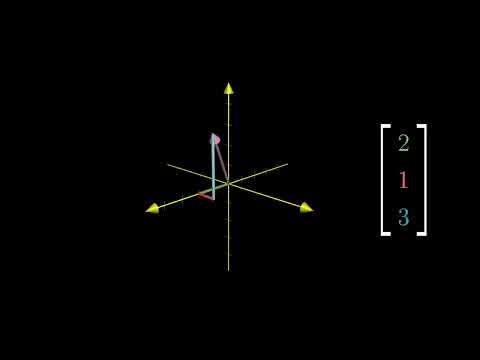 9:52
Vectors | Chapter 1, Essence of linear algebra
13M views • 10 years ago
3Blue1Brown
The first chapter of 3Blue1Brown's Essence of Linear Algebra series, introducing vectors with animated geometric visuals. It begins a series that builds intuition for linear algebra from the basics.
 5:58
MarI/O - Machine Learning for Video Games
11.5M views • 11 years ago
SethBling
SethBling shows MarI/O, a program using neural networks and the NEAT genetic algorithm to learn to play Super Mario World. The description links the source code, the paper and background reading.
 11:15
The hardest problem on the hardest test
16.5M views • 8 years ago
3Blue1Brown
3Blue1Brown walks through a very hard Putnam competition problem and its elegant solution, emphasizing the visual intuition and the thought process behind solving it.
 7:58
The Backwards Brain Bicycle - Smarter Every Day 133
31.6M views • 11 years ago
SmarterEveryDay
Destin of Smarter Every Day learns to ride a bicycle whose steering is reversed, taking about eight months, and compares it with how his young son learned much faster. It illustrates knowledge versus understanding and brain plasticity in adults versus children.
 10:50
Let's teach for mastery -- not test scores | Sal Khan
2.3M views • 10 years ago
TED
Sal Khan of Khan Academy argues that schools push students forward with gaps in their foundations, and that students should instead master concepts at their own pace. He compares it to building a house on an unfinished foundation.
 9:45
Hovering a Helicopter is Hilariously Hard - Smarter Every Day 145
6.9M views • 10 years ago
SmarterEveryDay
Smarter Every Day host Destin Sandlin tries to hover a helicopter and finds it very hard. The video shows how the constant coordinated corrections across several control axes feel at first and how learning makes them automatic.
 10:18
Backpropagation calculus | Deep Learning Chapter 4
4M views • 9 years ago
3Blue1Brown
3Blue1Brown's chapter 4 on deep learning gives a more formal, symbol-based account of backpropagation calculus, connecting the intuition from the previous chapter to the math found in textbooks and code.
 13:29
Infinite fractions and the most irrational number
658K views • 10 years ago
Mathologer
Mathologer uses continued fractions to show why the golden ratio is the most irrational number, comparing it with root 2, e and pi and pointing to where this shows up in nature.
 17:51
Does "land area" assume a country is perfectly flat?
859K views • 6 years ago
Stand-up Maths
Matt Parker of Stand-up Maths asks whether a country's reported land area accounts for hills and mountains, working through how surface area depends on the resolution of elevation data. It follows up on a question from a viewer and work by researchers who measured it.
 14:27
A simple trick to design your own solutions for Rubik's cubes
1.6M views • 10 years ago
Mathologer
Mathologer shows a simple idea, the commutator, that lets anyone who can solve the first layer design their own full Rubik's cube solution. The same idea carries over to other symmetric twisty puzzles such as the Megaminx.
 17:05
The essence of calculus
11.9M views • 9 years ago
3Blue1Brown
The first video of 3Blue1Brown's Essence of Calculus series, which builds toward integrals, derivatives, and the fundamental theorem of calculus from a simple geometry question. It aims to make viewers feel they could have invented calculus themselves.
 11:54
Building a Cathedral without Science or Mathematics: The Engineering Method Explained
1.1M views • 3 years ago
engineerguy
Bill Hammack of engineerguy explains how medieval engineers designed stone cathedrals using rules of thumb, with no science, mathematics or literacy. He uses it to define the engineering method.
 12:35
The Mathematics of Quantum Computers | Infinite Series
718K views • 9 years ago
PBS Infinite Series
A PBS Infinite Series episode explaining the mathematics of quantum computers, including how qubits store complex numbers and how quantum computation differs from classical computation. Hosted by Kelsey Houston-Edwards.
 9:22
The Best (and Worst) Ways to Shuffle Cards - Numberphile
2.3M views • 11 years ago
Numberphile
Persi Diaconis explains on Numberphile the mathematics of card shuffling, including why seven riffle shuffles are needed to randomize a deck and how different shuffles compare.
 6:23
Seymour Papert
44K views • 17 years ago
Seth Morabito
A short vintage film clip of Seymour Papert, creator of Logo, on using computers to spark children's imagination and learning.