leonard read
 28:43
Why build an entire computer on breadboards?
3.4M views • 6 years ago
Ben Eater
Ben Eater explains why he builds computers on breadboards, including testing their signal behavior on an oscilloscope. It is a companion to his 6502 breadboard computer series.
 6:33
I, Pencil: The Movie
1.4M views • 13 years ago
I, Pencil
A short film from the Competitive Enterprise Institute adapting Leonard Read's 1958 essay I, Pencil, showing how no one person knows how to make a pencil and how many people cooperate without central planning.
 9:37
Can Japanese People Read Chinese? (Kanji)
691K views • 7 years ago
That Japanese Man Yuta
Yuta, a Japanese YouTuber, explains whether Japanese speakers can read Chinese text. He shows how shared kanji let people guess meanings while the two languages remain completely different.
 7:49
America Keeps Rejecting an ID Card It Already Has
13.6M views • 9 years ago
CGP Grey
CGP Grey explains the history of the US Social Security card and number, and why they became a de facto national ID despite never being meant for it. He also covers why America resists a proper identity card.
 13:05
Smoother animation ≠ Better animation [read pinned comment]
16.1M views • 5 years ago
Noodle
Animator Noodle explains why frame interpolation does not make animation better, covering timing, easing, smear frames and using the wrong tool for the job. A pinned correction says the video is partly outdated given later AI developments.
 4:32
Web 2.0 ... The Machine is Us/ing Us
12.1M views • 19 years ago
Michael Wesch
Michael Wesch's five-minute video about Web 2.0, showing how the read/write web, XML and user-generated content change how people create and share information.
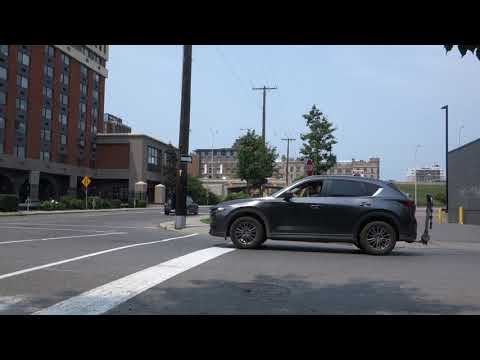 4:22
Idaho Stop for Cyclists? Drivers Already Do It!
34K views • 5 years ago
Oh The Urbanity!
A short urbanism video presenting original observations of how drivers treat stop signs, to argue that cyclists rolling through them under an Idaho stop is no different. It filmed intersections in Ottawa.
 6:17
Can You Watch This Without Getting Angry?
12.1M views • 11 years ago
CGP Grey
CGP Grey explains how ideas spread like germs, and why content that triggers outrage spreads fastest, using a study on what makes online content viral. He argues that opposing outrage-driven memes feed each other.
 9:39
What Happened Before History? Human Origins
24.3M views • 10 years ago
Kurzgesagt – In a Nutshell
Kurzgesagt's animated overview of human origins and the vast prehistory before recorded history. It covers how modern humans emerged and spread.
 8:56
Tiffany: The Name That Cheats Death
6M views • 5 years ago
CGP Grey
CGP Grey investigates why the name Tiffany spiked in popularity and then faded, with help from onomastics experts. It is a short, playful look at how names spread.
 9:35
Ancient Life as Old as the Universe
8.6M views • 3 years ago
Kurzgesagt – In a Nutshell
Kurzgesagt explores the idea that life might have arisen shortly after the Big Bang, when the whole universe was warm enough to be habitable. It discusses what that would mean for the origin and spread of life.
 8:35
Tesla Autopilot Crashes into Motorcycle Riders - Why?
1.1M views • 4 years ago
FortNine
FortNine looks at why Tesla Autopilot has rear-ended motorcyclists, speculating that the vision system misreads motorcycle taillights as a distant car. It argues that radar and other sensors would help.
 3:52
Are You Eating a Credit Card Every Week?
256K views • 4 years ago
vlogbrothers
A vlogbrothers video tracing how the claim that people eat a credit card of plastic every week spread. It walks through the funded talking point, the misleading amplification, and the peer review that missed it.
 8:26
Why don't subtitles match dubbing?
2M views • 2 years ago
Tom Scott
Tom Scott explains why subtitles often differ from dubbed dialogue, covering how translation, timing and reading speed shape each. It features translators and voice talent working in several languages.
 10:13
The Problem with Time & Timezones - Computerphile
4.4M views • 12 years ago
Computerphile
Tom Scott explains for Computerphile why handling time and timezones in code is so hard, walking through a simple web app that computes how long ago something happened. It covers the quirks of timezones and calendars and ends in an exasperated rant.
 12:01
Why Electronic Voting Is Still A Bad Idea
5.1M views • 6 years ago
Tom Scott
Tom Scott explains why electronic voting is a bad idea. Elections must be trusted by everyone and attacks on software scale in ways attacks on paper do not, so open source or blockchain fixes do not solve it.
 12:44
We Were Taught to Call Death a Blessing
11.9M views • 8 years ago
CGP Grey
CGP Grey narrates an animated adaptation of Nick Bostrom's Fable of the Dragon-Tyrant. The story uses a dragon that demands a daily toll of lives as a metaphor for aging and society's acceptance of death.
 4:48
London Swallowed a City but Couldn't Digest It.
8.6M views • 14 years ago
CGP Grey
CGP Grey explains that the City of London is a tiny, separate entity with its own governance, history and privileges, distinct from the city called London. He covers its financial role and how it is run.
 42:29
YouTube's copyright system isn't broken. The world's is.
9M views • 6 years ago
Tom Scott
Tom Scott's long explainer on YouTube's copyright system, Content ID and the DMCA. He argues the platform's system is a workaround for a broader copyright system that does not fit the modern world.
 2:23
Music and Life - Alan Watts
2.6M views • 19 years ago
seandulac
A two-minute animation of an Alan Watts talk arguing that life is like music: it is meant to be danced to in the moment, not rushed toward a final goal. It is a short, accessible take on living in the present.
 6:31
Why Your Vote Doesn't Count
7.9M views • 15 years ago
CGP Grey
CGP Grey explains first-past-the-post voting and why it pushes elections toward two dominant parties. It is the first in his series on electoral systems.
 12:04
Why Being Delusional is a Superpower
15.2M views • 6 years ago
Veritasium
Veritasium examines the role of luck in success, with simulations and examples showing how small advantages and chance can compound. It argues that top outcomes are disproportionately luck-driven while still crediting effort.
 11:09
The Wrong Way to Set Speed Limits [ST06]
2.1M views • 5 years ago
Not Just Bikes
Not Just Bikes explains how North American speed limits are set and why posted limits matter far less than street design. It argues that drivers follow the road's cues, so safe speeds have to be built into the street.
 6:24
You Need a Theme, Not a Goal
5.5M views • 6 years ago
CGP Grey
CGP Grey argues for picking a theme for the year or season instead of setting goals or new year's resolutions. He explains how a theme gives direction without a pass/fail target.
 17:08
Cities Aren't Loud: Cars Are Loud
2.3M views • 5 years ago
Not Just Bikes
Not Just Bikes argues that urban noise comes mostly from motor vehicles, drawing on the book Curbing Traffic and a visit to Delft, a city that takes noise seriously.
 12:08
Why Some Diseases Only Traveled One Direction
13.9M views • 10 years ago
CGP Grey
CGP Grey explains why European diseases devastated the Americas while few deadly diseases traveled the other way. He ties it to livestock domestication, dense cities, and the ideas of Guns, Germs and Steel.
 10:59
Your Brain Thinks Your Whole Home Is One Room
6.8M views • 6 years ago
CGP Grey
CGP Grey argues that your brain treats a whole home as one room during lockdown, blurring work, rest and leisure. He recommends creating separate spaces and routines for different activities to stay balanced.
 15:50
Can YOU Fix Climate Change?
14.3M views • 5 years ago
Kurzgesagt – In a Nutshell
Kurzgesagt examines what individuals can do about climate change, covering lesser-known carbon sources and why systemic and political change matter more than personal footprints.
 12:46
The Speed of Light is NOT About Light
7.1M views • 11 years ago
PBS Space Time
PBS Space Time argues that the speed of light is better understood as the speed of causality, the universal limit on how fast cause and effect propagate. Light travels at that speed because it is massless, but the limit itself is a property of spacetime.
 6:06
The 7 Habits of Highly Miserable People
14.7M views • 9 years ago
CGP Grey
CGP Grey's sarcastic animated video adapted from the book How to Be Miserable, listing habits that reliably make people unhappy. By inverting the advice, it shows what to avoid and prompts reflection on goals and routines.
 19:05
Why No One Has Measured The Speed Of Light
24.3M views • 6 years ago
Veritasium
Veritasium explains why the one-way speed of light has never been measured, only the round-trip speed, since measuring it requires synchronized clocks that assume the answer. It explores the implications for relativity.
 3:04
mRNA Translation (Advanced)
1.5M views • 16 years ago
DNA Learning Center
A short animation from the DNA Learning Center showing how mRNA carries a gene's message to the ribosome, where tRNA and codons are used to assemble amino acids into a protein.
 3:47
Why Grocery Shopping is Better in Amsterdam
1.3M views • 7 years ago
Not Just Bikes
A four-minute Not Just Bikes comparison of grocery shopping in Amsterdam versus car-centric North America, arguing that frequent small fresh-food trips beat bulk shopping. It ties this to land use and reduced food waste.
 7:16
Unix and Google
9K views • 10 years ago
FOAM
A short animated simulation comparing how Multics and Unix were developed, showing why Unix's small composable programs and pipes gave it a efficiency advantage. It frames Unix as a moonshot achievable by a small team.
 6:47
The Voting System That's Actually Too Good for Politicians to Allow
10.4M views • 12 years ago
CGP Grey
CGP Grey explains the Single Transferable Vote, a proportional ranked-ballot system, and why politicians have little incentive to adopt it. It is a short animated explainer of how multi-winner ranked voting works.
 4:58
You Actually Share Your Brain With a Silent Stranger
20.2M views • 10 years ago
CGP Grey
CGP Grey explains split-brain patients, where severing the corpus callosum lets the two hemispheres act independently. He uses this to explore the idea of two minds in one head.
 12:14
Why We Won't Raise Our Kids in Suburbia
5.2M views • 4 years ago
Not Just Bikes
Not Just Bikes argues that car-dependent suburbs rob children of independence, contrasting North American suburbia with Dutch cities where kids walk and bike on their own. It is the creator's remake of an earlier video on the topic.
 20:58
The Epidemic of Fake Disease
2.4M views • 6 years ago
Medlife Crisis
A Medlife Crisis video by cardiologist Rohin Francis on overdiagnosis and over-screening. It explains how detecting more disease does not necessarily mean saving more lives, and covers harms such as unnecessary treatment.
 8:28
The Fastest Way to Board a Plane Feels Like the Slowest
37.5M views • 7 years ago
CGP Grey
CGP Grey compares airplane boarding methods, based on an arXiv paper, and shows why the intuitive back-to-front approach is slow while random or outside-in boarding does better.
 21:15
The REAL Possibility of Mapping Alien Planets!
778K views • 4 years ago
PBS Space Time
PBS Space Time explains the proposal to use the Sun's gravity as a giant lens, sending a train of small light-sail spacecraft to the focal point roughly 550 AU out. It covers how such a telescope could image exoplanets in surprising detail and the engineering challenges involved.