mixed-use
 1:06:34
Paxos lecture (Raft user study)
114K views • 13 years ago
Diego Ongaro
John Ousterhout's slides-and-voiceover lecture on Paxos, made for the Raft user study comparing how students learn Raft and Paxos. It is a full introduction to the Paxos consensus algorithm.
 58:17
Raft lecture (Raft user study)
87K views • 13 years ago
Diego Ongaro
John Ousterhout lectures on the Raft consensus algorithm, made for the Raft user study comparing how students learn Raft and Paxos. It covers leader election and log repair.
 58:19
Irving Finkel | The Ark Before Noah: A Great Adventure
5.1M views • 10 years ago
The Institute for the Study of Ancient Cultures
Irving Finkel of the British Museum tells how a 4,000-year-old cuneiform tablet came to him for examination. It revealed the oldest known account of Noah's Ark and led to a book and a documentary.
 40:12
Immediate-Mode Graphical User Interfaces - 2005
150K views • 10 years ago
Casey Muratori
Casey Muratori's 2005 video introducing immediate-mode GUIs as an alternative to retained widget toolkits. He explains the motivation and shows minimal-state button logic.
 4:11
Growing Reddit - Web Development
91K views • 14 years ago
Udacity
A short clip from Udacity's Web Development course in which Reddit co-founder Steve Huffman describes how Reddit grew early on. He explains seeding the site with content from fake accounts.
 1:02:47
Secret History of Silicon Valley
491K views • 17 years ago
Computer History Museum
Steve Blank's Computer History Museum lecture argues that Silicon Valley's roots lie in WWII radar and electronic warfare work, Stanford's Fred Terman and Cold War military funding rather than the semiconductor alone.
 1:11:48
Math Encounters -- Five Balls, Two Hands: The Patterns of Juggling -- Colin Wright (Presentation)
33K views • 14 years ago
National Museum of Mathematics
Mathematician Colin Wright demonstrates juggling and explains the mathematics of juggling patterns, including notation that led to new throwing patterns. It is a public presentation at the Museum of Mathematics aimed at a general audience.
 1:12:19
Kursk: The Epic Armored Engagement (2013)
535K views • 12 years ago
The National WWII Museum
A panel at The National WWII Museum on the Battle of Kursk, moderated by Keith Huxen with historians Robert Citino and John Parshal. The discussion covers the armored engagement and the German, Soviet and US approaches to tank production.
 1:57:00
Origins of the Apple Human Interface
13K views • 7 years ago
Computer History Museum
A 1997 Computer History Museum lecture in which Larry Tesler and Chris Espinosa recount how the Apple human interface was born, from the Lisa through the Macintosh. It covers design decisions such as discoverability and the standard editing keys.
 1:37:22
Siggraph2019 Geometric Algebra
87K views • 7 years ago
Bivector
A SIGGRAPH 2019 course on geometric algebra. Charles Gunn gives an intro, then Steven De Keninck gives a programmer-focused course with live examples in ganja.js.
 56:27
In Search of Tomorrow
18K views • 10 years ago
Berkeley Institute for Data Science (BIDS)
Chris Granger, creator of Light Table and the Eve language, gives a Berkeley data science lecture on what computation and programming might look like in ten years. He covers the path that led to Eve and ends with demos.
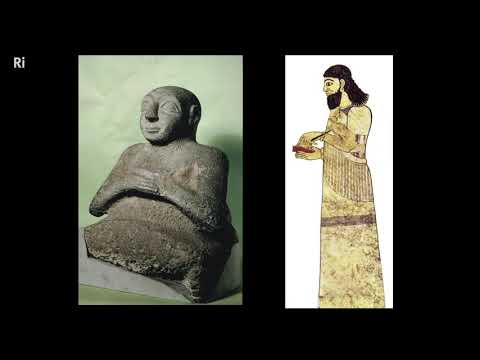 38:55
Cracking Ancient Codes: Cuneiform Writing - with Irving Finkel
2.8M views • 7 years ago
The Royal Institution
Irving Finkel of the British Museum lectures at the Royal Institution on the invention and decipherment of cuneiform writing in Mesopotamia, and why it is so hard to translate.
 46:48
Why Vertical Farming Won't Save the Planet
244K views • 11 years ago
Utah State University Extension
Utah State plant scientist Bruce Bugbee presents his analysis of the energy and environmental costs of vertical and indoor farming. He argues artificial lighting cannot compete with sunlight in fields or greenhouses.
 1:30:50
Lecture 7: Introduction to Galois Fields for the AES by Christof Paar
278K views • 12 years ago
Introduction to Cryptography by Christof Paar
Christof Paar's university lecture introducing Galois fields and finite-field arithmetic as used in AES. It covers the mathematics behind the AES S-box.
 1:12:30
"Understanding Burnout," Prof. Christina Maslach (U.C. Berkeley)
33K views • 11 years ago
Thriving In Science
A Berkeley lecture by psychologist Christina Maslach, a leading burnout researcher, on what burnout is and what causes it. It covers common misunderstandings and the job and workplace factors involved.
 0:55
Richard Feynman on hungry philosophers (or do we see objects or only their light)
272K views • 17 years ago
Zero
A one-minute clip from Richard Feynman's 1979 Auckland lecture in which he answers whether you see an object or only its light. It is a short, playful take on perception and on the use of philosophy.
 49:39
NeWS: A Networked and Extensible Window System, lecture by James Gosling
5K views • 10 years ago
Computer History Museum
A 1990 lecture by James Gosling on NeWS, Sun's networked window system in which clients send PostScript programs to the server for execution. It covers the high-level imaging model and compares NeWS with similar systems.
 1:03:43
How to Speak
23.5M views • 6 years ago
MIT OpenCourseWare
Patrick Winston's long-running MIT lecture on public speaking teaches heuristic rules for talks. It covers how to start, use time and place, boards, props and slides, and how to inform, persuade and finish.
 2:25:52
The spelled-out intro to neural networks and backpropagation: building micrograd
4.4M views • 4 years ago
Andrej Karpathy
Andrej Karpathy's first Neural Networks: Zero to Hero lecture, which builds micrograd, a tiny autograd engine, from scratch in Python. It explains backpropagation and neural network training step by step, assuming only basic Python and some high-school calculus.
 28:03
AT&T Archives: Similiarities of Wave Behavior (Bonus Edition)
473K views • 14 years ago
AT&T Tech Channel
A Bell Labs film in which Dr. J.N. Shive uses a mechanical wave machine to demonstrate reflection, standing waves, resonance and impedance matching. He includes some equations but relies mostly on real-world examples a layperson can follow.
 1:21:52
LEADERSHIP LAB: The Craft of Writing Effectively
9.3M views • 12 years ago
UChicago Social Sciences
Larry McEnerney of the University of Chicago Writing Program gives a graduate-student session on writing effectively. His core idea is that readers care about value to them, not the writer's thinking process.
 1:11:40
MIT's Pathway to Fusion Energy (IAP 2017) - Zach Hartwig
122K views • 9 years ago
MIT Plasma Science and Fusion Center
Zach Hartwig of MIT introduces the key concepts of magnetic fusion energy and the state of fusion research. He then presents MIT's proposed pathway of using high-field superconducting magnets to build smaller, cheaper tokamaks on a climate-relevant timescale.
 52:29
Stanford's Sapolsky On Depression in U.S. (Full Lecture)
6.4M views • 17 years ago
Stanford
Stanford professor Robert Sapolsky lectures on depression as a real biological disease. He covers its biological and psychological causes, how it differs from ordinary sadness, and ideas such as learned helplessness. He ties these together into one account.
 39:49
Lec 1 | MIT 18.06 Linear Algebra, Spring 2005
4.9M views • 17 years ago
MIT OpenCourseWare
The first lecture of Gilbert Strang's MIT 18.06 Linear Algebra course, covering the geometry of linear equations. It opens a full 35-lecture university course.
 58:51
DON'T PANIC — Hans Rosling showing the facts about population
3.3M views • 11 years ago
Gapminder Foundation
Hans Rosling uses data and animated statistics to show how world population is changing, why birth rates fall as child survival and wealth rise, and why population is expected to peak around 11 billion. It also tackles common misconceptions about Africa and family planning.
 9:18
The Most IMPORTANT Video You'll Ever See (part 1 of 8)
5.4M views • 19 years ago
wonderingmind42
Part 1 of a lecture by physicist Albert Bartlett on the exponential function and its consequences for population growth, resource use and energy. It argues that steady growth rates quickly lead to enormous quantities.
 3:31:24
Deep Dive into LLMs like ChatGPT
10.2M views • 1 year ago
Andrej Karpathy
Andrej Karpathy's three-hour-plus general-audience deep dive into how ChatGPT-style LLMs are built, covering the full training stack from pretraining to post-training. It also gives mental models for their quirks, like hallucination, and how to use them well.
 59:56
Marty Lobdell - Study Less Study Smart
25.5M views • 15 years ago
Pierce College District WA
Psychology professor Marty Lobdell gives a one-hour lecture on how to study effectively, covering short focused sessions with breaks, study environment, note-taking and memory techniques. It was aimed at students who cram without improving.
 18:41
Refterm Lecture Part 1 - Philosophies of Optimization
93K views • 5 years ago
Molly Rocket
Casey Muratori's first refterm lecture lays out philosophies of optimization, distinguishing optimization from non-pessimization, which means avoiding needless work. It uses his fast terminal renderer project to show how fast computers really are.
 13:47
This is how you treat ADHD based off science, Dr Russell Barkley part of 2012 Burnett Lecture
5.1M views • 12 years ago
Adhd Videos
A short excerpt from Dr Russell Barkley's 2012 Burnett Lecture on ADHD, focused on treatment. He argues ADHD is a disorder of executive function and self-regulation, and that environments should be designed to compensate.
 1:25:00
Lecture 6: Version Control (git) (2020)
751K views • 6 years ago
Missing Semester
A lecture from MIT's Missing Semester course covering version control with git. It builds up git from its data model rather than from commands.
 2:50:14
Simple Code, High Performance
463K views • 5 years ago
Molly Rocket
Casey Muratori's University of Twente guest lecture is a case study in how straightforward code can cut thousands of lines and tens of seconds of runtime down to a few dozen lines running in under a second. It uses concrete examples to show why software is often an order of magnitude slower than it should be.
 1:27:10
Jancovici : Can we save energy, jobs and growth at the same time ? 08/01/2018
46K views • 8 years ago
Jean-Marc Jancovici
Jean-Marc Jancovici lectures at ENS Paris on whether energy use, jobs and growth can all be preserved. He argues for a physical approach to economics, since resource depletion and climate limits make perpetual GDP growth unrealistic.
 56:30
How to Invent the Future II - Stanford CS183F: Startup School
26K views • 9 years ago
Stanford Online
Part two of Alan Kay's Stanford Startup School lecture on inventing the future. He draws on his time at Xerox PARC and elsewhere to discuss how to think about new technology and what makes ideas useful.
 2:04
Admiral Grace Hopper Explains the Nanosecond
163K views • 14 years ago
funbury
Admiral Grace Hopper holds up a length of wire to show how far light travels in a nanosecond, about 11.8 inches. She explains how she made the idea concrete to people who could not picture a billionth of a second.
 1:33:25
Collapse of Complex Societies by Dr. Joseph Tainter
207K views • 14 years ago
vlada888
Joseph Tainter lectures at a 2010 sustainability conference on why complex societies such as Rome collapse. His thesis is that rising complexity brings diminishing returns until societies cannot afford to maintain it.
 1:37:55
Particles, Fields and The Future of Physics - A Lecture by Sean Carroll
1.8M views • 13 years ago
Fermilab
Sean Carroll's 2013 Fermilab Users Meeting lecture on particles, fields and the future of particle physics. He explains that particles are vibrations in underlying quantum fields and touches on the Higgs, neutrinos and dark matter.
 1:14:16
Exponential Growth Arithmetic, Population and Energy, Dr. Albert A. Bartlett
84K views • 11 years ago
Hiroob
A recording of physicist Albert Bartlett's well-known lecture on the arithmetic of exponential growth, applied to population and energy use. He argues that steady percentage growth in a finite world cannot continue and sneaks up suddenly.
 1:10:18
1177 BC: The Year Civilization Collapsed (Eric Cline, PhD)
8.8M views • 10 years ago
National Capital Area Skeptics (NCAS)
Archaeologist Eric Cline lectures on the Late Bronze Age collapse around 1177 BC, when interconnected Mediterranean empires fell in rapid succession. He discusses the Sea Peoples and the combined causes of the collapse.
 47:20
Hamming, Intro to The Art of Doing Science and Engineering: Learning to Learn (March 28, 1995)
171K views • 14 years ago
securitylectures
The introductory lecture of Richard Hamming's capstone course, The Art of Doing Science and Engineering: Learning to Learn. It focuses on style of thinking and on educating rather than training, using technical material only as illustration.