ms-dos
 1:22:45
Building Software Systems At Google and Lessons Learned
257K views • 15 years ago
Stanford
Jeff Dean of Google describes his experiences building Google's systems and how its infrastructure evolved over time. The Stanford talk covers search, scaling tipping points and lessons from building large-scale software.
 14:36
Distributed Systems 1.1: Introduction
382K views • 6 years ago
Martin Kleppmann
The first lecture in Martin Kleppmann's 8-lecture distributed systems series from the University of Cambridge undergraduate course. It introduces the subject, and accompanying lecture notes are available.
 17:26
Lecture 1 | Programming Paradigms (Stanford)
1.2M views • 18 years ago
Stanford
The first lecture of Stanford's CS107 Programming Paradigms, taught by Jerry Cain, giving an overview of the course. The course goes from C and assembly through C++, concurrency, Scheme and Python.
 1:16:27
Randy Pausch's Last Lecture: Achieving Your Childhood Dreams
22.4M views • 18 years ago
Carnegie Mellon University
Randy Pausch's 2007 last lecture at Carnegie Mellon, given as he was dying of pancreatic cancer. He reflects on achieving childhood dreams, overcoming obstacles and helping others reach theirs.
 1:06:44
01 - Course Introduction & Relational Model (CMU Databases Systems / Fall 2019)
248K views • 7 years ago
CMU Database Group
The first lecture of Andy Pavlo's CMU 15-445 Intro to Database Systems (Fall 2019), covering course introduction and the relational model.
 1:31:54
Noam Chomsky - "The machine, the ghost, and the limits of understanding"
472K views • 14 years ago
Andy80o
Noam Chomsky's 2011 University of Oslo lecture on Newton's contributions to the study of mind. He argues Newton abandoned mechanical explanation and lowered the bar for scientific intelligibility, with consequences for the limits of human understanding. Q&A starts at 45:33.
 56:36
Noam Chomsky Thought Control In Democratic Societies NEW!
12K views • 11 years ago
Riccardo
A lecture by Noam Chomsky on thought control in democratic societies, covering propaganda and manufacturing consent. The upload has no description.
 1:19:35
Lecture 1: Introduction
921K views • 6 years ago
MIT 6.824: Distributed Systems
The opening lecture of MIT 6.824 Distributed Systems (Spring 2020), introducing the course and core challenges of distributed systems. It begins a playlist that goes on to cover Raft and other consensus papers in Go.
 3:31:24
Deep Dive into LLMs like ChatGPT
10.2M views • 1 year ago
Andrej Karpathy
Andrej Karpathy's three-hour-plus general-audience deep dive into how ChatGPT-style LLMs are built, covering the full training stack from pretraining to post-training. It also gives mental models for their quirks, like hallucination, and how to use them well.
 44:19
Hamming, "You and Your Research" (June 6, 1995)
368K views • 14 years ago
securitylectures
Richard Hamming's 1995 recording of his talk 'You and Your Research', drawn from his graduate engineering course. He discusses how great scientists pick important problems and build careers, drawing on his years at Bell Labs.
 11:41
RSA ANIMATE: Changing Education Paradigms
18M views • 16 years ago
Royal Society of Arts
An RSA Animate drawn from a Sir Ken Robinson talk arguing that current education systems are modeled on the industrial age. It discusses divergent thinking, standardization, and how schools disengage kids.
 55:53
Michael Stonebraker | Big Data is (at least) Four Different Problems
30K views • 10 years ago
Michigan Engineering
Database pioneer Michael Stonebraker argues that 'big data' is really at least four different problems: big volumes with small analytics, big analytics, velocity, and variety. He comments on where each market is heading.
 49:39
NeWS: A Networked and Extensible Window System, lecture by James Gosling
5K views • 10 years ago
Computer History Museum
A 1990 lecture by James Gosling on NeWS, Sun's networked window system in which clients send PostScript programs to the server for execution. It covers the high-level imaging model and compares NeWS with similar systems.
 1:03:07
Clutching at Random Straws, Matt Parker | LMS Popular Lectures 2010
601K views • 12 years ago
London Mathematical Society
Matt Parker's LMS popular lecture on how seemingly incredible results can be meaningless random patterns. He ranges from ancient Woolworths civilisations to shoelaces and DNA.
 1:45:38
The Unanswered Question 1973 1 Musical Phonology Bernstein Norton
742K views • 12 years ago
cagin
Leonard Bernstein's 1973 Norton Lectures at Harvard, starting with Musical Phonology. He draws analogies between music and linguistics, including references to Chomsky.
 44:24
31 Hamming, Learning to Learn: You and Your Research, 6 June 1995
9K views • 8 years ago
Hamming on Hamming: Learning to Learn
The final lecture of Richard Hamming's Learning to Learn course, from 1995, based on his well-known talk 'You and Your Research'. It covers how to do important work and build a career.
 51:47
Lecture 19: Dynamic Programming I: Fibonacci, Shortest Paths
2.9M views • 13 years ago
MIT OpenCourseWare
Erik Demaine's MIT 6.006 lecture introducing dynamic programming through Fibonacci numbers and shortest paths. It covers memoization, subproblems and optimal substructure.
 1:18:06
Michael Levin: Anatomical decision-making by cellular collectives
32K views • 5 years ago
Thomas Ouldridge
Michael Levin presents his lab's work on how cellular collectives use bioelectric networks to make anatomical decisions. Topics include pattern memories, regeneration and synthetic living organisms.
 39:43
Do we need Attention? - Linear RNNs and State Space Models (SSMs) for NLP
35K views • 3 years ago
Sasha Rush
Sasha Rush surveys linear RNNs and state space models as replacements for attention in transformer-style models, in a talk for MLSys. It covers the foundational preliminaries and predates Mamba.
 52:54
Rust at speed — building a fast concurrent database
225K views • 7 years ago
Jon Gjengset
A guest lecture Jon Gjengset gave at Two Sigma on using Rust for large, high-performance systems. It covers why Rust suits such projects, the Noria research database, a concurrent data structure used in it, and practical experience.
 10:20
Feynman: 'Greek' versus 'Babylonian' mathematics
377K views • 14 years ago
TehPhysicalist
A clip of Richard Feynman contrasting the Greek and Babylonian traditions of mathematical reasoning. It compares the axiomatic approach of mathematicians with how physicists use mathematics.
 1:06:43
Scott Aaronson | How Much Math Is Knowable?
58K views • 1 year ago
Harvard CMSA
Scott Aaronson's Harvard CMSA talk traces what mathematical truths are knowable, from Godel and Turing to the Busy Beaver function. He covers recent work on Busy Beaver values.
 39:49
Lec 1 | MIT 18.06 Linear Algebra, Spring 2005
4.9M views • 17 years ago
MIT OpenCourseWare
The first lecture of Gilbert Strang's MIT 18.06 Linear Algebra course, covering the geometry of linear equations. It opens a full 35-lecture university course.
 9:59
Feynman on Scientific Method.
2.4M views • 15 years ago
seabala
A short clip of Richard Feynman explaining the scientific method: guess, compute consequences, compare to experiment, and why vague theories like astrology cannot be proven wrong.
 2:31:27
Lecture: 2017 Maps of Meaning 01: Context and Background
6.4M views • 9 years ago
Jordan B Peterson
The first lecture of Jordan Peterson's 2017 Maps of Meaning course, setting out the Cold War context for his theory of belief and culture. He introduces the narrative structure of culture and archetypal characters for the individual, the known and the unknown.
 1:06:34
Paxos lecture (Raft user study)
114K views • 13 years ago
Diego Ongaro
John Ousterhout's slides-and-voiceover lecture on Paxos, made for the Raft user study comparing how students learn Raft and Paxos. It is a full introduction to the Paxos consensus algorithm.
 38:55
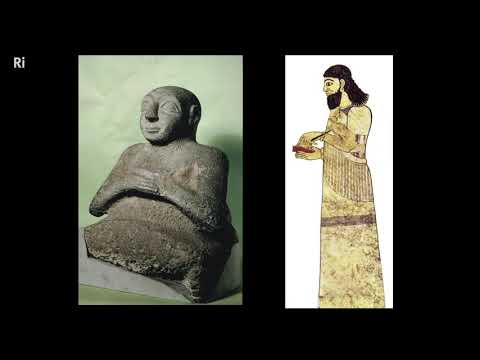
Cracking Ancient Codes: Cuneiform Writing - with Irving Finkel
2.8M views • 7 years ago
The Royal Institution
Irving Finkel of the British Museum lectures at the Royal Institution on the invention and decipherment of cuneiform writing in Mesopotamia, and why it is so hard to translate.
 19:32
Control Bootcamp: Overview
560K views • 9 years ago
Steve Brunton
The opening lecture of Steve Brunton's Control Bootcamp, covering the kinds of control and why closed-loop feedback matters. It starts a series that follows the control chapter of the Brunton and Kutz data-driven science book.
 58:17
Raft lecture (Raft user study)
87K views • 13 years ago
Diego Ongaro
John Ousterhout lectures on the Raft consensus algorithm, made for the Raft user study comparing how students learn Raft and Paxos. It covers leader election and log repair.
 12:55
Building Prototypes Dan Gelbart part 10 of 18 Flexures
114K views • 13 years ago
Dan Gelbart
Part 10 of Dan Gelbart's prototype-building lecture series, covering flexures: flexible joints that give precise, frictionless motion. It shows how a cheap piece of aluminum can become a nanometer-accurate mechanism.
 1:21:22
Light Years Ahead | The 1969 Apollo Guidance Computer
2.8M views • 6 years ago
TNMoC
Robert Wills of TNMoC explains the Apollo Guidance Computer hardware and software, then walks through the Apollo 11 landing procedure step by step, including the 1202 alarms.
 1:12:56
Lecture 1A | MIT 6.001 Structure and Interpretation, 1986
995K views • 17 years ago
MIT OpenCourseWare
The first lecture of MIT's 1986 6.001 Structure and Interpretation of Computer Programs, given by Harold Abelson, introducing Lisp and the idea of computer science as the study of process.
 1:56:10
Sunlight: Optimize Health and Immunity (Light Therapy and Melatonin)
4.2M views • 4 years ago
MedCram - Medical Lectures Explained CLEARLY
Dr. Roger Seheult of MedCram reviews the benefits of sunlight beyond vitamin D, covering the solar spectrum, circadian rhythm, melatonin and infrared light. The lecture runs nearly two hours with timestamps.
 14:34
Blockchains Are a Bad Idea (James Mickens)
68K views • 8 years ago
HBS Digital Initiative
James Mickens of Harvard gives a funny lecture at HBS's Future Assembly arguing that blockchains are a very bad idea. He covers their trust, legal and practical shortcomings for real-world problems.
 1:15:47
Richard Feynman Computer Science Lecture - Hardware, Software and Heuristics
978K views • 14 years ago
Muon Ray
A lecture by Richard Feynman on how computers work, using the analogy of a filing clerk that becomes progressively dumber and faster. It also covers heuristics and how computers handle data and solve problems in finite time.
 58:02
How to Invent the Future I - Stanford CS183F: Startup School
40K views • 9 years ago
Stanford Online
Alan Kay's Stanford Startup School lecture covers his career at Xerox PARC and how to think about inventing the future. He goes through what came out of PARC and why companies fail to capitalize on such ideas.
 1:27:44
"Why Zebras Don't Get Ulcers: Stress and Health" by Dr. Robert Sapolsky
1.1M views • 9 years ago
Beckman Institute at Illinois
Robert Sapolsky's lecture on how the body's stress response, evolved for short-term physical emergencies, harms long-term health when triggered by psychological stressors. It was given as the inaugural Fenton-Rhodes Lecture.
 1:07:02
Stanford Lecture: Don Knuth—"A Conjecture That Had To Be True" (2017)
30K views • 8 years ago
Stanford Online
Donald Knuth's 2017 Christmas Tree Lecture at Stanford about a combinatorial geometry problem whose computed numbers matched a striking formula. He tells the story of the conjecture and its sequel.
 1:25:11
College Lecture Series - Neil Postman - "The Surrender of Culture to Technology"
170K views • 13 years ago
College of DuPage
Neil Postman's 1997 lecture at College of DuPage, based on his book, argues that Americans treat technology as a national religion and depend on it to solve larger human problems. It includes audience questions.
 2:13:35
Let's build the GPT Tokenizer
1.3M views • 2 years ago
Andrej Karpathy
Andrej Karpathy builds the GPT tokenizer from scratch, implementing byte pair encoding along with encode and decode. He shows how many odd LLM behaviors trace back to tokenization, and covers Unicode byte encodings along the way.