new math
 10:14
Making a heart with Maths
112K views • 9 years ago
Inigo Quilez
Inigo Quilez shows step by step how to build a simple heart shape from mathematics and shaders, with code on Shadertoy. It is an introduction to procedural graphics and signed distance functions.
 4:59
No Knead Bread | Bread Recipe | The New York Times
3.7M views • 19 years ago
The New York Times
Mark Bittman and baker Jim Lahey of Sullivan Street Bakery demonstrate the no-knead bread recipe, where a long, slow rise does the work instead of kneading. It is a short New York Times recipe video.
 14:27
A simple trick to design your own solutions for Rubik's cubes
1.6M views • 10 years ago
Mathologer
Mathologer shows a simple idea, the commutator, that lets anyone who can solve the first layer design their own full Rubik's cube solution. The same idea carries over to other symmetric twisty puzzles such as the Megaminx.
 24:46
Painting a Character with Maths
458K views • 5 years ago
Inigo Quilez
Inigo Quilez live-codes a cartoon character painting entirely from math, using signed distance fields in a Shadertoy shader. He explains each step of building the image from formulas.
 42:00
I painted a Landscape with Mathematics
812K views • 4 years ago
Inigo Quilez
Inigo Quilez live-paints a mountain landscape using only math in a shader, building up from a basic polynomial noise surface through fractal terrain, lighting and atmosphere. The code runs in real time on Shadertoy so viewers can edit it as they follow along.
 24:02
Learn to Paint with Mathematics
191K views • 12 years ago
Inigo Quilez
Inigo Quilez live-codes a painting using only mathematics in a shader, building it up step by step. The linked Shadertoy source shows the result.
 1:59:29
Tutorial: New and Updated - Everything You Always Wanted to Know About Optical Networking
58K views • 9 years ago
NANOG
A two-hour NANOG tutorial by Richard Steenbergen aimed at network engineers, covering optical networking technologies. This is the updated 2017 edition of a recurring talk.
 10:25
Pepin Debone Chicken.flv
1.4M views • 14 years ago
newnew2005love
Jacques Pepin demonstrates deboning a whole chicken, quickly and with complete control. It is a short, wordless-feeling technique demo that shows a skill most cooks never learn.
 54:01
You Suck at Excel - Joel Spolsky (Reupload)
27K views • 2 years ago
Cool Bug Facts
A reupload of Joel Spolsky's talk teaching spreadsheet users the Excel features they are probably missing, such as keyboard navigation, named ranges, tables and lookups. The original disappeared and this copy comes from the Wayback Machine.
 10:32
Javascript in 2015
58K views • 11 years ago
Glen Maddern
A short screencast tour of JSPM, SystemJS and ES6 features, building a small app with the then-new JavaScript module and package tooling. It shows how JSPM works as a package manager, bundler and loader.
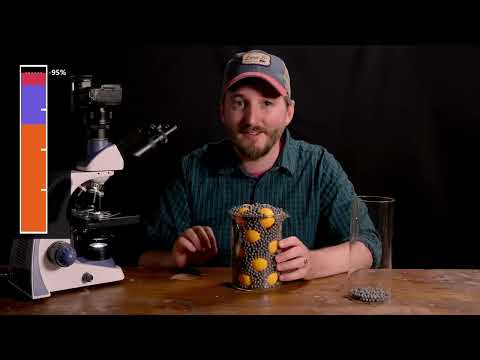 40:14
Making Infrared Cooling Paint From Grocery Store Items (w/Novel CaCO₃ Microsphere Synthesis)
1.3M views • 3 years ago
NightHawkInLight
NightHawkInLight shows how to make radiative sky cooling paint from grocery and hardware store materials, including a novel calcium carbonate microsphere synthesis. The paint can cool a surface below ambient air temperature in direct sunlight without electricity.
 16:43
Blender 3.0 Beginner Tutorial - Part 1
9.3M views • 4 years ago
Blender Guru
Blender Guru's beginner tutorial series, in which you model, light, texture and render a donut while learning Blender's core features. This is Part 1 of the Blender 3.0 version.
 3:03:54
The Why, What, and How of Pinning in Rust
87K views • 7 years ago
Jon Gjengset
Jon Gjengset's long live-coding stream explains Rust's Pin and Unpin types: why they exist, how they work, and how they connect to futures and async/await. It also covers moving from pre-pinning code to the new model.
 12:27
Obsidian for Beginners: Start HERE — How to Use the Obsidian App for Notes
2.4M views • 6 years ago
Linking Your Thinking with Nick Milo
A 12-minute beginner lesson from Nick Milo's Linking Your Thinking series introducing the Obsidian note-taking app and the first steps to start using it.
 7:03
Emacs Doom Episode 1 - Getting Started
159K views • 8 years ago
Zaiste Programming
A short first episode in Zaiste's Doom Emacs series, showing how to get started with Doom, an Emacs configuration aimed at Vim users. It presents Doom as a polished, fast, batteries-included distribution.
 1:01:04
Introduction to Julia - Part 1 | SciPy 2014 | David Sanders
80K views • 12 years ago
Enthought
David Sanders gives the first part of a two-part introduction to the Julia programming language at SciPy 2014. It walks through the language's basics and its appeal for scientific computing.
 5:43:06
LIVE Coding "Happy Jumping"
106K views • 7 years ago
Inigo Quilez
Inigo Quilez live-codes the "Happy Jumping" animated scene in a Shadertoy GLSL shader over about six hours. He builds the raymarched character step by step, explaining the math and procedural techniques, with checkpoints linked for each stage.
 17:10
How to use uBlock Origin to protect your online privacy and security | uBlock Origin tutorial 2018
299K views • 8 years ago
The Hated One
A 2018 tutorial explaining uBlock Origin's advanced user mode, including how to block scripts and use the dynamic filtering settings. It positions the extension as a replacement for tools like uMatrix.
 11:41
Using Emacs - 1 - setting up the package manager
73K views • 10 years ago
Mike Zamansky
The first episode of Mike Zamansky's Using Emacs series, covering setting up the package manager for new Emacs users as a start toward customization and efficient editing.
 38:06
A simple guide to electronic components.
8.5M views • 10 years ago
bigclivedotcom
Big Clive gives a 38-minute beginner's guide to identifying common electronic components and what they do. He keeps the maths minimal and aims to fill gaps for people just starting out.
 7:26
Teletype Model 19 - Part 1: A Teletype Arrives for Restoration
33K views • 8 years ago
CuriousMarc
CuriousMarc inspects a newly arrived Teletype Model 19, an early military unit built around a Model 15 keyboard and printer, after an initial rough cleaning. It is the first part of a restoration series and touches on 5-bit Baudot code.