old computers
 1:20:35
Anton: A Special-Purpose Machine That Achieves a Hundred-Fold Speedup in Biomolecular Simulations
12K views • 14 years ago
NC State
David Shaw of D. E. Shaw Research presents Anton, a special-purpose machine that speeds up biomolecular simulations about a hundred-fold. The lecture covers molecular dynamics and how simulation helps understand how drugs bind.
 1:15:47
Richard Feynman Computer Science Lecture - Hardware, Software and Heuristics
978K views • 14 years ago
Muon Ray
A lecture by Richard Feynman on how computers work, using the analogy of a filing clerk that becomes progressively dumber and faster. It also covers heuristics and how computers handle data and solve problems in finite time.
 1:16:22
If Brains are Computers, Who Designs the Software? - with Daniel Dennett
873K views • 9 years ago
The Royal Institution
Daniel Dennett's Royal Institution lecture on whether the brain is a computer and where its software comes from. He argues that minds are built by evolution and culture, with competence arising without comprehension.
 8:07
Seymour Papert 1983
28K views • 19 years ago
Cynthia Solomon
An eight-minute excerpt of a 1983 video featuring Seymour Papert, creator of Logo, on children learning programming and abstract ideas through embodied play. It shows kids acting out the Logo turtle.
 1:12:56
Lecture 1A | MIT 6.001 Structure and Interpretation, 1986
995K views • 17 years ago
MIT OpenCourseWare
The first lecture of MIT's 1986 6.001 Structure and Interpretation of Computer Programs, given by Harold Abelson, introducing Lisp and the idea of computer science as the study of process.
 1:00:26
Colossus - The Greatest Secret in the History of Computing
1M views • 6 years ago
The Centre for Computing History
Chris Shore of the Centre for Computing History explains how Colossus was built, how it worked, and how it affected the course of World War II. It is an hour-long museum lecture on the codebreaking computer.
 1:03:16
Yuri Bezmenov: Psychological Warfare Subversion & Control of Western Society (Complete)
1.9M views • 15 years ago
GBPPR2
A 1983 Los Angeles lecture by KGB defector Yuri Bezmenov on how the Soviets carried out ideological subversion of target societies through propaganda. He walks through demoralization and normalization stages.
 4:11
Growing Reddit - Web Development
91K views • 14 years ago
Udacity
A short clip from Udacity's Web Development course in which Reddit co-founder Steve Huffman describes how Reddit grew early on. He explains seeding the site with content from fake accounts.
 1:04:46
Quantum Computing and Bitcoin (Vitalik Buterin, November 2013)
16K views • 13 years ago
Bitcoin Israel
A 2013 lecture in which Vitalik Buterin explains what quantum computers are and what they can and cannot do. He then discusses what they could mean for Bitcoin's cryptography.
 1:12:56
Lecture 1A: Overview and Introduction to Lisp
420K views • 7 years ago
MIT OpenCourseWare
The first lecture of MIT's 6.001 (SICP) with Abelson and Sussman, giving an overview of the course and an introduction to Lisp. It argues that computer science is about managing complexity and abstraction, not computers.
 18:41
Refterm Lecture Part 1 - Philosophies of Optimization
93K views • 5 years ago
Molly Rocket
Casey Muratori's first refterm lecture lays out philosophies of optimization, distinguishing optimization from non-pessimization, which means avoiding needless work. It uses his fast terminal renderer project to show how fast computers really are.
 2:31:27
Lecture: 2017 Maps of Meaning 01: Context and Background
6.4M views • 9 years ago
Jordan B Peterson
The first lecture of Jordan Peterson's 2017 Maps of Meaning course, setting out the Cold War context for his theory of belief and culture. He introduces the narrative structure of culture and archetypal characters for the individual, the known and the unknown.
 1:02:47
Secret History of Silicon Valley
491K views • 17 years ago
Computer History Museum
Steve Blank's Computer History Museum lecture argues that Silicon Valley's roots lie in WWII radar and electronic warfare work, Stanford's Fred Terman and Cold War military funding rather than the semiconductor alone.
 58:19
Irving Finkel | The Ark Before Noah: A Great Adventure
5.1M views • 10 years ago
The Institute for the Study of Ancient Cultures
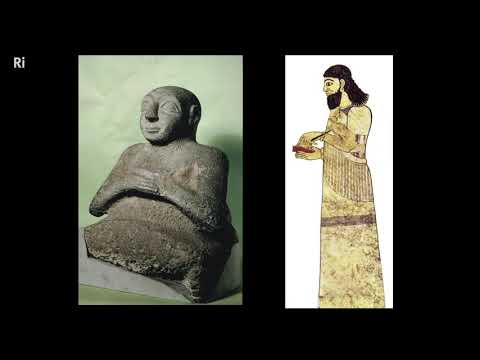
Irving Finkel of the British Museum tells how a 4,000-year-old cuneiform tablet came to him for examination. It revealed the oldest known account of Noah's Ark and led to a book and a documentary.
 38:55
Cracking Ancient Codes: Cuneiform Writing - with Irving Finkel
2.8M views • 7 years ago
The Royal Institution
Irving Finkel of the British Museum lectures at the Royal Institution on the invention and decipherment of cuneiform writing in Mesopotamia, and why it is so hard to translate.
 2:04
Admiral Grace Hopper Explains the Nanosecond
163K views • 14 years ago
funbury
Admiral Grace Hopper holds up a length of wire to show how far light travels in a nanosecond, about 11.8 inches. She explains how she made the idea concrete to people who could not picture a billionth of a second.
 32:06
Preface | MIT Calculus Revisited: Single Variable Calculus
358K views • 15 years ago
MIT OpenCourseWare
The preface to Herb Gross's MIT OpenCourseWare 'Calculus Revisited: Single Variable Calculus', an older black-and-white lecture series. It introduces his approach to teaching calculus from the basics.
 1:19:38
John Hennessy and David Patterson 2017 ACM A.M. Turing Award Lecture
150K views • 8 years ago
Association for Computing Machinery (ACM)
Hennessy and Patterson's 2018 Turing Award lecture at ISCA, A New Golden Age for Computer Architecture. It covers domain-specific hardware, security, open instruction sets and agile chip development.
 1:00:34
1. Introduction, Finite Automata, Regular Expressions
626K views • 5 years ago
MIT OpenCourseWare
The first lecture of Michael Sipser's MIT 18.404J Theory of Computation course, covering course mechanics, finite automata, regular languages and regular expressions. It proves closure of regular languages under union and begins concatenation.
 1:10:03
Stanford Seminar - Generalized Reversible Computing and the Unconventional Computing Landscape
16K views • 9 years ago
Stanford Online
A Stanford EE380 seminar by Michael P. Frank of Sandia National Laboratories on generalized reversible computing. It surveys unconventional computing approaches as transistor scaling nears its limits and energy efficiency stops improving.
 48:40
Capt. Grace Hopper on Future Possibilities: Data, Hardware, Software, and People (Part One, 1982)
179K views • 2 years ago
National Security Agency
Part one of Capt. Grace Hopper's 1982 NSA lecture on the future of data, hardware, software and people. It includes her humor, her nanosecond demonstration and views on scaling and resisting old ways of doing things.
 1:05:35
CS50 Lecture by Mark Zuckerberg - 7 December 2005
9.5M views • 12 years ago
CS50
A December 2005 guest lecture by Mark Zuckerberg in Harvard's CS50, discussing Facebook's early days, its technical choices and computer science. It captures him as a 21-year-old founder before Facebook's rise.
 5:37
Feynman: Knowing versus Understanding
2.7M views • 14 years ago
TehPhysicalist
A short clip of Richard Feynman on the difference between merely knowing how to reason mathematically and understanding why physical theories work. He discusses holding multiple equivalent ideas and guessing new laws.
 1:24:38
Lecture 7A: Metacircular Evaluator, Part 1
32K views • 7 years ago
MIT OpenCourseWare
Lecture 7A from MIT 6.001 (SICP) by Abelson and Sussman introduces the metacircular evaluator, a Scheme interpreter written in Scheme. It shows how evaluating a program is itself a program.
 58:22
Lecture 1B | MIT 6.001 Structure and Interpretation, 1986
116K views • 17 years ago
MIT OpenCourseWare
Lecture 1B of MIT's 6.001 Structure and Interpretation of Computer Programs (1986) with Gerald Sussman, covering procedures, processes and the substitution model. It includes the line about the power of naming things.
 56:04
Richard Feynman Messenger Lectures at Cornell The Character of Physical Law Part 1 The Law of Gravitation
163K views • 14 years ago
TalkReelTV
The first of Richard Feynman's 1964 Messenger Lectures at Cornell, 'The Character of Physical Law', covering the law of gravitation. Feynman traces the history from Kepler and Newton to the universality of the inverse-square law. The recording is an older one with weak audio.
 18:27
Richard Feynman: Can Machines Think?
2.5M views • 6 years ago
Lex Clips
An excerpt of Richard Feynman's 1985 lecture Q&A about whether machines can think. He discusses the difficulty of defining what computers can never do and compares machine intelligence to machines that don't copy animals.
 10:00
SICP / What is "Computer Science" ?
131K views • 20 years ago
LarryNorman
An excerpt from Hal Abelson's opening SICP lecture introducing computer science and contrasting declarative and imperative knowledge. He argues that computer science is not really a science and is more like magic or engineering of ideas.