physics demo
 1:47
The Counterintuitive Physics of Turning a Bike
855K views • 11 years ago
minutephysics
A two-minute minutephysics video explaining why turning a bicycle requires first steering briefly the other way. It covers counter-steering and balance with slow-motion footage and 3D animation.
 7:23
How Trees Bend the Laws of Physics
5M views • 14 years ago
Veritasium
Veritasium explains how trees lift water from roots to the top of tall trunks, using transpiration pull and the negative pressure that liquid water can sustain. It explains why trees do not need pumps or valves.
 17:56
A Physics Professor Bet Me $10,000 I'm Wrong
26.3M views • 5 years ago
Veritasium
Veritasium recounts a $10,000 bet with a UCLA physics professor over whether a vehicle can travel downwind faster than the wind. He presents the professor's reasoning and demonstrations, including one without aerodynamics.
 6:26
Slow Motion Flipping Cat Physics | Smarter Every Day 58
11.3M views • 14 years ago
SmarterEveryDay
Destin of Smarter Every Day films a cat falling in high-speed slow motion to show how cats right themselves in midair, and introduces the physics behind it.
 23:05
World's Strongest Magnet!
16.4M views • 3 years ago
Veritasium
Veritasium visits the National High Magnetic Field Laboratory to see the world's strongest magnets and demonstrate effects like eddy currents. It covers what intense magnetic fields do to materials and objects.
Topic match · Everyday physics & science demos 13:41
The Physics of Life (ft. It's Okay to be Smart & PBS Eons!)
771K views • 8 years ago
PBS Space Time
PBS Space Time, together with It's Okay to be Smart and PBS Eons, asks how a universe drifting toward disorder produced something as complex as life. It presents the idea that the laws of physics, through thermodynamics, may actually favor the emergence of life.
 11:22
Most People Don't Know How Bikes Work
24.9M views • 4 years ago
Veritasium
Veritasium explains why bicycles are stable, arguing that gyroscopic effects are not the answer. The video shows countersteering and an experiment where riders blocked from steering the opposite way cannot turn.
Topic match · Everyday physics & science demos 5:04
Liquid Democracy In Simple Terms
76K views • 13 years ago
pxi
A five-minute animated explainer of liquid democracy, in which voters can delegate their vote to trusted people. It starts from the origins of democracy and contrasts direct and representative models.
 21:08
Demographic Collapse — China's Reckoning (Part 1)
3M views • 5 years ago
PolyMatter
PolyMatter's first part of a series on China's demographic collapse, covering the effects of the one-child policy, shrinking workforce and economic consequences.
 27:15
The Most Misunderstood Concept in Physics
31.5M views • 3 years ago
Veritasium
Veritasium's explainer on entropy, presented as one of physics' most important and least understood concepts. It uses examples such as heat engines and the sun's energy flowing through the Earth.
 21:38
Risking My Life To Settle A Physics Debate
12.4M views • 5 years ago
Veritasium
Veritasium investigates whether a wind-powered vehicle can travel directly downwind faster than the wind, driving the Blackbird craft himself. The video explains the physics behind a claim some physics professors dispute.
 4:20
Why It's Impossible to Tune a Piano
4.1M views • 11 years ago
minutephysics
A minutephysics video explaining why a piano cannot be perfectly tuned, comparing equal temperament with just intonation and the math of harmonics.
Topic match · Everyday physics & science demos 3:57
How Do Bikes Stay Up?
1.7M views • 11 years ago
minutephysics
A short minutephysics video explaining why bicycles stay upright. It looks at gyroscopic precession, head angle and centre of mass, and shows that bikes self-steer toward the direction they lean.
Topic match · Everyday physics & science demos 7:40
The Original Double Slit Experiment
10.2M views • 13 years ago
Veritasium
Veritasium revisits Thomas Young's original double slit experiment with light, showing how interference supports the wave nature of light. It uses a pond-wave demonstration to explain the pattern.
Topic match · Everyday physics & science demos 16:43
The Equation That Explains (Nearly) Everything!
1.6M views • 4 years ago
PBS Space Time
PBS Space Time explains the Standard Model Lagrangian, the single equation encapsulating the particle physics theory, and visualizes what its terms mean.
Topic match · Fundamental physics 11:21
How does a whip break the sound barrier? (Slow Motion Shockwave formation) - Smarter Every Day 207
6.5M views • 7 years ago
SmarterEveryDay
Smarter Every Day uses high-speed and Schlieren photography to show how a whip crack is a supersonic shockwave formed at the tip. It references academic papers on whip physics.
Topic match · Everyday physics & science demos 19:29
The Surprising Secret of Synchronization
27.9M views • 5 years ago
Veritasium
Veritasium explores how synchronization arises spontaneously in nature, with metronomes, fireflies and bridges, drawing on Steven Strogatz's work on chaos and complexity.
Topic match · Everyday physics & science demos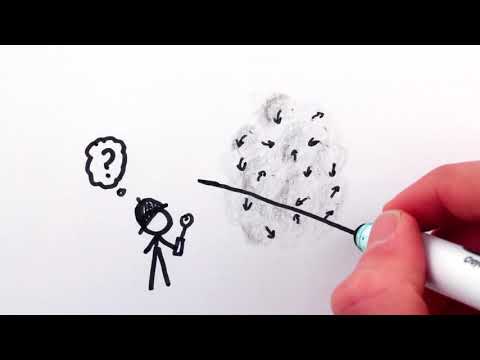 3:12
Why is the Solar System Flat?
9.5M views • 12 years ago
minutephysics
A minutephysics explainer on why the planets orbit in a flat plane. It shows how conserved angular momentum flattens a collapsing cloud of matter into a disk.
Topic match · Fundamental physics 3:34
Complete Solution To The Twins Paradox
2.3M views • 10 years ago
minutephysics
A minutephysics explainer on the twins paradox in special relativity. It shows why the traveling twin ends up younger and how acceleration resolves the paradox.
Topic match · Fundamental physics 6:22
The Unreasonable Efficiency of Black Holes
4.5M views • 8 years ago
minutephysics
Minutephysics compares how efficiently different processes convert mass to energy per E=mc^2, from fire and fission to fusion, antimatter and black holes, which can convert a large fraction of mass to energy.
Topic match · Fundamental physics 3:13
Hitting the Sun is HARD
3M views • 10 years ago
minutephysics
A three-minute minutephysics video on the orbital mechanics of why crashing into the Sun takes far more energy than leaving the solar system.
Topic match · Fundamental physics 27:40
The Biggest Misconception in Physics
14.2M views • 1 year ago
Veritasium
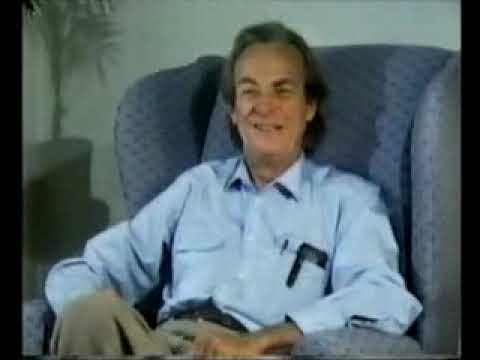
Veritasium explores why energy is not conserved in general relativity, using Emmy Noether's theorem linking symmetries to conservation laws. Physicists interviewed explain energy loss in an expanding universe.
 2:27
What keeps a train on the track?
191K views • 17 years ago
BoreMeScience
A short clip of Richard Feynman explaining how a train stays on its tracks, through the conical shape of wheels and how it handles curves without differentials.
Topic match · Fundamental physics 2:27
Feynman: How the train stays on the track FUN TO IMAGINE 7
820K views • 18 years ago
Christopher Sykes
A short clip from the 1983 BBC series Fun to Imagine in which Richard Feynman explains how a train stays on the track. He covers the geometry of tapered wheels that steer the train back toward the center of the rails.
Topic match · Fundamental physics 18:54
The NEW Warp Drive Possibilities
2.8M views • 5 years ago
PBS Space Time
PBS Space Time explains how general relativity permits warp drive in principle and covers recent theoretical advances toward solving the negative energy problem.
Topic match · Fundamental physics 5:30
The Moon's Orbit is WEIRD
1.9M views • 2 years ago
minutephysics
A minutephysics explainer showing that the Moon's path around the Sun is not a spiral but closer to a 12-sided polygon with curved corners. It argues the Moon arguably orbits the Sun rather than the Earth.
Topic match · Everyday physics & science demos 7:02
Traffic Waves
1M views • 18 years ago
wbeaty
A short video from the trafficwaves.org site showing how traffic jams and standing waves form, including the fight between cheaters and blockers at an exit-lane backup. It also touches on how individual driving behavior affects the flow.
Topic match · Everyday physics & science demos 25:10
How an Atomic Clock Really Works: Inside the HP 5061A Cesium Clock
464K views • 6 years ago
CuriousMarc
CuriousMarc powers up a vintage HP 5061A cesium beam clock and explains both the quantum principle and the HP implementation in detail. It is part of a longer atomic clock series.
Topic match · Everyday physics & science demos 3:16
Feynman: Mirrors FUN TO IMAGINE 6
600K views • 18 years ago
Christopher Sykes
Richard Feynman, in a clip from the BBC series Fun to Imagine, takes on the puzzle of why mirrors seem to swap left and right but not top and bottom.
Topic match · Everyday physics & science demos 29:48
MOLTEN GLASS VS Prince Rupert's Drop - Smarter Every Day 285
5.8M views • 3 years ago
SmarterEveryDay
Destin Sandlin of Smarter Every Day explores molten glass and Prince Rupert's drops with a glass artist, including a process that freezes the moment glass shatters and an artisan who makes the drops.
Topic match · Everyday physics & science demos 18:49
The Snowflake Myth
10.6M views • 4 years ago
Veritasium
Veritasium visits snowflake expert Dr Ken Libbrecht, who grows designer snowflakes in the lab. The video explains how snowflakes form and why they take so many shapes.
Topic match · Everyday physics & science demos 15:41
How anti-theft tags work - magnetostriction
886K views • 10 years ago
Applied Science
Applied Science explains how retail anti-theft tags work. A tiny magnetostrictive strip acts as a mechanical oscillator excited by a magnetic field, and magnetizing or demagnetizing it arms or disarms the tag.
Topic match · Everyday physics & science demos 19:22
Mechanical circuits: electronics without electricity
8.7M views • 4 years ago
Steve Mould
Steve Mould shows Spintronics, a set of mechanical components such as resistors, capacitors and transistors linked by chains, that give an intuitive feel for how electrical circuits work.
Topic match · Everyday physics & science demos 5:26
Neural Network Learns The Physics of Fluids and Smoke | Two Minute Papers #118
209K views • 9 years ago
Two Minute Papers
Two Minute Papers covers a paper on speeding up fluid and smoke simulation with convolutional networks. It contrasts the approach with earlier regression forest methods.
 5:36
Why all solar panels are secretly LEDs (and all LEDs are secretly solar panels)
2.5M views • 7 years ago
Steve Mould
Steve Mould shows that LEDs and solar panels are both diodes made from semiconductors, so a solar panel can emit light and an LED can generate electricity. He demonstrates a small solar panel lighting up.
Topic match · Everyday physics & science demos 7:38
Does Hot Water Freeze Faster Than Cold Water?
5M views • 9 years ago
Sciencium
Sciencium examines the Mpemba effect, the claim that hot water freezes faster than cold water. It walks through experiments and a published paper questioning the effect.
Topic match · Everyday physics & science demos 19:05
Why No One Has Measured The Speed Of Light
24.3M views • 6 years ago
Veritasium
Veritasium explains why the one-way speed of light has never been measured, only the round-trip speed, since measuring it requires synchronized clocks that assume the answer. It explores the implications for relativity.
Topic match · Fundamental physics 7:07
Feynman: What things really are like FUN TO IMAGINE 1
747K views • 17 years ago
Christopher Sykes
A clip from the 1983 BBC series Fun to Imagine in which Richard Feynman explains heat as the jiggling of atoms and how we perceive it as hot and cold.
Topic match · Fundamental physics 10:48
The True Nature of Matter and Mass | Space Time | PBS Digital Studios
1.8M views • 10 years ago
PBS Space Time
A PBS Space Time episode asking what matter, mass, and energy really are, starting with inertial versus gravitational mass and what mass-energy equivalence means.
Topic match · Fundamental physics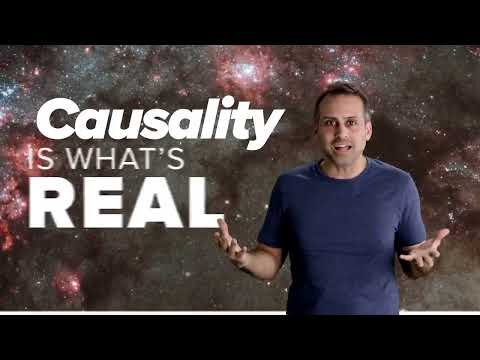 8:55
Are Space and Time An Illusion?
3.3M views • 11 years ago
PBS Space Time
A PBS Space Time episode hosted by Gabe Perez-Giz on the nature of spacetime and whether space and time are fundamental. It builds up reference frames and causality in a short, dense format.
Topic match · Fundamental physics