physics visualization
 27:15
The Most Misunderstood Concept in Physics
31.5M views • 3 years ago
Veritasium
Veritasium's explainer on entropy, presented as one of physics' most important and least understood concepts. It uses examples such as heat engines and the sun's energy flowing through the Earth.
 21:38
Risking My Life To Settle A Physics Debate
12.4M views • 5 years ago
Veritasium
Veritasium investigates whether a wind-powered vehicle can travel directly downwind faster than the wind, driving the Blackbird craft himself. The video explains the physics behind a claim some physics professors dispute.
 17:56
A Physics Professor Bet Me $10,000 I'm Wrong
26.3M views • 5 years ago
Veritasium
Veritasium recounts a $10,000 bet with a UCLA physics professor over whether a vehicle can travel downwind faster than the wind. He presents the professor's reasoning and demonstrations, including one without aerodynamics.
 15:53
Quantum Field Theory visualized
2.7M views • 6 years ago
ScienceClic English
ScienceClic gives a 15-minute animated introduction to quantum field theory, covering fields, spin, conserved quantities, the standard model and interactions.
 16:43
The Equation That Explains (Nearly) Everything!
1.6M views • 4 years ago
PBS Space Time
PBS Space Time explains the Standard Model Lagrangian, the single equation encapsulating the particle physics theory, and visualizes what its terms mean.
 11:33
A new way to visualize General Relativity
3.6M views • 6 years ago
ScienceClic English
ScienceClic explains why the rubber sheet analogy for general relativity is misleading and offers a new visualization that includes the curvature of time and shows gravity as motion through curved spacetime.
 11:22
Most People Don't Know How Bikes Work
24.9M views • 4 years ago
Veritasium
Veritasium explains why bicycles are stable, arguing that gyroscopic effects are not the answer. The video shows countersteering and an experiment where riders blocked from steering the opposite way cannot turn.
 27:40
The Biggest Misconception in Physics
14.2M views • 1 year ago
Veritasium
Veritasium explores why energy is not conserved in general relativity, using Emmy Noether's theorem linking symmetries to conservation laws. Physicists interviewed explain energy loss in an expanding universe.
 12:36
Why the Muon g-2 Results Are So Exciting!
1.5M views • 5 years ago
PBS Space Time
A PBS Space Time episode explaining the Fermilab Muon g-2 results and why a discrepancy with the Standard Model prediction could point to new physics.
 18:54
The NEW Warp Drive Possibilities
2.8M views • 5 years ago
PBS Space Time
PBS Space Time explains how general relativity permits warp drive in principle and covers recent theoretical advances toward solving the negative energy problem.
 44:23
A Swift Introduction to Geometric Algebra
1.1M views • 6 years ago
sudgylacmoe
An animated introduction to geometric algebra, presented as a language that can describe most of physics. It was made with manim and covers multivectors and how they generalize familiar tools like cross products and quaternions.
 19:05
Why No One Has Measured The Speed Of Light
24.3M views • 6 years ago
Veritasium
Veritasium explains why the one-way speed of light has never been measured, only the round-trip speed, since measuring it requires synchronized clocks that assume the answer. It explores the implications for relativity.
 37:54
Do Chairs Exist?
16.2M views • 5 years ago
Vsauce
A Vsauce video exploring whether chairs exist, through metaphysics, mereology and the philosophy of categorizing objects. It runs about 38 minutes and cites academic work on ontology.
 11:26
Do Complex Numbers Exist?
854K views • 5 years ago
Sabine Hossenfelder
Sabine Hossenfelder asks whether complex numbers are just a convenient tool or necessary in physics. She discusses a recent paper arguing that quantum mechanics cannot be done with real numbers alone.
 12:20
I Solved Klotski
2.1M views • 1 year ago
2swap
2swap explains how he solved the Klotski sliding-block puzzle by mapping its full state space as a graph and visualizing it. The video includes footage of the Guinness world-record solve and links to an interactive graph.
 23:05
World's Strongest Magnet!
16.4M views • 3 years ago
Veritasium
Veritasium visits the National High Magnetic Field Laboratory to see the world's strongest magnets and demonstrate effects like eddy currents. It covers what intense magnetic fields do to materials and objects.
 5:30
The Moon's Orbit is WEIRD
1.9M views • 2 years ago
minutephysics
A minutephysics explainer showing that the Moon's path around the Sun is not a spiral but closer to a 12-sided polygon with curved corners. It argues the Moon arguably orbits the Sun rather than the Earth.
 13:06
Hydrogen vs. Battery Electric Cars
716K views • 5 years ago
Physics Girl
Physics Girl compares hydrogen fuel cell cars and battery electric cars after driving 1800 miles in a Toyota Mirai. The video was part of a series sponsored by Toyota.
 24:26
The Beauty of Bézier Curves
2.2M views • 5 years ago
Freya Holmér
Freya Holmer explains how Bezier curves work, from the helper-line construction to their uses in animation, text rendering and shapes. It uses visuals from her Unity Shapes plugin and was a SoME1 contest winner.
 1:13:50
The Continuity of Splines
1.9M views • 3 years ago
Freya Holmér
Freya Holmer's 74-minute video essay on splines, covering Bezier curves, B-splines, derivatives and the different levels of continuity (C0, C1, C2), built with custom animation tools. She notes she did not cover non-uniform splines.
 27:14
Transformers, the tech behind LLMs | Deep Learning Chapter 5
11.6M views • 2 years ago
3Blue1Brown
3Blue1Brown's visual explanation of how transformers and GPT-style language models work, tracing data through tokens, embeddings and attention.
 14:48
The Biggest Misconception About Electricity
28.2M views • 4 years ago
Veritasium
Veritasium argues that electric energy is carried by fields around the wires rather than by electrons moving through them, using a thought experiment with a large circuit.
 21:15
The REAL Possibility of Mapping Alien Planets!
778K views • 4 years ago
PBS Space Time
PBS Space Time explains the proposal to use the Sun's gravity as a giant lens, sending a train of small light-sail spacecraft to the focal point roughly 550 AU out. It covers how such a telescope could image exoplanets in surprising detail and the engineering challenges involved.
 28:34
But why would light "slow down"? | Visualizing Feynman's lecture on the refractive index
2.9M views • 2 years ago
3Blue1Brown
3Blue1Brown visualizes Feynman's lecture on the refractive index, explaining why light appears to slow down in glass and why the effect depends on color. It builds the idea from waves produced by oscillating charges in the material.
 19:07
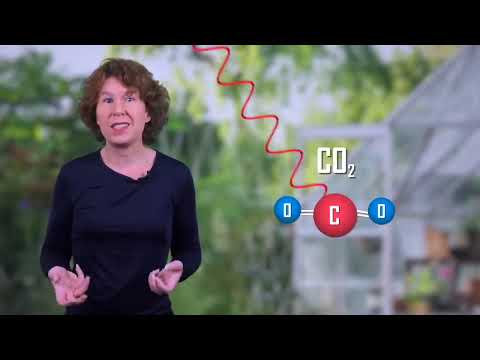
I Misunderstood the Greenhouse Effect. Here's How It Works.
989K views • 3 years ago
Sabine Hossenfelder
Sabine Hossenfelder explains how the greenhouse effect actually works, given that infrared is mostly absorbed low in the atmosphere already. She walks through why more CO2 still warms the surface.
 26:10
Attention in transformers, step-by-step | Deep Learning Chapter 6
4.8M views • 2 years ago
3Blue1Brown
3Blue1Brown's visual walkthrough of the attention mechanism inside transformers, covering self-attention, multiple heads and cross-attention. It is chapter 6 of his deep learning series.
 25:10
How an Atomic Clock Really Works: Inside the HP 5061A Cesium Clock
464K views • 6 years ago
CuriousMarc
CuriousMarc powers up a vintage HP 5061A cesium beam clock and explains both the quantum principle and the HP implementation in detail. It is part of a longer atomic clock series.
 12:51
The Delayed Choice Quantum Eraser, Debunked
718K views • 5 years ago
Sabine Hossenfelder
Sabine Hossenfelder explains the delayed choice quantum eraser and argues it does not rewrite the past, as popular accounts claim. She walks through what the experiment actually shows.
 18:04
How the Higgs Mechanism Give Things Mass
1.9M views • 4 years ago
PBS Space Time
A PBS Space Time episode on how the Higgs mechanism gives particles mass, prompted by Fermilab's heavier-than-expected W boson measurement. It goes beyond the usual pop-science treatment without heavy math.
 57:03
HACKENBUSH: a window to a new world of math
562K views • 5 years ago
Owen Maitzen
Owen Maitzen's animated hour-long introduction to Hackenbush, a simple combinatorial game, and how its strategy leads to surreal numbers and the roots of the number system.
 24:31
How Electricity Actually Works
12.8M views • 4 years ago
Veritasium
Veritasium explores how electrical energy actually travels in a circuit, arguing that it flows through electromagnetic fields around the wires rather than through the electrons. It builds a long-cable experiment with Caltech to test when a distant bulb lights.
 1:19:08
A Million Dollars vs A Billion Dollars, Visualized: A Road Trip
8.3M views • 6 years ago
Tom Scott
Tom Scott makes the difference between a million and a billion dollars tangible by using distance on a road trip instead of volume. The drive makes the scale of a billion intuitively felt.
 45:55
Turning Waves Into Particles
194K views • 1 year ago
Huygens Optics
Huygens Optics explores the idea that space is a non-linear elastic medium, and uses simulations to show how wave energy might be confined locally into particle-like objects. It touches on inertia, the Schwinger limit and the vacuum as a medium.
 4:01
Spherical Geometry Is Stranger Than Hyperbolic - Hyperbolica Devlog #2
1.8M views • 6 years ago
CodeParade
CodeParade's short devlog on how spherical geometry looks in 2D and 3D and why it feels so unusual, part of the Hyperbolica series on a non-Euclidean game.
 11:50
Dark Matter: The Situation has Changed
830K views • 5 years ago
Sabine Hossenfelder
Sabine Hossenfelder explains how her opinion on dark matter has shifted, weighing the evidence for and against it and the case for modified gravity. It runs through what dark matter is and why it has not been detected.
 23:47
I Think Faster Than Light Travel is Possible. Here's Why.
3.8M views • 3 years ago
Sabine Hossenfelder
Sabine Hossenfelder explains why she thinks faster-than-light travel may not be ruled out. She argues that the standard objections from special relativity are inconclusive.
 22:38
I recently learned that waste heat will boil the oceans in about 400 years.
767K views • 3 years ago
Sabine Hossenfelder
Sabine Hossenfelder explains that waste heat from ever-growing energy use could eventually boil the oceans in a few centuries, whatever the energy source. She discusses proposed ways to cool the planet.
 29:48
MOLTEN GLASS VS Prince Rupert's Drop - Smarter Every Day 285
5.8M views • 3 years ago
SmarterEveryDay
Destin Sandlin of Smarter Every Day explores molten glass and Prince Rupert's drops with a glass artist, including a process that freezes the moment glass shatters and an artisan who makes the drops.
 17:48
All you need to know to understand 5G
1.6M views • 5 years ago
Sabine Hossenfelder
Physicist Sabine Hossenfelder explains how 5G works and examines the health concerns around millimeter wave radiation. She reviews the scientific evidence and the open letters from scientists.
 52:22
Power is not energy: why the difference matters
2.3M views • 1 year ago
Technology Connections
Technology Connections explains the difference between power (watts) and energy (watt-hours) and why confusing them leads to errors. It runs about 52 minutes and uses everyday examples.