programming history
 11:11
The Agricultural Revolution: Crash Course World History #1
17.7M views • 14 years ago
CrashCourse
The first episode of Crash Course World History, in which John Green covers the shift from hunting and gathering to agriculture and how it shaped civilization. It is delivered fast and with jokes.
 15:09
Mouse Cursor History (and why I made my own)
3M views • 8 years ago
Posy
Posy gives a short history of the computer mouse cursor, from early straight pointers to the tilted arrow, comparing Apple and Windows designs. He then explains why he designed his own cursor set and offers it as a free download.
 19:26
history of the entire world, i guess
185.5M views • 9 years ago
bill wurtz
A fast, absurdist 19-minute animated run through the history of the whole world, narrated and scored by Bill Wurtz in his distinctive style. It compresses millennia of events into jokes, songs and quick visuals.
 9:09
England: South Sea Bubble - The Sharp Mind of John Blunt - Extra History - Part 1
3.5M views • 11 years ago
Extra History
The first part of Extra History's animated miniseries on the South Sea Bubble. It explains how England's government debt led Robert Harley to turn to financier John Blunt, whose schemes began inflating artificial demand for shares.
 7:09
A New History for Humanity – The Human Era
10.1M views • 9 years ago
Kurzgesagt – In a Nutshell
Kurzgesagt explains the Holocene or Human Era calendar, which adds 10,000 years to the current year to anchor dates to the start of human civilization. It argues this gives a more sensible frame for human history.
 18:28
w
3.7M views • 7 years ago
jan Misali
jan Misali traces the history of the letter W, including why it is called double u. The video is part of a series of deep dives into individual letters.
 17:52
Holy Post - Race in America
1.7M views • 6 years ago
Holy Post Media
Phil Vischer of VeggieTales and Holy Post gives an 18-minute history of racial injustice in America, covering why anger persists despite civil rights laws. It is told from an evangelical Christian perspective and adapted from a class he co-taught.
 9:39
What Happened Before History? Human Origins
24.3M views • 10 years ago
Kurzgesagt – In a Nutshell
Kurzgesagt's animated overview of human origins and the vast prehistory before recorded history. It covers how modern humans emerged and spread.
 10:00
How A London Orchestra Broke International Law
270K views • 7 years ago
12tone
12tone tells the story of pitch inflation and how concert A came to be standardized at 440 Hz, including attempts at legal standards. It is a short music history explainer.
 11:45
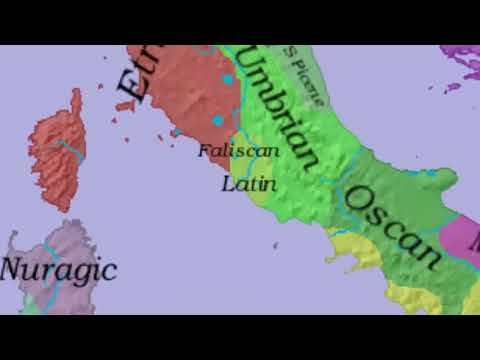
The History of Europe: Every Year
33.9M views • 8 years ago
Cottereau
An animated map showing the borders and populations of European countries for every year since 400 BC. Vassal states and colonies are excluded from population counts.
 12:09
I promise this story about microwaves is interesting.
9M views • 5 years ago
Tom Scott
Tom Scott investigates the claim that the microwave was invented to heat hamsters, and interviews James Lovelock about freezing and microwave-thawing hamsters in the 1950s. It traces early magnetron uses beyond radar.
 15:37
Salmon Sushi Is Not Real
465K views • 5 years ago
My Name Is Andong
Andong examines the popular story that Norway invented salmon sushi in Japan in the 1990s. He argues it is largely a myth, pointing to earlier evidence of raw salmon eaten in Japan and elsewhere.
 18:57
Why the Soviet Computer Failed
4.2M views • 4 years ago
Asianometry
An Asianometry explainer on why the Soviet Union, once a leading computing power, fell far behind the US in computers by the 1980s. It traces the gap from the 1960s onward despite strong state support for science.
 11:24
The Tube Map nearly looked very different
2.6M views • 4 years ago
Map Men
Map Men's Jay Foreman tells the story of how the London Tube map nearly looked very different, including Harry Beck's design and TfL's initial rejection of it. A short, witty history of a design icon.
 4:48
London Swallowed a City but Couldn't Digest It.
8.6M views • 14 years ago
CGP Grey
CGP Grey explains that the City of London is a tiny, separate entity with its own governance, history and privileges, distinct from the city called London. He covers its financial role and how it is run.
 9:13
Worst Nuclear Accidents in History
10.9M views • 5 years ago
Kurzgesagt – In a Nutshell
Kurzgesagt compares how many people nuclear accidents have killed against other energy sources. It walks through the worst nuclear accidents and puts their death tolls in context per unit of energy.
 14:27
Why is TV 29.97 frames per second?
2.2M views • 10 years ago
Stand-up Maths
Matt Parker explains the history behind NTSC television running at 29.97 frames per second rather than 30, tracing it to the backward-compatible addition of color. He walks through the arithmetic behind the odd ratio.
 13:55
Segmented Displays
7.2M views • 4 years ago
Posy
Posy explores segmented displays, from the seven-segment display to alternative designs with fewer or more segments, with patents and history.
 9:07
Which key is the saddest?
1.3M views • 9 years ago
Adam Neely
Musician Adam Neely examines whether certain keys sound sadder than others, looking at the history of tuning systems and temperaments and at how instrument timbre shapes the emotional character we hear. It draws on historical aesthetics writing and audio examples.
 10:22
Shakespeare: Original pronunciation (The Open University)
5.6M views • 15 years ago
OpenLearn from The Open University
David and Ben Crystal introduce the Original Pronunciation production of Shakespeare and show what it reveals about the history of English, including puns and rhymes lost in modern speech.
 4:42
The US-Canada Border Is 5,500 Miles of Pure Nonsense
37.4M views • 13 years ago
CGP Grey
CGP Grey walks through the odd history and quirks of the US-Canada border, including how it was surveyed and its irregularities such as exclaves.
 4:51
The UK Election Results Were the Worst in History
8.1M views • 11 years ago
CGP Grey
CGP Grey explains how the 2015 UK general election showed the flaws of first-past-the-post voting, with parties like UKIP winning many votes but few seats.
 16:00
The Iroquois Confederacy
1.5M views • 8 years ago
Historia Civilis
Historia Civilis explains the origins and governing system of the Iroquois (Haudenosaunee) Confederacy. It covers the Great Law and the league's surprisingly intricate legal and political structure.
 19:37
Why is Japan So Weak in Software?
968K views • 2 years ago
Asianometry
Asianometry examines why Japan's software industry has lagged despite its hardware strengths. It looks at dependence on US software and the low prestige of programming.
 12:23
Typesetters in the '80s - Computerphile
105K views • 12 years ago
Computerphile
Professor Brailsford of the University of Nottingham describes how the university set out to print its own mathematics exam papers in the 1980s. The story centers on getting a Mergenthaler Linotron 202 typesetter to work with their own software.
 17:49
How Japan Learned Semiconductors
228K views • 4 years ago
Asianometry
Asianometry traces the 30-year rise and peak of Japan's semiconductor industry from the 1950s to the 1980s, covering how a postwar country gained competence in an emerging technology.
 10:29
Vertical Landing Rockets Before SpaceX
785K views • 8 years ago
Curious Droid
Curious Droid surveys vertical take-off and landing rockets that predate SpaceX and Blue Origin, including the McDonnell Douglas DC-X of the 1990s. It shows that propulsive landing has about 60 years of history.
 13:38
Why Japan had NO Chance in WW2
835K views • 7 years ago
Military History Visualized
Military History Visualized charts ship production by the United States and Japan from December 1941 to September 1945. The growing numbers show why Japan, despite a stronger starting navy, could not win a long war.
 10:13
The Problem with Time & Timezones - Computerphile
4.4M views • 12 years ago
Computerphile
Tom Scott explains for Computerphile why handling time and timezones in code is so hard, walking through a simple web app that computes how long ago something happened. It covers the quirks of timezones and calendars and ends in an exasperated rant.
 12:08
Why Some Diseases Only Traveled One Direction
13.9M views • 10 years ago
CGP Grey
CGP Grey explains why European diseases devastated the Americas while few deadly diseases traveled the other way. He ties it to livestock domestication, dense cities, and the ideas of Guns, Germs and Steel.
 6:30
How the Dutch got their cycle paths
1.2M views • 15 years ago
BicycleDutch
A short BicycleDutch video on how the Netherlands got its cycling infrastructure, including the 1970s protests and the shift away from car-centric planning. The channel later published an updated version.
 11:54
Building a Cathedral without Science or Mathematics: The Engineering Method Explained
1.1M views • 3 years ago
engineerguy
Bill Hammack of engineerguy explains how medieval engineers designed stone cathedrals using rules of thumb, with no science, mathematics or literacy. He uses it to define the engineering method.
 6:42
Carl Sagan - Cosmos - Eratosthenes
3M views • 17 years ago
carlsagandotcom
A short clip from Carl Sagan's Cosmos in which he explains how Eratosthenes measured the circumference of the Earth using shadows in two Egyptian cities. It is a clear, visual account of an ancient scientific feat.
 17:30
This is why we can't have nice things
25.6M views • 5 years ago
Veritasium
Veritasium explores planned obsolescence, from the Phoebus lightbulb cartel to printers and phones. It explains how companies deliberately shortened product lifetimes and why products aren't better.
 4:44
Debt Metaphor
95K views • 17 years ago
Ward Cunningham
Ward Cunningham explains the history and intent of the debt metaphor, which he coined while refactoring the WyCash product. He says debt means code reflecting an incomplete understanding of the problem, not sloppy programming.
 12:23
Xanadu Basics 1a - VISIBLE CONNECTION
20K views • 8 years ago
TheTedNelson
Ted Nelson explains the original Xanadu hypertext idea of visible connection, the notion that links between documents should be shown and preserved. He argues that the Web and current document standards lost this concept.
 4:34
This giant model stopped a terrible plan
10M views • 9 years ago
Tom Scott
Tom Scott tells how John Reber's plan to dam San Francisco Bay was disproved by the Army Corps of Engineers' giant hydraulic Bay Model in Sausalito. The model showed the plan would have been dangerously wrong.
 18:58
How The Auto Industry Carjacked The American Dream | Climate Town
922K views • 5 years ago
Climate Town
A Climate Town video on how the auto industry reshaped American cities and culture through advertising, lobbying and campaigns like the 1939 World's Fair. It is snarky in tone but backed by a published source document.
 19:25
New computers don't speed up old code
187K views • 1 year ago
Matthias random stuff
Matthias Wandel tests old and new code on a range of PCs, including a new mini PC, to measure how much faster modern hardware really is. He also shows optimization techniques such as branchless code, with benchmark programs on GitHub.
 13:20
How Kodak Exposed Nuclear Testing
6.7M views • 6 years ago
Veritasium
Veritasium tells how Kodak film was fogged by radioactive fallout from the first atomic tests, letting the company detect nuclear testing before anyone announced it. The video also covers the deal to keep it quiet and how fallout contaminated packaging.