quantum computing
 17:05
How Physicists Created a Holographic Wormhole in a Quantum Computer
2.4M views • 3 years ago
Quanta Magazine
Quanta Magazine explains the 2022 experiment that claimed to create a holographic wormhole on Google's quantum computer. The description now notes that a later independent analysis questioned whether any wormhole was created.
 31:18
Quantum Expert Insight: Peter Shor
607K views • 5 years ago
Qiskit
Peter Shor tells the story of how he discovered Shor's Algorithm, from his early mathematics days to the quantum factoring breakthrough. It was recorded at MIT at the Physics of Computation conference.
 56:11
A Brief History of Quantum Mechanics - with Sean Carroll
4.7M views • 6 years ago
The Royal Institution
Sean Carroll gives a Royal Institution talk tracing the history of quantum mechanics from Einstein and Bohr to today. He covers the Copenhagen interpretation and the many worlds interpretation.
 12:51
The Delayed Choice Quantum Eraser, Debunked
718K views • 5 years ago
Sabine Hossenfelder
Sabine Hossenfelder explains the delayed choice quantum eraser and argues it does not rewrite the past, as popular accounts claim. She walks through what the experiment actually shows.
 54:35
"An approach to computing and sustainability inspired from permaculture" by Devine Lu Linvega
19K views • 3 years ago
Strange Loop Conference
Devine Lu Linvega of Hundred Rabbits talks about low-power, offline computing, esoteric languages and the Uxn virtual machine, informed by years of sailing the Pacific. The talk frames computing sustainability through a permaculture lens.
 19:19
Was Penrose Right? NEW EVIDENCE For Quantum Effects In The Brain
1.1M views • 2 years ago
PBS Space Time
PBS Space Time examines Roger Penrose's idea that consciousness arises from quantum processes in the brain, and reviews new evidence about microtubules. It ends with an estimate of what replicating consciousness would demand.
 15:53
Quantum Field Theory visualized
2.7M views • 6 years ago
ScienceClic English
ScienceClic gives a 15-minute animated introduction to quantum field theory, covering fields, spin, conserved quantities, the standard model and interactions.
 1:00:26
Colossus - The Greatest Secret in the History of Computing
1M views • 6 years ago
The Centre for Computing History
Chris Shore of the Centre for Computing History explains how Colossus was built, how it worked, and how it affected the course of World War II. It is an hour-long museum lecture on the codebreaking computer.
 21:42
Future Computers Will Be Radically Different (Analog Computing)
13.2M views • 4 years ago
Veritasium
Veritasium explains why analog computing may suit AI workloads, covering old analog computers, The Analog Thing and Mythic's analog chips that use flash memory for neural network inference. It argues digital hardware is hitting limits.
 11:26
Do Complex Numbers Exist?
854K views • 5 years ago
Sabine Hossenfelder
Sabine Hossenfelder asks whether complex numbers are just a convenient tool or necessary in physics. She discusses a recent paper arguing that quantum mechanics cannot be done with real numbers alone.
 27:10
Growing Living Rat Neurons To Play... DOOM? | Part 1
4.5M views • 3 years ago
The Thought Emporium
The Thought Emporium grows living rat neurons on an electrode array and tries to train them to play Doom. It is part of a series on biological computing.
 2:14:31
There’s No Wave Function? | Jacob Barandes
488K views • 1 year ago
Curt Jaimungal
Physicist Jacob Barandes discusses his view that quantum mechanics can be formulated without wave functions, using a stochastic, probabilistic approach. The long interview covers measurement, the foundations of quantum theory and the history of the field.
 33:01
The Strangest Implication of Quantum Mechanics
20.6M views • 1 year ago
Veritasium
A Veritasium video that follows the principle of least action from Bernoulli and Newton to quantum mechanics, asking whether light takes all possible paths at once. It includes experiments showing quantum waves.
 20:30
Does Superdeterminism save Quantum Mechanics? Or does it kill free will and destroy science?
989K views • 4 years ago
Sabine Hossenfelder
Sabine Hossenfelder explains superdeterminism as an interpretation of quantum mechanics, addressing common objections and misconceptions, including the worry that it kills free will or science. She ties it to Bell's theorem and hidden variables.
 1:52:48
Sir Roger Penrose & Dr. Stuart Hameroff: CONSCIOUSNESS AND THE PHYSICS OF THE BRAIN
889K views • 6 years ago
The Qualcomm Institute
A 2020 UC San Diego event with Roger Penrose and Stuart Hameroff presenting their Orch OR theory that consciousness arises from quantum processes in brain microtubules, followed by a conversation with Roger Bingham.
 2:39:15
Jim Keller: The Future of Computing, AI, Life, and Consciousness | Lex Fridman Podcast #162
1.3M views • 5 years ago
Lex Fridman
Lex Fridman interviews chip architect Jim Keller about the future of computing, AI, life and consciousness. Topics include CPU design, branch prediction and why imperfect designs often win.
 49:48
2023 LLVM Dev Mtg - Mojo 🔥: A system programming language for heterogenous computing
61K views • 2 years ago
LLVM
A 2023 LLVM Developers' Meeting keynote by Abdul Dakkak, Chris Lattner and Jeff Niu introducing Mojo, a Python-family systems language built on MLIR and LLVM for heterogeneous computing.
 3:28:54
COLLAPSE of Personal Computing | Investigation Into the Destruction of Ownership
3.2M views • 5 months ago
Gamers Nexus
A roughly 3.5-hour Gamers Nexus investigation into rising PC component prices, driven largely by AI data-center demand for memory and other hardware. It draws on interviews with industry figures to argue that personal computing and ownership are being eroded.
 18:57
Why the Soviet Computer Failed
4.2M views • 4 years ago
Asianometry
An Asianometry explainer on why the Soviet Union, once a leading computing power, fell far behind the US in computers by the 1980s. It traces the gap from the 1960s onward despite strong state support for science.
 2:42:41
Chris Lattner: The Future of Computing and Programming Languages | Lex Fridman Podcast #131
594K views • 6 years ago
Lex Fridman
Lex Fridman's long interview with Chris Lattner, creator of LLVM and Swift, covering the future of computing and programming languages. It touches on compilers, hardware, and his work at Apple, Tesla, Google and SiFive.
 46:56
IBM Computing Cheese Cutter [Restoration]
3.6M views • 5 years ago
Hand Tool Rescue
A 47-minute restoration of a 1920s IBM computing cheese cutter, a machine with parts patented between 1901 and 1907. The video covers the restoration work and explains why it is a computing cheese cutter.
 18:31
Fourier Optics used for Optical Pattern Recognition
103K views • 6 years ago
Huygens Optics
Huygens Optics explains the Fourier transform and shows how a lens performs one optically. A DLP projector is used as a Fourier filter to do simple pattern recognition on lithographic character patterns.
 20:13
The Most Powerful Computers You've Never Heard Of
13.7M views • 4 years ago
Veritasium
Veritasium traces analog computers from the Antikythera mechanism and Kelvin's tide-predicting machines to fire control and modern analog approaches. It explains how these machines computed continuously rather than digitally.
 25:10
How an Atomic Clock Really Works: Inside the HP 5061A Cesium Clock
464K views • 6 years ago
CuriousMarc
CuriousMarc powers up a vintage HP 5061A cesium beam clock and explains both the quantum principle and the HP implementation in detail. It is part of a longer atomic clock series.
 57:05
Keynote: Begin...End?
9K views • 5 years ago
David Beazley
David Beazley's PyData Global 2021 keynote, an oral history of early scientific Python. He tells how Python ended up running on a Connection Machine supercomputer at Los Alamos.
 2:58:24
The Death of Affordable Computing | Tariffs Impact & Investigation
2.3M views • 1 year ago
Gamers Nexus
A long Gamers Nexus investigation into how volatile US tariffs affect the computer hardware industry. It interviews manufacturers and sellers about costs, margins and why moving production to the US is hard.
 23:00
Consciousness is Not a Computation (Roger Penrose) | AI Podcast Clips
2.3M views • 6 years ago
Lex Fridman
Clip from Lex Fridman's podcast with Roger Penrose in which Penrose argues that consciousness is not a computation. He discusses Godel-style arguments and the possible role of quantum effects in microtubules.
 1:27:57
Roger Penrose: Physics of Consciousness and the Infinite Universe | Lex Fridman Podcast #85
2.7M views • 6 years ago
Lex Fridman
Lex Fridman interviews physicist Roger Penrose on consciousness, the limits of computation, quantum mechanics and his cyclic cosmology. It covers his views on AI and the big bang.
 6:55:03
50TH ANNIVERSARY OF THE COMPUTER SCIENCE DEPARTMENT AT THE UNIVERSITY OF UTAH
4K views • 3 years ago
University of Utah
A full-day recording of the University of Utah computer science department's 50th anniversary event with panels, keynotes and talks by alumni and pioneers. It includes Ivan Sutherland's presentation on single flux quantum electronics.
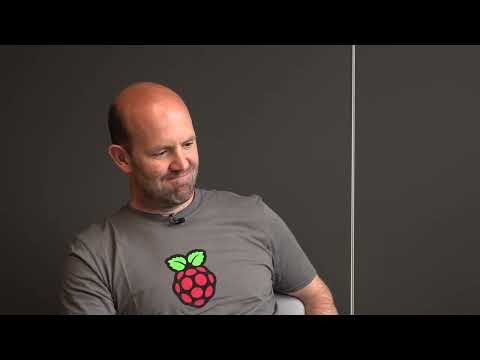 37:45
He started a computing REVOLUTION—then the shortage hit
224K views • 3 years ago
Jeff Geerling
Jeff Geerling interviews Raspberry Pi co-founder Eben Upton about the Pi shortage, the RP2040, RISC-V, the Sony investment and the origin of the name.
 52:59
Introducing Nx - José Valim | Lambda Days 2021
26K views • 5 years ago
Code Sync
Jose Valim introduces Nx, the project bringing numerical computing to Elixir, covering multi-dimensional tensors, automatic differentiation and JIT compilation to CPU and GPU.
 40:29
What is the Ultraviolet Catastrophe?
2.7M views • 6 years ago
Physics Explained
A detailed 40-minute explanation of the ultraviolet catastrophe, covering Rayleigh and Jeans' classical treatment of blackbody radiation and Planck's quantum hypothesis. It follows the Eisberg and Resnick textbook treatment.
 4:52
Freespin
148K views • 5 years ago
Matthias Kramm
Freespin is a demo that runs on a Commodore 1541 floppy drive. It makes sound by vibrating the drive head and video by toggling the serial bus lines, and it keeps running after the C64 that booted it is disconnected.
 1:43:10
Brian Kernighan: UNIX, C, AWK, AMPL, and Go Programming | Lex Fridman Podcast #109
766K views • 6 years ago
Lex Fridman
Lex Fridman interviews Brian Kernighan, co-author of The C Programming Language and co-creator of AWK and AMPL. They discuss Unix, C, Go and his memoir on the history of Unix.
 20:11
Apple Vision Pro Impressions!
18.2M views • 3 years ago
Marques Brownlee
Marques Brownlee shares his hands-on impressions of Apple's $3500 Vision Pro headset after trying it. He covers the spatial computing experience, eye tracking, and how it compares to other devices.
 56:54
Change w/ Jim Keller
61K views • 3 years ago
Tenstorrent
Jim Keller, CTO of Tenstorrent, gives a keynote at Stanford's System X conference on change, understanding and the future of computing. He touches on Moore's Law, how far transistors are from physical limits, and ideas like DNA origami.
 20:00
Why Parallel Universes Are Probably Real
25.4M views • 6 years ago
Veritasium
Veritasium explains the many-worlds interpretation of quantum mechanics, drawing heavily on Sean Carroll's book. It walks through the Schrodinger equation and why wave collapse may be unnecessary if the universe keeps splitting.
 50:06
Protected KVM on Arm64: A Technical Deep Dive - Quentin Perret, Google
6K views • 4 years ago
The Linux Foundation
Quentin Perret of Google gives a technical deep dive into protected KVM (pKVM) on Arm64, a confidential computing approach for CPUs without hardware extensions. It explains how the nVHE hypervisor manages stage-2 MMU access control to protect guest memory.
 37:43
Doom The Way it Was Meant to Be Played - v1.1 Multi-monitor
1.2M views • 3 years ago
Tech Tangents
Tech Tangents sets up original Doom's three-screen multi-monitor mode, which required a separate networked computer for each monitor. The video covers the hardware and setup work and the result.
 6:33
The Biggest Ideas in the Universe: Introduction
384K views • 6 years ago
Sean Carroll
Sean Carroll introduces his video series on the biggest ideas in physics, such as symmetry, space and matter, as informal discussions with follow-up Q&A videos. This is the short opening video of the series.