reference frames
 12:55
Apple Pro Display XDR Review (vs Sony Reference Monitor)
570K views • 6 years ago
HDTVTest
HDTVTest reviews the Apple Pro Display XDR using measurements and a side-by-side comparison with a Sony BVM-HX310 dual-layer LCD reference monitor. It examines how well the display handles HDR against a professional reference.
 8:55
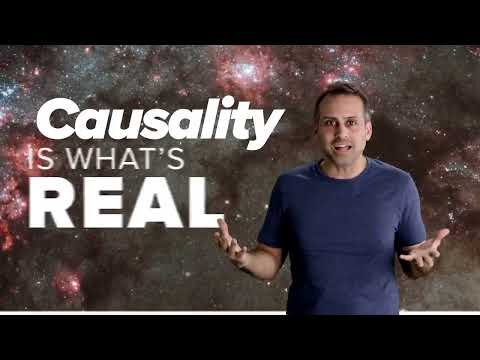
Are Space and Time An Illusion?
3.3M views • 11 years ago
PBS Space Time
A PBS Space Time episode hosted by Gabe Perez-Giz on the nature of spacetime and whether space and time are fundamental. It builds up reference frames and causality in a short, dense format.
 14:27
Why is TV 29.97 frames per second?
2.2M views • 10 years ago
Stand-up Maths
Matt Parker explains the history behind NTSC television running at 29.97 frames per second rather than 30, tracing it to the backward-compatible addition of color. He walks through the arithmetic behind the odd ratio.
 18:32
The world depends on a collection of strange items. They're not cheap
12.6M views • 3 years ago
Veritasium
Veritasium visits NIST to explain Standard Reference Materials, the carefully characterized items such as peanut butter used to calibrate instruments and keep measurements consistent. It covers why they exist and why they are expensive.
 9:29
Clockmaking - How To Make A Clock In The Home Machine Shop - Part 1 - Making The Clock Frames
696K views • 11 years ago
Clickspring
The first episode of Clickspring's series building a John Wilding skeleton clock from raw stock in a home machine shop. It covers making the frames along with the tools needed for the job.
 11:02
Imaging at a trillion frames per second | Ramesh Raskar
3.2M views • 14 years ago
TED
Ramesh Raskar presents femto-photography, a technique that captures a trillion frames per second, fast enough to show light itself moving through a scene. He discusses possible uses such as cameras that see around corners or inside the body.
 9:40
HOW TO DATAMOSH: PART 1
433K views • 17 years ago
datamosher
A how-to video on datamoshing, the glitch-art technique of removing keyframes so that motion data smears across video. It walks through the tools needed, such as ffmpegx and Avidemux, though the author notes parts are outdated.
 17:52
Training AI Without Writing A Reward Function, with Reward Modelling
259K views • 6 years ago
Robert Miles AI Safety
Robert Miles explains reward modelling, in which an AI learns what humans want from their preference comparisons instead of a hand-written reward function. He walks through the 2017 paper on deep reinforcement learning from human preferences.
 18:16
Choice, happiness and spaghetti sauce | Malcolm Gladwell
2M views • 19 years ago
TED
Malcolm Gladwell's TED talk on how Howard Moskowitz found that there is no single perfect spaghetti sauce. He draws a larger point about choice, preference and happiness.
 7:33
Richard Feynman. Why.
5.5M views • 14 years ago
firewalker
A short clip of Richard Feynman answering an interviewer's question about why magnets repel, explaining that a 'why' question depends on a shared framework of understanding. It illustrates how hard it is to explain fundamentals to a layperson.
 6:18
The artificial gravity lab
7.2M views • 7 years ago
Tom Scott
Tom Scott tours the rotating room artificial gravity facility at Brandeis University's Graybiel lab. It shows how humans cope with rotation-based gravity and the odd effects such as Coriolis forces.
 15:36
The Alt-Right Playbook: I Hate Mondays
2.1M views • 6 years ago
Innuendo Studios
An Innuendo Studios Alt-Right Playbook episode about a rhetorical tactic of dismissing partial fixes to problems. It frames this as a style of argument that treats flaws as unfixable facts of life.
 13:06
Filming the Speed of Light at 10 Trillion FPS
42.1M views • 7 years ago
The Slow Mo Guys
The Slow Mo Guys visit a lab with a camera capable of filming at 10 trillion frames per second, fast enough to see light travel. They show the setup and the resulting footage.
 4:29
[HD] Children of Men - Ark of the Arts - "I just don't think about it"
269K views • 10 years ago
Justin Simmons
A scene from Children of Men in which Theo visits Nigel in the Ark of the Arts to get transit papers. It features Nigel's line "I just don't think about it" and a one-handed chorded keyboard.
 19:05
Why No One Has Measured The Speed Of Light
24.3M views • 6 years ago
Veritasium
Veritasium explains why the one-way speed of light has never been measured, only the round-trip speed, since measuring it requires synchronized clocks that assume the answer. It explores the implications for relativity.
 7:16
Unix and Google
9K views • 10 years ago
FOAM
A short animated simulation comparing how Multics and Unix were developed, showing why Unix's small composable programs and pipes gave it a efficiency advantage. It frames Unix as a moonshot achievable by a small team.
 14:36
The Lottery: Last Week Tonight with John Oliver (HBO)
16M views • 11 years ago
LastWeekTonight
John Oliver's Last Week Tonight segment on state lotteries. It argues that the claim that lotteries fund education is misleading, because the money is fungible and often diverted to general funds.
 7:32
Ted Nelson demonstrates Xanadu Space
84K views • 18 years ago
photonhunter
Ted Nelson demonstrates Xanadu Space, his software for representing hypertext in three-dimensional space with linked, referenced content fragments.
 7:15
A Selfish Argument for Making the World a Better Place – Egoistic Altruism
11.4M views • 8 years ago
Kurzgesagt – In a Nutshell
Kurzgesagt makes a selfish case for improving the world, arguing that helping people far away raises prosperity and innovation for everyone, including yourself. The animated video frames this as egoistic altruism and positive-sum cooperation.
 17:06
What Is A Black Start Of The Power Grid?
3.1M views • 3 years ago
Practical Engineering
Practical Engineering explains what a black start is: restarting a power grid after total collapse. It shows why most plants need outside power to start and why rebuilding a synchronized grid is delicate and high-stakes.
 7:48
Slaughterbots
3.9M views • 8 years ago
Stop Autonomous Weapons
Slaughterbots is a fictional short film, backed by Stuart Russell, depicting swarms of cheap autonomous drones that use facial recognition to assassinate targets. It was made to argue for banning autonomous weapons.
 9:01
George Carlin - Euphemisms
6.3M views • 13 years ago
poyani
A George Carlin stand-up bit on euphemisms, tracing how language gets softened, such as shell shock becoming PTSD, until it loses its emotional force.
 4:38
The Only Safe Phone Is One Even the Police Can't Unlock
4.1M views • 10 years ago
CGP Grey
A five-minute CGP Grey explainer arguing that a phone is effectively an extension of your mind, and that any backdoor or master key into encrypted devices will inevitably be abused or leaked. It frames the encryption debate as locks that are either unbreakable or absent.
 13:34
Salt: Are you getting Enough? (More Sodium & Health)
1.4M views • 9 years ago
Joseph Everett - WIL
Joseph Everett argues, drawing on the book The Salt Fix, that most people benefit from more rather than less salt, and reviews studies on sodium, potassium and blood pressure.
 4:46
Head Tracking for Desktop VR Displays using the WiiRemote
10.9M views • 18 years ago
Johnny Lee
Johnny Lee demonstrates head tracking with a Wii remote and a head-mounted pair of IR LEDs, so a screen acts like a window into a 3D scene as your head moves.
 14:28
Superpositions, Sudoku, the Wave Function Collapse algorithm.
764K views • 6 years ago
Martin Donald
Martin Donald explains the Wave Function Collapse algorithm using Sudoku-like constraint solving and shows how he implemented it with Blender and Godot. It links demos and reference articles.
 7:33
Richard Feynman Magnets
999K views • 17 years ago
nebulajr
A short clip of Richard Feynman answering an interviewer's question about how magnets work, in which he explains why a why-question has no simple answer without a shared frame of reference.
 6:50
13 Misconceptions About Global Warming
5.9M views • 12 years ago
Veritasium
Veritasium debunks common climate change myths in under seven minutes, with references to NASA and published research. Topics include CO2 sources, sea ice and 1970s predictions of cooling.
 16:45
How Airlines Quietly Became Banks
7.4M views • 4 years ago
Wendover Productions
A Wendover Productions explainer arguing that major airlines make much of their profit from loyalty programs and co-branded credit cards rather than flying. It frames airlines as quasi-banks that sell points in bulk, using United's pandemic-era loan as a hook.
 13:40
Free software, free society: Richard Stallman at TEDxGeneva 2014
487K views • 12 years ago
TEDx Talks
Richard Stallman's TEDxGeneva 2014 talk describing how nonfree programs give companies control over users and what users can do to regain control. It introduces the free software movement and the four freedoms.
 13:05
Smoother animation ≠ Better animation [read pinned comment]
16.1M views • 5 years ago
Noodle
Animator Noodle explains why frame interpolation does not make animation better, covering timing, easing, smear frames and using the wrong tool for the job. A pinned correction says the video is partly outdated given later AI developments.
 11:21
How does a whip break the sound barrier? (Slow Motion Shockwave formation) - Smarter Every Day 207
6.5M views • 7 years ago
SmarterEveryDay
Smarter Every Day uses high-speed and Schlieren photography to show how a whip crack is a supersonic shockwave formed at the tip. It references academic papers on whip physics.
 18:19
Why city flags may be the worst-designed thing you've never noticed | Roman Mars
5.2M views • 11 years ago
TED
Roman Mars gives a funny TED talk on vexillology, laying out five basic principles of good flag design and why many city flags fail them.
 18:57
Manipulating the YouTube Algorithm - (Part 1/3) Smarter Every Day 213
2.7M views • 7 years ago
SmarterEveryDay
Part 1 of Smarter Every Day's three-part series on manipulating the YouTube algorithm. It features Renee DiResta and examples of how social media platforms can be manipulated.
 19:42
Blade Runner 2049 | "Cells Interlinked" and Pale Fire (LITERALLY ME! INCELS INTERLINKED)
344K views • 4 years ago
Fallopium Films
A film-analysis video essay linking Blade Runner 2049's Cells Interlinked sequence to Nabokov's Pale Fire. It examines the poetry and meaning behind the film's references.
 9:52
AI Slop Is Destroying The Internet
11.4M views • 1 year ago
Kurzgesagt – In a Nutshell
Kurzgesagt examines how AI-generated content is flooding the internet, from video and music to news and books. It looks at how this makes verifying what is real harder.
 16:04
Genetic Engineering Will Change Everything Forever – CRISPR
30.8M views • 10 years ago
Kurzgesagt – In a Nutshell
Kurzgesagt's animated explainer on CRISPR gene editing, covering how the technology works and what it could mean for curing disease, designer babies and aging. It frames genetic engineering as an irreversible change coming to humanity.
 4:00
Gall--Peters Projection
2.5M views • 16 years ago
UsefulClips
A short clip from The West Wing in which characters argue for the Gall-Peters map projection over Mercator. It dramatizes how standard maps distort the relative size of countries.
 7:50
ASTOUNDING: 1 + 2 + 3 + 4 + 5 + ... = -1/12
9.8M views • 12 years ago
Numberphile
A Numberphile video in which physicists Tony Padilla and Ed Copeland show a seemingly astounding result that 1+2+3+4+... equals -1/12. The argument is informal and has drawn criticism for glossing over what the result actually means.
 16:07
The Geometry of Causality
1.8M views • 9 years ago
PBS Space Time
PBS Space Time explains how spacetime geometry and light cones determine the order of events and what can cause what. It visualizes causality in special relativity.