robert lustig
 57:39
Debunking Dr. Robert Lustig's Claims from The Huberman Lab Podcast | Educational Video | Biolayne
261K views • 2 years ago
Dr. Layne Norton
Dr. Layne Norton critiques claims made by Dr. Robert Lustig on the Huberman Lab podcast, going through them against the nutrition research with cited sources. It covers topics like sugar, calories and fruit juice.
 57:42
Prof. Robert Lustig - 'Sugar, metabolic syndrome, and cancer'
1.2M views • 6 years ago
Low Carb Down Under
Pediatric endocrinologist Robert Lustig talks at Low Carb Denver 2020 about sugar, metabolic syndrome and cancer. He lays out the case that metabolic dysfunction drives disease.
 3:29:21
How Sugar & Processed Foods Impact Your Health | Dr. Robert Lustig
5.1M views • 2 years ago
Andrew Huberman
A long Huberman Lab podcast episode with Dr. Robert Lustig on the calories-in, calories-out model and how sugar, fructose, fiber and processed foods affect insulin, liver and metabolic health.
 3:13
Robert's Rules of Order, The WIre, S03E01
12K views • 8 years ago
Robert Kienzle
A three-minute clip from The Wire season 3 in which Stringer Bell chairs a drug-crew business meeting using Robert's Rules of Order. The scene plays the formal procedure against the criminal setting.
 1:26:15
Fat Chance: Fructose 2.0
7.3M views • 13 years ago
University of California Television (UCTV)
Robert Lustig of UCSF updates his sugar talk, arguing that fructose and processed foods drive obesity and metabolic syndrome through their endocrine effects. It is a roughly 90-minute university lecture.
 1:39:37
Is a Calorie a Calorie? Processed Food, Experiment Gone Wrong
12M views • 11 years ago
Stanford Health Care
Stanford Health Care hosts Christopher Gardner and Robert Lustig on whether all calories are equal, with a focus on processed food and sugar. The talk questions the idea that calories in versus calories out fully explains weight and health.
 1:29:37
Sugar: THE BITTER TRUTH
25.7M views • 17 years ago
University of California Television (UCTV)
Robert Lustig of UCSF lectures on the biochemistry of sugar, arguing that fructose and lack of fiber drive the obesity epidemic via insulin. It is the widely viewed 90-minute talk that popularized the anti-sugar case.
 4:26
Dr. Robert Zubrin with a brilliant answer to "Why Should We Go To Mars?"
470K views • 10 years ago
Jamin Gray
A short clip of Dr. Robert Zubrin, author of The Case for Mars, answering why humanity should go to Mars. He argues that societies grow by challenging themselves and that exploration inspires young people.
 1:13:13
Robert Sapolsky: The Biology of Humans at Our Best and Worst
1.5M views • 8 years ago
Stanford Iranian Studies Program
A 73-minute Stanford talk by Robert Sapolsky drawn from his book Behave. It surveys the biological factors behind human behavior at its best and worst.
 2:12
Robert F. Kennedy challenges Gross Domestic Product
378K views • 18 years ago
ipyramid
A short video of Robert F. Kennedy's 1968 speech criticizing Gross Domestic Product as a measure of progress, saying it counts everything except what makes life worthwhile.
 1:22:47
Dr. Robert Sapolsky's lecture about Biological Underpinnings of Religiosity
874K views • 14 years ago
Aprendiendo Juntos
Robert Sapolsky's Stanford lecture on the biological underpinnings of religiosity, from his human behavioral biology course. It covers theories linking religion to stress, and schizotypal traits.
 9:02
Why hierarchy creates a destructive force within the human psyche (by dr. Robert Sapolsky)
322K views • 14 years ago
TheSymposionNights
A short clip of Robert Sapolsky on how social hierarchy generates chronic stress, drawing on baboon research. It links rank-related stress to heart health and life expectancy.
 1:07:46
Joe Rogan Experience #965 - Robert Sapolsky
1.7M views • 9 years ago
PowerfulJRE
Joe Rogan interviews Stanford neuroendocrinologist Robert Sapolsky about his book Behave. They discuss the biology of human behavior, including toxoplasmosis and risk-taking, and baboon troop dynamics.
 1:28:31
FoodGate: The Break-in, the Cover-up, & the Aftermath
2.1M views • 8 years ago
University of California Television (UCTV)
A UCTV panel with endocrinologist Robert Lustig, dentist Cristen Kearns and health policy expert Laura Schmidt on how the US food system and sugar industry influence diet and health, including industry efforts to shape the science.
 1:46
Robert Kennedy on GDP
83K views • 8 years ago
Wimble Don
A two-minute excerpt of Robert Kennedy's 1968 University of Kansas speech criticizing GDP as a measure of national worth. He notes it counts harmful spending while ignoring what makes life worthwhile.
 0:25
Robert Mueller on Iraq War and WMD's
93K views • 9 years ago
IPA Media
A short clip of Robert Mueller speaking about Iraq and weapons of mass destruction.
 9:33
Avoiding Negative Side Effects: Concrete Problems in AI Safety part 1
161K views • 9 years ago
Robert Miles AI Safety
Robert Miles introduces the first of several videos on the paper 'Concrete Problems in AI Safety', focusing on how AI systems can cause accidental negative side effects. It explains the problem in accessible terms.
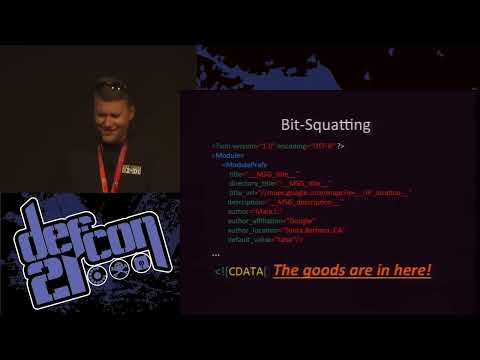 37:02
DEFCON 21 - DNS May Be Hazardous to Your Health - Robert Stucke
20K views • 13 years ago
Robert Stucke (bobhex)
A DEFCON 21 talk by Robert Stucke on DNS errors caused by single-bit flips, which lead to requests for misspelled domains. It shows real-world data on bitsquatting.
 10:36
Why Would AI Want to do Bad Things? Instrumental Convergence
274K views • 8 years ago
Robert Miles AI Safety
Robert Miles explains instrumental convergence: why an AGI with almost any goal would tend to pursue sub-goals like self-preservation and resource acquisition. It builds on Omohundro's basic AI drives and his orthogonality thesis video.
 13:03
Intelligence and Stupidity: The Orthogonality Thesis
710K views • 8 years ago
Robert Miles AI Safety
Robert Miles explains the orthogonality thesis: how an agent can be highly intelligent while pursuing goals that seem stupid or alien to humans. He separates intelligence from goals and touches on the stamp-collector example.
 18:05
Intro to AI Safety, Remastered
210K views • 5 years ago
Robert Miles AI Safety
Robert Miles gives a remastered introduction to AI safety, adapted from a talk in London. It lays out why advanced AI could go wrong and answers common objections.
 15:27
Why Not Just: Think of AGI Like a Corporation?
163K views • 7 years ago
Robert Miles AI Safety
Robert Miles asks whether corporations can be thought of as artificial general superintelligences and how far the analogy holds. He argues the differences, such as being limited by employees' capabilities, matter for AI safety.
 13:44
Is AI Safety a Pascal's Mugging?
388K views • 7 years ago
Robert Miles AI Safety
Robert Miles examines whether the case for AI safety is a Pascal's mugging, a tiny probability of an enormous payoff. He argues it is not, because AI risk does not depend on vanishingly small probabilities.
 16:29
10 Reasons to Ignore AI Safety
363K views • 6 years ago
Robert Miles AI Safety
Robert Miles goes through ten common reasons people give for dismissing AI safety, adapted from Stuart Russell's list, and answers each one. It is aimed at skeptics and newcomers.
 26:53
What the heck is the event loop anyway? | Philip Roberts | JSConf EU
3.8M views • 12 years ago
JSConf
Philip Roberts explains the JavaScript event loop, call stack, callbacks and asynchronous behavior with live visualizations using a tool he built. It demystifies terms like non-blocking and single-threaded.
 1:06:39
Ruby Midwest 2011 - Keynote: Architecture the Lost Years by Robert Martin
172K views • 14 years ago
Confreaks
Robert C. Martin's Ruby Midwest 2011 keynote argues that software architecture should express the application's intent rather than its framework. He covers separating entities, interactors and boundaries so the web, database and framework are details.
 1:27:44
"Why Zebras Don't Get Ulcers: Stress and Health" by Dr. Robert Sapolsky
1.1M views • 9 years ago
Beckman Institute at Illinois
Robert Sapolsky's lecture on how the body's stress response, evolved for short-term physical emergencies, harms long-term health when triggered by psychological stressors. It was given as the inaugural Fenton-Rhodes Lecture.
 1:00:56
RailsConf 09: Robert Martin, "What Killed Smalltalk Could K
87K views • 17 years ago
O'Reilly
Robert Martin's RailsConf 2009 talk looks at why Smalltalk lost out despite its technical strengths. He draws lessons about language communities and arrogance that he argues could hurt Ruby too.
 41:07
KEYNOTE / Robert Erdmann
24K views • 5 years ago
PyCon US
Robert Erdmann, a materials scientist at the Rijksmuseum, gives a PyCon keynote on the ultra-high-resolution imaging of Rembrandt's Night Watch. He covers the automated gantry camera system, the Python software that drives it, and the large volumes of image data involved.
 48:04
"NTFS really isn't that bad" - Robert Collins (LCA 2020)
161K views • 6 years ago
linux.conf.au
Robert Collins explains why rustup installs were painfully slow on Windows and how changes to rustup and Windows cut install time from 3m30s to 14s. The talk covers NTFS, small files and the cost of antivirus hooks on file close.
 58:39
Robert C Martin - Clean Architecture and Design
285K views • 12 years ago
gnbitcom
Robert C. Martin (Uncle Bob) talks about clean architecture and design, including keeping the database and frameworks out of the center of an application. It is an hour-long conference talk.
 27:21
dotScale 2014 - Robert Kennedy - Life in the Trenches of healthcare.gov
13K views • 12 years ago
dotconferences
A dotScale 2014 talk by Robert Kennedy, a former healthcare.gov SRE who later worked at Google, about the engineering effort to rescue the troubled site. It explains the technical and organizational problems behind the failed launch.
 1:14:51
Lisp at the Frontier of Computation, by Robert Smith at Rigetti Computing
16K views • 8 years ago
Arthur Gleckler
Robert Smith of Rigetti Computing talks at a Bay Area Lisp and Scheme meetup about using Common Lisp for quantum computing. He covers the technical, sociological and psychological sides of working across disciplines.
 32:10
Robert Moss: Julia and the Next Generation Airborne Collision Avoidance System
4K views • 11 years ago
The Julia Programming Language
Robert Moss's JuliaCon 2015 talk describes using Julia as a specification language for ACAS X, the next-generation airborne collision avoidance system that succeeds TCAS.
 49:27
DConf 2019: All Spreadsheets Must Die -- Robert Schadek
5K views • 7 years ago
The D Language Foundation
A DConf 2019 talk by Robert Schadek arguing that spreadsheets are the world's dominant programming language and that D can be used to replace them. It looks at spreadsheet quirks and then at techniques for moving away from them.
 1:36:57
2. Behavioral Evolution
7.8M views • 15 years ago
Stanford
Stanford biologist Robert Sapolsky lectures on the evolution of behavior, including the Prisoner's Dilemma and tit-for-tat strategies in animals. It is part of his Human Behavioral Biology course.
 1:13:53
THE MARS UNDERGROUND [HD] Full Movie
18.5M views • 12 years ago
Blue Mars
A documentary following Robert Zubrin and the Mars Society as they push the Mars Direct plan for sending humans to Mars using current technology and local resources. It also covers the clash with NASA's more expensive approach.
 1:32:44
Should Google Go Nuclear? Clean, cheap, nuclear power...
74K views • 19 years ago
Google TechTalks
A 2006 Google Tech Talk by Robert Bussard on inertial electrostatic confinement (polywell) fusion as a cheap, clean alternative to conventional thermonuclear reactors. He argues it could be made viable with modest funding.
 44:59
Ada, Past Present and Future
17K views • 15 years ago
AdaCore
An AdaCore talk on the history, present and future of the Ada language, including remarks from Robert Dewar. The title and description say little else.
 1:37:33
21. Chaos and Reductionism
1.8M views • 15 years ago
Stanford
Robert Sapolsky's Stanford lecture on chaos and reductionism, which he calls one of the hardest of the course. It examines the limits of breaking systems into parts to understand them and introduces chaotic systems.