root cause
 20:08
Fast Inverse Square Root — A Quake III Algorithm
6M views • 5 years ago
Nemean
A walkthrough of the Quake III fast inverse square root, explaining where the constant 0x5f3759df comes from. It covers IEEE 754 floats, the bit hack that approximates a logarithm, and a Newton's method refinement.
 37:07
Who Destroyed Three Mile Island? - Nickolas Means | The Lead Developer Austin 2018
762K views • 8 years ago
LeadDev
Nickolas Means recounts the 1979 Three Mile Island accident minute by minute, from the control rod insertion to the operator's decision to switch off emergency cooling. He argues that finding systemic causes is more useful than blaming individuals.
 7:42
Triangle of Power
812K views • 10 years ago
3Blue1Brown
3Blue1Brown presents the Triangle of Power, an alternate notation that unifies powers, logarithms and roots in a single triangular symbol. The video shows how the inverse operations relate and how the notation could help.
 40:47
DEFCON 19: Steal Everything, Kill Everyone, Cause Total Financial Ruin! (w speaker)
1.7M views • 14 years ago
Christiaan008
Jayson E. Street's DEF CON 19 talk shows photos from real security engagements where he was already inside client facilities, illustrating how social engineering and physical intrusion can cause huge losses. For each attack he also explains what defenses would have stopped him.
 11:51
Does Time Cause Gravity?
3M views • 5 years ago
PBS Space Time
PBS Space Time explores whether time causes gravity, explaining that gravity does not truly warp the flow of time but arises from time gradients. It revisits how gravitational time dilation works in general relativity.
 6:30
KSK Key Signing Ceremony (16 Jun 10)
575K views • 16 years ago
ICANN
Highlights of the June 2010 ICANN DNSSEC root Key Signing Ceremony, showing the procedures used to generate and protect the root zone signing key.
 1:04:25
#HITB2012KUL D1T3 - The Grugq - OPSEC: Because Jail is for wuftpd
158K views • 13 years ago
Hack In The Box Security Conference
The Grugq's Hack In The Box 2012 talk on operational security for hackers, drawing on hacker indictments and counter-intelligence research. It reviews OPSEC goals and methods for avoiding detection and arrest, with case studies of how hackers got caught.
 1:36:14
The Roots of Your Profits - Dr Elaine Ingham, Soil Microbiologist, Founder of Soil Foodweb Inc
327K views • 11 years ago
Oxford Real Farming Conference
Soil microbiologist Elaine Ingham speaks at the Oxford Real Farming Conference on how soil organisms cycle nutrients, unlock minerals from rock and air, and why pesticides and fertilizers harm soil life. Slides are linked in the description.
 19:14
Jonathan Haidt: The moral roots of liberals and conservatives
739K views • 18 years ago
TED
Psychologist Jonathan Haidt presents his moral foundations research in a TED talk. He argues that liberals and conservatives weigh a different set of moral values, which helps explain political divides.
 12:10
Why North America Can't Build Nice Apartments (because of one rule)
2.2M views • 2 years ago
About Here
About Here explains how North American building codes requiring two staircases make small multi-story apartment buildings hard to build, and contrasts this with places that allow single-stair designs.
 5:45
China’s "Social Credit System" Has Caused More Than Just Public Shaming (HBO)
2.4M views • 7 years ago
VICE News
A VICE News piece on China's Social Credit System, including a neighbor-watch pilot where paid watchers record behavior. It covers rewards for high scores and public shaming or restrictions for low ones.
 4:35
Pilot Declares Emergency Because Of Extreme Hypoxia
1.6M views • 17 years ago
HouieLouy
Air traffic audio of a pilot slurring and incoherent while declaring an emergency due to extreme hypoxia, with controllers at Cleveland Center struggling to understand him.
 1:49:11
WE MUST ADD STRUCTURE TO DEEP LEARNING BECAUSE...
101K views • 2 years ago
Machine Learning Street Talk
Machine Learning Street Talk interviews Paul Lessard about Categorical Deep Learning, which uses category theory and monads to make neural network architectures more interpretable and composable. They also discuss neural networks' limits in reasoning and unbounded computation.
 22:54
I Built a COMPUTER in Magic: The Gathering
2M views • 7 years ago
Because Science
Kyle Hill of Because Science explains and demonstrates, using real cards, how Magic: The Gathering can be used to build a Turing machine, a computer inside the card game.
 18:20
We the People, and the Republic we must reclaim | Lawrence Lessig
314K views • 13 years ago
TED
In this TED talk, Lawrence Lessig argues that American politics is corrupted by Congress's dependence on funding from a tiny fraction of citizens. He uses rapid-fire visuals and calls for a bipartisan push to reclaim the Republic.
 20:54
Our democracy no longer represents the people. Here's how we fix it | Larry Lessig | TEDxMidAtlantic
2.7M views • 11 years ago
TEDx Talks
Harvard law professor Lawrence Lessig argues that US democracy is corrupted by money, since a tiny fraction of the population effectively funds who gets elected. He says fixing this must come before addressing issues like climate change or student debt.
 44:30
Prof. Thomas Seyfried - 'Cancer as a Metabolic Disease: Implications for Novel Therapies'
193K views • 6 years ago
Low Carb Down Under
A lecture by Prof. Thomas Seyfried arguing that cancer is primarily a metabolic disease rather than a genetic one. It covers the Warburg effect, mitochondrial damage and implications for therapies.
 47:11
Gacha Drama and the Korean Gender War
987K views • 2 years ago
Moon Channel
A video essay from lawyer-turned-YouTuber Moon Channel on the South Korean gender war, tracing its historical roots and modern origins through the lens of a gacha game controversy. It is the first part of a two-part series.
 18:38
How the US Is Destroying Young People’s Future | Scott Galloway | TED
8.2M views • 2 years ago
TED
Scott Galloway's TED talk uses data to argue that young Americans are financially worse off than earlier generations, calling it a great intergenerational theft. He covers root causes and what could change it.
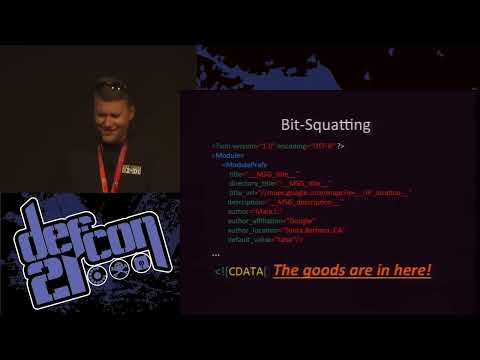 37:02
DEFCON 21 - DNS May Be Hazardous to Your Health - Robert Stucke
20K views • 13 years ago
Robert Stucke (bobhex)
A DEFCON 21 talk by Robert Stucke on DNS errors caused by single-bit flips, which lead to requests for misspelled domains. It shows real-world data on bitsquatting.
 20:41
Cuba's Underground Gaming Network
1.5M views • 8 years ago
Cloth Map
Cloth Map documents Havana's SNET, a community-built private network that Cubans created because internet prices were high. It is used for gaming and sharing.
 43:53
Lecture 1 - How to Start a Startup (Sam Altman, Dustin Moskovitz)
5.6M views • 12 years ago
YC Root Access
The opening lecture of the How to Start a Startup course at Stanford, with Sam Altman covering ideas and products and Dustin Moskovitz discussing why to start a startup.
 48:08
Lecture 3 - Before the Startup (Paul Graham)
1.1M views • 12 years ago
YC Root Access
Paul Graham's lecture in the 'How to Start a Startup' course, covering counterintuitive parts of startups and how to have ideas. It is the video form of his essay 'Before the Startup'.
 2:25:52
The spelled-out intro to neural networks and backpropagation: building micrograd
4.4M views • 4 years ago
Andrej Karpathy
Andrej Karpathy's first Neural Networks: Zero to Hero lecture, which builds micrograd, a tiny autograd engine, from scratch in Python. It explains backpropagation and neural network training step by step, assuming only basic Python and some high-school calculus.
 52:29
Stanford's Sapolsky On Depression in U.S. (Full Lecture)
6.4M views • 17 years ago
Stanford
Stanford professor Robert Sapolsky lectures on depression as a real biological disease. He covers its biological and psychological causes, how it differs from ordinary sadness, and ideas such as learned helplessness. He ties these together into one account.
 1:28:23
Quantum Computing for Computer Scientists
2.2M views • 8 years ago
Microsoft Research
An 88-minute Microsoft Research talk that explains how quantum computers beat classical ones using basic linear algebra, qubits, superposition and gates. It works through the Deutsch oracle problem and ends with entanglement, teleportation and a live demo.
 46:09
Why Isn't Functional Programming the Norm? – Richard Feldman
1.6M views • 7 years ago
Metosin
Richard Feldman argues that functional programming is not the norm largely because of historical accidents, such as C++ popularity, platform exclusivity, marketing spend and network effects, rather than merit. He traces the history of how languages become mainstream.
 16:29
The great porn experiment | Gary Wilson | TEDxGlasgow
17.8M views • 14 years ago
TEDx Talks
Gary Wilson's TEDxGlasgow talk argues that internet pornography hyperstimulates the brain's reward system and can cause symptoms that reverse when people stop. TED notes that several claims are not supported by respected academic studies.
 1:48:55
The Thirty Million Line Problem
326K views • 8 years ago
Molly Rocket
Casey Muratori's long talk arguing that modern software has ballooned to tens of millions of lines because of hardware and OS diversity. He proposes a stable ISA for entire system-on-a-chip packages and recalls when games shipped with their own boot disk.
 6:18
Fear the Boom and Bust: Keynes vs. Hayek - The Original Economics Rap Battle!
8.9M views • 16 years ago
Radical Discourse
A rap battle in which John Maynard Keynes and F. A. Hayek debate the causes of boom and bust, stimulus, and bailouts. It was produced by Econstories to teach the two schools of thought.
 6:59
The Problem With Facebook
3.1M views • 12 years ago
2veritasium
Veritasium's Derek Muller argues that Facebook's business model works against pages and creators, because it charges them to reach the audiences they built. He explains how filtering and paid promotion undermine the value of likes.
 1:21:13
Dr. Michael Greger | How Not To Die | Talks at Google
1.4M views • 10 years ago
Talks at Google
Dr. Michael Greger presents his book How Not to Die at Google NYC, arguing that diet and lifestyle changes can prevent or reverse many of the top causes of death. He walks through evidence on whole-food plant-based eating.
 59:23
28c3: The Science of Insecurity
42K views • 14 years ago
28c3
Meredith Patterson and Sergey Bratus argue that networked software stays insecure because protocols and inputs are too complex to recognize safely. They propose using formal language theory and grammars to build secure, verifiable input handling.
 1:25:00
Lecture 6: Version Control (git) (2020)
751K views • 6 years ago
Missing Semester
A lecture from MIT's Missing Semester course covering version control with git. It builds up git from its data model rather than from commands.
 8:38
Diffie-Hellman Key Exchange
938K views • 14 years ago
Art of the Problem
A short explainer on the history and mechanics of public key cryptography and the Diffie-Hellman key exchange. It uses a mixing-paint-colors analogy to show how two parties can agree on a shared secret in public.
 12:46
The Speed of Light is NOT About Light
7.1M views • 11 years ago
PBS Space Time
PBS Space Time argues that the speed of light is better understood as the speed of causality, the universal limit on how fast cause and effect propagate. Light travels at that speed because it is massless, but the limit itself is a property of spacetime.
 4:27
The Voting System That Should Replace Every Election
4.7M views • 15 years ago
CGP Grey
A short CGP Grey explainer on the alternative vote (instant runoff voting) versus first past the post, made around the 2011 UK referendum. It shows how ranked ballots are tallied and why they avoid spoiler effects.
 6:08
Immigration, World Poverty and Gumballs
6.8M views • 16 years ago
NumbersUSA
Roy Beck's short gumball presentation using World Bank and Census data to argue that letting people immigrate to the US cannot solve world poverty because the numbers are so large. It is made by NumbersUSA, an immigration-restriction advocacy group.
 2:01:02
What Alcohol Does to Your Body, Brain & Health
8.1M views • 4 years ago
Andrew Huberman
A two-hour Huberman Lab podcast episode on the physiological effects of alcohol on the brain and body at different levels of consumption. It covers genetic predisposition to alcoholism, alcohol metabolism, and how it causes cellular stress and changes thinking and behavior.
 1:02:47
Secret History of Silicon Valley
491K views • 17 years ago
Computer History Museum
Steve Blank's Computer History Museum lecture argues that Silicon Valley's roots lie in WWII radar and electronic warfare work, Stanford's Fred Terman and Cold War military funding rather than the semiconductor alone.