self-paced learning
 18:40
But what is a neural network? | Deep learning chapter 1
25.1M views • 9 years ago
3Blue1Brown
3Blue1Brown's first chapter on deep learning explains what neurons and layers are and the math underlying a basic neural network, using handwritten digit recognition with visual animations.
 21:36
Fractals are typically not self-similar
4.6M views • 9 years ago
3Blue1Brown
3Blue1Brown explains fractal dimension and shows why many fractals are not strictly self-similar. Self-similarity turns out to be a special case of the broader idea of fractional dimension.
 26:10
Attention in transformers, step-by-step | Deep Learning Chapter 6
4.8M views • 2 years ago
3Blue1Brown
3Blue1Brown's visual walkthrough of the attention mechanism inside transformers, covering self-attention, multiple heads and cross-attention. It is chapter 6 of his deep learning series.
 14:27
The Biggest Myth In Education
15.5M views • 5 years ago
Veritasium
Veritasium debunks the idea of learning styles, such as being a visual learner, with an interview with Daniel Willingham and a memory experiment. It argues that a multimodal approach helps everyone.
 12:47
Backpropagation, intuitively | Deep Learning Chapter 3
6.4M views • 9 years ago
3Blue1Brown
3Blue1Brown's third deep learning chapter gives a visual, intuitive account of backpropagation and what happens to a neural network as it learns. A follow-up video covers the underlying calculus.
 20:33
Gradient descent, how neural networks learn | Deep Learning Chapter 2
9.7M views • 9 years ago
3Blue1Brown
3Blue1Brown's second neural network chapter explains cost functions and gradient descent, showing how a network learns by minimizing error during training.
 20:41
Training an unbeatable AI in Trackmania
17.7M views • 3 years ago
Yosh
Yosh trains a reinforcement learning agent to drive Trackmania until he can no longer beat it. The video explains how the training works and the design choices involved.
 27:14
Transformers, the tech behind LLMs | Deep Learning Chapter 5
11.6M views • 2 years ago
3Blue1Brown
3Blue1Brown's visual explanation of how transformers and GPT-style language models work, tracing data through tokens, embeddings and attention.
 11:06
The Map of Mathematics
16.3M views • 9 years ago
Domain of Science
An animated 11-minute tour of the whole field of mathematics as a single map, showing how pure and applied math and their sub-fields relate to each other.
 13:59
MENACE: the pile of matchboxes which can learn
453K views • 8 years ago
Stand-up Maths
Matt Parker of Stand-up Maths demonstrates MENACE, Donald Michie's 1961 machine made of matchboxes that learns to play noughts and crosses through reinforcement. He builds and trains a physical version.
 4:30
Traffic Has a Perfect Solution. Humans Are the Problem.
44.6M views • 10 years ago
CGP Grey
CGP Grey explains how traffic jams come from human driving behavior such as tailgating and reaction delays, and how leaving gaps and smoothing speed would reduce congestion. It also touches on self-driving cars.
 7:15
A Selfish Argument for Making the World a Better Place – Egoistic Altruism
11.4M views • 8 years ago
Kurzgesagt – In a Nutshell
Kurzgesagt makes a selfish case for improving the world, arguing that helping people far away raises prosperity and innovation for everyone, including yourself. The animated video frames this as egoistic altruism and positive-sum cooperation.
 9:06
Vancouver Never Plays Itself
2.2M views • 11 years ago
Every Frame a Painting
A video essay from Every Frame a Painting about Vancouver, a major film production city that almost never appears onscreen as itself. It shows clips of films and TV shot there that pass the city off as somewhere else.
 6:02
OpenAI Plays Hide and Seek…and Breaks The Game! 🤖
11M views • 7 years ago
Two Minute Papers
Two Minute Papers covers OpenAI's multi-agent hide-and-seek experiment, in which agents learned emergent tool use and found ways to break the game's rules. It summarizes the 'Emergent Tool Use from Multi-Agent Interaction' paper.
 10:18
Backpropagation calculus | Deep Learning Chapter 4
4M views • 9 years ago
3Blue1Brown
3Blue1Brown's chapter 4 on deep learning gives a more formal, symbol-based account of backpropagation calculus, connecting the intuition from the previous chapter to the math found in textbooks and code.
 13:04
VACNET Anti-cheat
574K views • 8 years ago
3kliksphilip
3kliksphilip summarizes Valve's GDC talk on VACNet, a deep-learning system that flags CS:GO cheaters and feeds the Overwatch review queue. It covers Trust Factor, VAC, and how the data is collected and analyzed.
 17:59
The Expert Myth
16M views • 4 years ago
Veritasium
Veritasium examines which experts have real expertise, drawing on chess research and work by Klein and Kahneman. It explains that expertise comes from pattern recognition built through deliberate practice in valid, feedback-rich environments.
 14:12
How Harley-Davidson Killed Itself
5M views • 6 years ago
FortNine
FortNine explains how Harley-Davidson ended up in decline, from a narrow lifestyle niche and an aging customer base to the pandemic hitting a company already in trouble.
 17:52
Training AI Without Writing A Reward Function, with Reward Modelling
259K views • 6 years ago
Robert Miles AI Safety
Robert Miles explains reward modelling, in which an AI learns what humans want from their preference comparisons instead of a hand-written reward function. He walks through the 2017 paper on deep reinforcement learning from human preferences.
 12:24
Am I still lactose tolerant? - Lactose Gene Therapy Update
765K views • 6 years ago
The Thought Emporium
The Thought Emporium's update on the home-brewed gene therapy he took to cure his lactose intolerance. It reports how the effect held up over two years and what future versions might look like.
 45:13
You've (Likely) Been Playing The Game Of Life Wrong
11.6M views • 11 months ago
Veritasium
Veritasium explains why many real-world systems follow power laws rather than normal distributions. It covers self-organized criticality, with simulations of sandpiles, magnetism and forest fires.
 8:04
Khan Academy and the Effectiveness of Science Videos
1.7M views • 15 years ago
Veritasium
Veritasium examines research suggesting science explainer videos like Khan Academy's make students feel they understand while tests show they have not learned, because misconceptions go unaddressed. It suggests how to partly fix this.
 6:00
Rhyme: Why Eminem is one of the most impressive lyricists ever
3.7M views • 13 years ago
Library of Alexandria
A re-upload of a video breaking down Eminem's rhyme schemes, showing multi-syllable and internal rhymes in songs such as Lose Yourself. It aims to show why he is considered a standout lyricist.
 3:57
How Do Bikes Stay Up?
1.7M views • 11 years ago
minutephysics
A short minutephysics video explaining why bicycles stay upright. It looks at gyroscopic precession, head angle and centre of mass, and shows that bikes self-steer toward the direction they lean.
 9:48
Bitcoin Q&A: How Do I Secure My Bitcoin?
117K views • 9 years ago
aantonop
Andreas Antonopoulos answers a question about how to secure your Bitcoin. He covers holding your own keys, backing up the 12 to 24 word seed phrase, and the tradeoffs of custodial accounts, phone wallets and hardware wallets.
 4:45
How playing an instrument benefits your brain - Anita Collins
15.2M views • 12 years ago
TED-Ed
A short TED-Ed animated lesson by Anita Collins on what happens in the brain when people play a musical instrument. It argues that playing engages many brain areas at once, like a full-body workout, with long-term benefits.
 12:10
The Science of Thinking
9.3M views • 9 years ago
Veritasium
A Veritasium explainer on how the brain works and how we learn. It is inspired by Kahneman's Thinking, Fast and Slow and covers System 1 and System 2 thinking and why harder learning builds skill.
 5:26
Neural Network Learns The Physics of Fluids and Smoke | Two Minute Papers #118
209K views • 9 years ago
Two Minute Papers
Two Minute Papers covers a paper on speeding up fluid and smoke simulation with convolutional networks. It contrasts the approach with earlier regression forest methods.
 5:49
Can Japanese Actually Write Japanese Kanji?
5.5M views • 10 years ago
That Japanese Man Yuta
Yuta asks whether native Japanese speakers can actually write kanji by hand, showing that many struggle to recall characters from memory.
 3:04
mRNA Translation (Advanced)
1.5M views • 16 years ago
DNA Learning Center
A short animation from the DNA Learning Center showing how mRNA carries a gene's message to the ribosome, where tRNA and codons are used to assemble amino acids into a protein.
 6:24
You Need a Theme, Not a Goal
5.5M views • 6 years ago
CGP Grey
CGP Grey argues for picking a theme for the year or season instead of setting goals or new year's resolutions. He explains how a theme gives direction without a pass/fail target.
 6:06
The 7 Habits of Highly Miserable People
14.7M views • 9 years ago
CGP Grey
CGP Grey's sarcastic animated video adapted from the book How to Be Miserable, listing habits that reliably make people unhappy. By inverting the advice, it shows what to avoid and prompts reflection on goals and routines.
 27:07
Attention Is All You Need
814K views • 8 years ago
Yannic Kilcher
Yannic Kilcher walks through the Attention Is All You Need paper, which introduced the Transformer, a sequence model based solely on attention without recurrence or convolutions. He reviews the architecture and the paper's translation results.
 24:52
AlphaFold - The Most Useful Thing AI Has Ever Done
11M views • 1 year ago
Veritasium
A Veritasium video on AlphaFold, DeepMind's protein structure prediction system, and the protein design work it enabled. It features interviews with John Jumper and with David Baker's protein design group and explains why predicting protein folding matters.
 24:07
AI can't cross this line and we don't know why.
2.5M views • 2 years ago
Welch Labs
A Welch Labs explainer on neural scaling laws and the compute-efficient frontier, asking why model loss seems to hit a line it cannot cross. It draws an analogy to an ideal gas law for AI.
 11:47
We Were Right! Real Inner Misalignment
271K views • 5 years ago
Robert Miles AI Safety
Robert Miles covers a paper where researchers ran real versions of his earlier mesa-optimizer thought experiments. They show inner misalignment, where an AI learns the wrong goal in training and misbehaves when deployed.
 10:13
The Problem with Time & Timezones - Computerphile
4.4M views • 12 years ago
Computerphile
Tom Scott explains for Computerphile why handling time and timezones in code is so hard, walking through a simple web app that computes how long ago something happened. It covers the quirks of timezones and calendars and ends in an exasperated rant.
 12:46
The Speed of Light is NOT About Light
7.1M views • 11 years ago
PBS Space Time
PBS Space Time argues that the speed of light is better understood as the speed of causality, the universal limit on how fast cause and effect propagate. Light travels at that speed because it is massless, but the limit itself is a property of spacetime.
 34:00
Math's Fundamental Flaw
30.8M views • 5 years ago
Veritasium
Veritasium's explainer on Godel's incompleteness theorems and the limits of mathematical proof, tracing set theory, Hilbert's program and the road to Turing and modern computing.
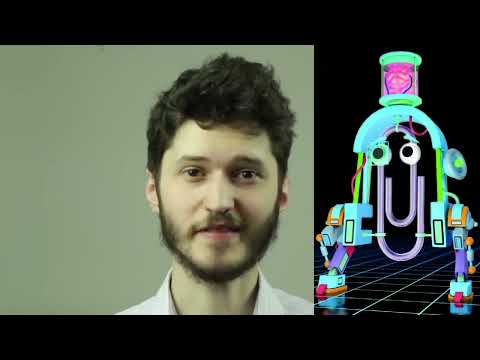 10:36
Why Would AI Want to do Bad Things? Instrumental Convergence
274K views • 8 years ago
Robert Miles AI Safety
Robert Miles explains instrumental convergence: why an AGI with almost any goal would tend to pursue sub-goals like self-preservation and resource acquisition. It builds on Omohundro's basic AI drives and his orthogonality thesis video.