sim swap
 4:40
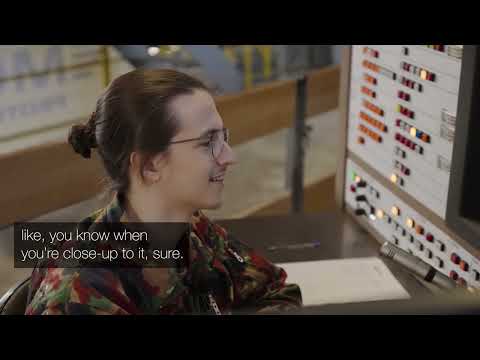
This 1970s tank simulator drives through a tiny world
12M views • 4 years ago
Tom Scott
Tom Scott visits the Swiss Military Museum to see the last surviving 1970s tank-driving simulator. It uses a real camera moving over a miniature model landscape rather than any computer graphics.
 21:36
Fractals are typically not self-similar
4.6M views • 9 years ago
3Blue1Brown
3Blue1Brown explains fractal dimension and shows why many fractals are not strictly self-similar. Self-similarity turns out to be a special case of the broader idea of fractional dimension.
 36:29
Drip Coffee Makers — super simple, super cheap
4.7M views • 4 years ago
Technology Connections
Technology Connections explains how the simple American drip coffee maker works, including the bimetal valve and bubble-pump heating, and compares the original Mr. Coffee with modern machines.
 13:23
Simulating Green Beard Altruism
4.5M views • 5 years ago
Primer
Primer simulates green beard altruism, where individuals recognize and help others carrying a shared marker, and shows how imposters affect its evolution. It is an animated evolution simulation based on published papers.
 8:16
Why Asimov's Laws of Robotics Don't Work - Computerphile
873K views • 11 years ago
Computerphile
Rob Miles explains for Computerphile why simple rule sets like Asimov's Three Laws cannot make robots and AI safe. Terms like harm and human are too ambiguous to specify precisely.
 23:12
Simulating an epidemic
5.2M views • 6 years ago
3Blue1Brown
3Blue1Brown builds toy SIR models to simulate how an epidemic spreads and tests scenarios like social distancing, travel restrictions, central gathering places and quarantine. It was made during the early COVID-19 outbreak.
 14:03
Simulating alternate voting systems
4.5M views • 6 years ago
Primer
Primer uses simulations to compare voting systems such as first-past-the-post, approval, ranked choice and others. It shows how each system behaves and can be manipulated, with links to further voting theory resources.
 5:26
Neural Network Learns The Physics of Fluids and Smoke | Two Minute Papers #118
209K views • 9 years ago
Two Minute Papers
Two Minute Papers covers a paper on speeding up fluid and smoke simulation with convolutional networks. It contrasts the approach with earlier regression forest methods.
 18:10
A London Accent from the 14th to the 21st Centuries
7.2M views • 5 years ago
Simon Roper
Linguist Simon Roper reconstructs how a London accent would have sounded from the 14th to the 21st centuries, reading passages in period pronunciation. It draws on the Cambridge History of the English Language.
 28:34
Humidifiers: Simpler is better?
3.4M views • 5 years ago
Technology Connections
Technology Connections explains why humidity matters and compares the main types of humidifiers, including evaporative and ultrasonic designs. It covers how and why you would add moisture to indoor air.
 11:18
The simple, clever sensor behind automatic windshield wipers
1.8M views • 2 years ago
Technology Connections
Technology Connections explains how automatic windshield wiper rain sensors work, using an infrared light source and total internal reflection in the glass.
 22:15
Awnings: a simple cooling tech we apparently forgot about
2.1M views • 2 years ago
Technology Connections
Technology Connections looks at why awnings disappeared from houses and how effective they are at cutting solar heat gain and cooling costs. It argues they are a simple, forgotten cooling technology.
 25:35
Epicycles, complex Fourier series and Homer Simpson's orbit
421K views • 8 years ago
Mathologer
Mathologer explains epicycles and complex Fourier series, inspired by an animation of Homer Simpson drawn with epicycles. It covers the shape of the Moon's orbit around the Sun and how to make your own epicycle drawings.
 12:04
Why Being Delusional is a Superpower
15.2M views • 6 years ago
Veritasium
Veritasium examines the role of luck in success, with simulations and examples showing how small advantages and chance can compound. It argues that top outcomes are disproportionately luck-driven while still crediting effort.
 6:18
Animated Voting Methods
16K views • 9 years ago
Unify The Vote
An animated simulation comparing single-winner voting methods such as plurality, instant runoff and STAR. Colored regions show which candidate wins as a randomized electorate shifts across a two-dimensional political space, building on Ka-Ping Yee's earlier diagrams.
 22:58
Runaway Stabilizer!! How to stop MCAS.
421K views • 7 years ago
Mentour Pilot
A Boeing 737 pilot explains the runaway stabilizer checklist, the procedure for stopping unwanted horizontal stabilizer movement such as an MCAS activation on the 737 MAX. He walks through the steps, the trim cutout switches and the jackscrew mechanism, and shows a simulator run including the manual trim wheel effort.
 10:09
Dominic Frisby. A simple guide to land value tax
25K views • 11 years ago
Dominic Frisby Comedy Videos
Comedian Dominic Frisby gives a ten-minute explanation of land value tax. He argues it would fix problems of rent-seeking and the economics of land ownership.
 4:18
Flexbox vs. CSS Grid — Which is Better?
314K views • 8 years ago
Layout Land
Jen Simmons explains the difference between CSS Flexbox and CSS Grid, and when to use each. She makes the case that Grid does not replace Flexbox and most sites use both.
 45:13
You've (Likely) Been Playing The Game Of Life Wrong
11.6M views • 11 months ago
Veritasium
Veritasium explains why many real-world systems follow power laws rather than normal distributions. It covers self-organized criticality, with simulations of sandpiles, magnetism and forest fires.
 45:55
Turning Waves Into Particles
194K views • 1 year ago
Huygens Optics
Huygens Optics explores the idea that space is a non-linear elastic medium, and uses simulations to show how wave energy might be confined locally into particle-like objects. It touches on inertia, the Schwinger limit and the vacuum as a medium.
 26:48
Algorithmic Redistricting: Elections made-to-order
584K views • 5 years ago
AlphaPhoenix
AlphaPhoenix uses Monte Carlo simulation and annealing-style methods to draw North Carolina congressional district maps, both gerrymandered and fair. He focuses on the fascinating computational problem rather than the politics.
 10:15
Using ground relays with Starlink
506K views • 6 years ago
Mark Handley
Mark Handley of UCL explains, with simulation visualizations, how early Starlink satellites without inter-satellite links could still give low-latency wide-area communication by hopping via ground relays. He shows it can beat fibre on many long paths.
 5:04
Liquid Democracy In Simple Terms
76K views • 13 years ago
pxi
A five-minute animated explainer of liquid democracy, in which voters can delegate their vote to trusted people. It starts from the origins of democracy and contrasts direct and representative models.
 22:52
A simple water heater is more clever than it seems
2.6M views • 3 years ago
Technology Connections
Technology Connections explains how an ordinary tank water heater works, including twin-element designs, and why it is cleverer than it looks.
 8:35
The Big Short (2015) - Jared Vennett's Pitch to Front Point Partners (Jenga Blocks Scene) [HD 1080p]
17.9M views • 9 years ago
Extractor
A scene from The Big Short in which Jared Vennett pitches credit default swaps on mortgage bonds to a hedge fund team, using a Jenga tower to illustrate collateralized debt obligations.
 12:20
I Solved Klotski
2.1M views • 1 year ago
2swap
2swap explains how he solved the Klotski sliding-block puzzle by mapping its full state space as a graph and visualizing it. The video includes footage of the Guinness world-record solve and links to an interactive graph.
 28:28
What is PLUS times PLUS?
2.2M views • 1 year ago
2swap
2swap explores lambda calculus using John Tromp's lambda diagrams, with animated beta-reductions, asking what PLUS times PLUS gives. It touches on Church encodings and the equivalence of Turing machines and lambda calculus.
 8:58
Double Pendulums are Chaoticn't
4.3M views • 1 year ago
2swap
A short explainer from 2swap on the chaotic behavior of double pendulums. It examines how predictable the system is for some starting conditions and whether closed-form solutions exist.
 8:28
The Fastest Way to Board a Plane Feels Like the Slowest
37.5M views • 7 years ago
CGP Grey
CGP Grey compares airplane boarding methods, based on an arXiv paper, and shows why the intuitive back-to-front approach is slow while random or outside-in boarding does better.
 18:39
This equation will change how you see the world (the logistic map)
17.1M views • 6 years ago
Veritasium
A Veritasium video on the logistic map, showing how a simple population equation leads to chaos and bifurcation. It connects the idea to convection, neuron firing and the Mandelbrot set, with interactive animations.
 15:28
The Braitenberg Vehicles
65K views • 10 years ago
Brian Douglas
Brian Douglas introduces Braitenberg vehicles, simple robots whose sensors are wired directly to motors yet show surprisingly lifelike behavior. He draws on Valentino Braitenberg's book Vehicles.
 6:30
You Lose an Hour of Sleep to Save $4
12.6M views • 15 years ago
CGP Grey
CGP Grey explains the mess of Daylight Saving Time, including its dubious energy savings and the odd cases like Arizona that opt out. It is a short, simple explainer.
 21:05
Why is there no equation for the perimeter of an ellipse‽
2.7M views • 6 years ago
Stand-up Maths
Stand-up Maths explains why the perimeter of an ellipse has no simple closed-form equation, showing the infinite series and presenting approximation formulas.
 32:57
Are Seed Oils Inflammatory?! (The *Evidence* No One Shows)
480K views • 4 years ago
Nutrition Made Simple!
A nutrition-science explainer reviewing the human evidence on whether seed oils cause inflammation. It looks at nine different seed oils, heated oils, and genetic variability, and compares omega-6 intake with saturated fat.
 10:13
The Problem with Time & Timezones - Computerphile
4.4M views • 12 years ago
Computerphile
Tom Scott explains for Computerphile why handling time and timezones in code is so hard, walking through a simple web app that computes how long ago something happened. It covers the quirks of timezones and calendars and ends in an exasperated rant.
 10:48
RSA ANIMATE: Drive: The surprising truth about what motivates us
20.2M views • 16 years ago
Royal Society of Arts
An RSA Animate whiteboard adaptation of Dan Pink's talk on what motivates people at work. It argues that beyond simple tasks, autonomy, mastery and purpose drive performance more than money.
 7:16
Unix and Google
9K views • 10 years ago
FOAM
A short animated simulation comparing how Multics and Unix were developed, showing why Unix's small composable programs and pipes gave it a efficiency advantage. It frames Unix as a moonshot achievable by a small team.
 33:33
Longer-lasting light bulbs: it was complicated
2.3M views • 3 years ago
Technology Connections
Technology Connections examines why light bulbs have the lifespans they do, including the real history of the Phoebus cartel. He shows that bulb life trades off against brightness and efficiency rather than being simple planned obsolescence.
 6:34
Why Is It So Hard to Do Something That Should Be Easy? (Wall of Awful pt. 1)
2.1M views • 7 years ago
How to ADHD
A short How to ADHD explainer, featuring Brendan Mahan, on why simple tasks can feel impossible for people with ADHD. It introduces the 'wall of awful', a pile of past failures, shame and anxiety that builds up in front of a task and blocks starting it.
 11:11
Old-fashioned rice cookers are extremely clever
3.2M views • 6 years ago
Technology Connections
Technology Connections explains how old-fashioned non-electronic rice cookers work, using a magnet and spring switch tripped by the Curie point. It shows the thermodynamics and magnetism behind a simple appliance.