software evolution
 13:40
Free software, free society: Richard Stallman at TEDxGeneva 2014
487K views • 12 years ago
TEDx Talks
Richard Stallman's TEDxGeneva 2014 talk describing how nonfree programs give companies control over users and what users can do to regain control. It introduces the free software movement and the four freedoms.
 10:08
Software is in Decline - Jonathan Blow
179K views • 4 years ago
gamedev cuts
A ten-minute clip from Jonathan Blow's talk on preventing the collapse of civilization, arguing that software quality and the knowledge to build it are in decline.
 17:55
Building the Software 2 0 Stack (Andrej Karpathy)
73K views • 8 years ago
Databricks
Andrej Karpathy's Databricks talk on Software 2.0, the shift from human-written code to code produced by neural network training. It covers how developer work moves toward curating datasets, the advantages and challenges, and opportunities for new tooling.
 10:43
Eben Moglen: How I discovered Free Software and met RMS
14K views • 19 years ago
roblimo
A clip in which Eben Moglen tells how he grew up when software was freer and how his path crossed Richard Stallman's. He describes how they came to work together to make software free again.
 14:26
OSCON 2011: Karen Sandler
15K views • 15 years ago
O'Reilly
Karen Sandler, then Executive Director of the GNOME Foundation, talks at OSCON 2011 about the risks of proprietary, closed-source software in implanted medical devices like her own pacemaker-defibrillator.
 19:44
Mountain West Ruby 2012 Capability vs. Suitability by Gary Bernhardt
22K views • 14 years ago
Confreaks
Gary Bernhardt argues that software history moves in reactions to earlier tools, and that new tools are not simply better in every way. He distinguishes capability (what a tool allows) from suitability (what it fits), and warns against repeating past mistaken reactions.
 19:00
Optical illusions show how we see | Beau Lotto
3.5M views • 17 years ago
TED
Neuroscientist Beau Lotto runs the audience through color and pattern illusions to show that perception is shaped by context and evolutionary history rather than being a direct readout of the world. The talk is playful and hands-on, and it argues that the brain interprets ambiguous signals.
 15:00
John Carmack Keynote QuakeCon 2010 Part 1
10K views • 16 years ago
J
Audio-only recording of the first part of John Carmack's QuakeCon 2010 keynote, taken from G4TV. It covers id Software's work around that time, including Rage and platform topics such as PC, PS3 and Xbox 360, and includes his informal audience poll about paying for mobile apps.
 15:13
PdF 2011 | Eben Moglen: The alternate net we need, and how we can build it ourselves
20K views • 15 years ago
PdF YouTube
Eben Moglen's 2011 Personal Democracy Forum talk on the loss of anonymity and privacy on the internet. He proposes building an alternative net of personal servers, the idea behind FreedomBox.
 11:07
Linus Torvalds on why desktop Linux sucks
2.2M views • 5 years ago
gentooman
Excerpts from Linus Torvalds's DebConf 14 talk on why desktop Linux struggles. He covers application distribution, distros breaking backwards compatibility, wasted package management effort and how Windows does app distribution better.
 4:23
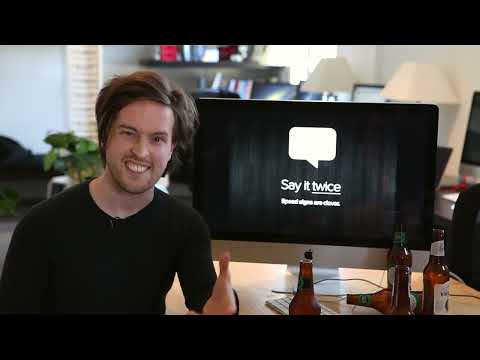
The User is Drunk
275K views • 13 years ago
squareweave
A short talk by Will Dayble of Squareweave arguing that you should design software as if the user were drunk: distracted, impaired in attention and vision, and prone to misreading. It is a user experience talk built around that framing.
 15:20
The thrilling potential of SixthSense technology | Pranav Mistry
5.5M views • 16 years ago
TED
Pranav Mistry demos SixthSense, a wearable device that projects information onto the physical world and lets people interact with data through gestures. He also shows a paper "laptop" and says he will open-source the software.
 9:16
The magic washing machine | Hans Rosling
791K views • 15 years ago
TED
Hans Rosling makes the case that the washing machine was the greatest invention of the industrial revolution. Using Gapminder graphics, he shows how electricity and economic growth free up time for reading and learning.