sun microsystems
 3:13
Hitting the Sun is HARD
3M views • 10 years ago
minutephysics
A three-minute minutephysics video on the orbital mechanics of why crashing into the Sun takes far more energy than leaving the solar system.
 8:39
How to Move the Sun: Stellar Engines
19.5M views • 6 years ago
Kurzgesagt – In a Nutshell
Kurzgesagt explains stellar engines such as the Shkadov thruster and Caplan thruster, which could move the Sun and solar system across the galaxy over millions of years to avoid hazards and reach new regions.
 27:15
The Most Misunderstood Concept in Physics
31.5M views • 3 years ago
Veritasium
Veritasium's explainer on entropy, presented as one of physics' most important and least understood concepts. It uses examples such as heat engines and the sun's energy flowing through the Earth.
 11:13
What if you could only see the world in UV?
5.6M views • 8 years ago
Veritasium
Veritasium shows what the world looks like through a UV camera. It covers how pigments absorb UV, how fluorescence works, and how UV imaging reveals sunscreen effectiveness and skin damage.
 28:46
Space Shades: Humanity's Last Hope | Answers With Joe
1.1M views • 6 years ago
Joe Scott
Joe Scott takes a serious look at space sunshades as a climate fix, asking how big they would need to be, what they would cost and whether they would work. He draws on Roger Angel's paper and launch options.
 18:28
The Antique Toaster that's Better than Yours
3.4M views • 7 years ago
Technology Connections
Technology Connections takes apart a 1940s Sunbeam Radiant Control toaster. It senses the toast's own browning and lowers and raises it automatically using purely mechanical parts and no electronics.
 19:07
I Misunderstood the Greenhouse Effect. Here's How It Works.
989K views • 3 years ago
Sabine Hossenfelder
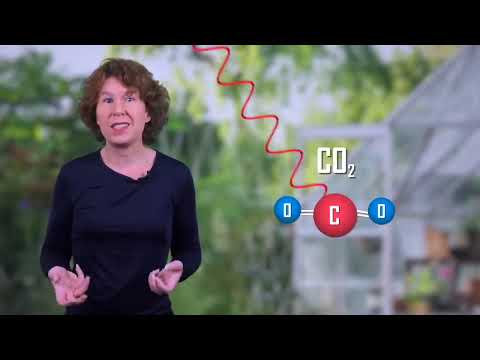
Sabine Hossenfelder explains how the greenhouse effect actually works, given that infrared is mostly absorbed low in the atmosphere already. She walks through why more CO2 still warms the surface.
 1:21:39
D is for Debacle - The Crucial Story of Vitamin D and Human Health
302K views • 11 years ago
Ivor Cummins
Ivor Cummins gives an 82-minute presentation on the history and science of vitamin D and human health. He draws on expert interviews to argue that sun exposure and vitamin D status are linked to many chronic diseases.
 11:02
How to design an actually good toaster with lessons from the 1940's
851K views • 6 years ago
Technology Connections
Technology Connections praises a 1940s-50s Sunbeam toaster and explains what makes a toaster well designed, drawing on a vintage Sunbeam video.
 3:38
The Electrowetting Display
118K views • 13 years ago
IEEE Spectrum
IEEE Spectrum interviews Samsung display researcher Johan Feenstra on how electrowetting displays work. He explains why they can match LCD capability while being about three times more efficient.
 5:30
The Moon's Orbit is WEIRD
1.9M views • 2 years ago
minutephysics
A minutephysics explainer showing that the Moon's path around the Sun is not a spiral but closer to a 12-sided polygon with curved corners. It argues the Moon arguably orbits the Sun rather than the Earth.
 19:42
Using AI To Detect AI Music (and other music industry data-porn)
452K views • 1 year ago
Benn Jordan
Musician Benn Jordan uses AI to detect AI-generated music and digs into music industry data, including streaming payouts and sample library copyright problems. He covers ways to tell whether a track is human-made.
 23:32
The Solar Gravitational Lens will Map Exoplanets. Seriously.
582K views • 6 years ago
Launch Pad Astronomy
Explains the proposed NASA JPL plan to use the Sun as a gravitational lens, sending solar sail craft to its focal region to image an exoplanet's surface. It covers the distances involved, how imaging with the Sun would work and the mission design.
 11:33
A new way to visualize General Relativity
3.6M views • 6 years ago
ScienceClic English
ScienceClic explains why the rubber sheet analogy for general relativity is misleading and offers a new visualization that includes the curvature of time and shows gravity as motion through curved spacetime.
 21:15
The REAL Possibility of Mapping Alien Planets!
778K views • 4 years ago
PBS Space Time
PBS Space Time explains the proposal to use the Sun's gravity as a giant lens, sending a train of small light-sail spacecraft to the focal point roughly 550 AU out. It covers how such a telescope could image exoplanets in surprising detail and the engineering challenges involved.
 8:05
What People Get Wrong About Induced Demand
291K views • 5 years ago
Oh The Urbanity!
Explains induced demand beyond roads, showing that it applies to transit, walking and cycling infrastructure too but with different consequences. It corrects common misunderstandings of the concept.
 13:31
Randomness is Random - Numberphile
893K views • 7 years ago
Numberphile
Numberphile with Simon Pampena on how humans misunderstand randomness, including coin-flip sequences, run lengths and the gambler's fallacy.
 11:10
Why Japan's Conviction Rate is 99% (Actually Explained)
82K views • 6 years ago
That Japanese Man Yuta
Yuta explains what Japan's 99% conviction rate actually means, noting that prosecutors drop cases unless confidence is very high. He argues that the number is widely misunderstood and cites his sources.
 31:12
The Insane Engineering of James Webb Telescope
8.8M views • 4 years ago
Real Engineering
Real Engineering explains the engineering behind the James Webb Space Telescope, including its folding mirror, sunshield, orbit and cooling systems, and why deployment was so difficult.
 26:13
The Smartphone CPU Review You NEED to Watch!
345K views • 4 years ago
Geekerwan
Geekerwan reviews smartphone CPUs by power efficiency rather than benchmark scores, with test methodology and chapters on Qualcomm, Apple, Samsung and Google chips. It explains why high benchmark scores can coexist with heat and poor battery life.
 28:33
Terence Tao on the cosmic distance ladder
6.5M views • 1 year ago
3Blue1Brown
Terence Tao and Grant Sanderson of 3Blue1Brown walk through the cosmic distance ladder, showing how humans measured distances from the Earth to the Moon, Sun, planets and beyond. It includes animations and the history behind each step.
 28:11
Why Everyone Is Talking About Data Centers In Space
408K views • 10 months ago
Scott Manley
Scott Manley examines why SpaceX, Google and others are looking at orbital data centers. He walks through the economics, heat rejection and solar power arguments, with links to the Lumen/Starcloud and Google Suncatcher papers.
 7:33
What is a genocide?
82K views • 2 years ago
Anders Puck Nielsen
Anders Puck Nielsen clears up common misunderstandings about what legally counts as genocide, then compares the situation in Gaza with the genocide case against Putin. The chapters cover the definition, individual intent, and the two case comparisons.
 7:49
How to Build a Dyson Sphere - The Ultimate Megastructure
24.5M views • 7 years ago
Kurzgesagt – In a Nutshell
A Kurzgesagt animated explainer on how humanity could build a Dyson sphere, a swarm of structures capturing the sun's energy. It covers using Mercury's materials and a step-by-step construction approach.
 2:45
Two Is the Wrong Number of Days Off
14.1M views • 6 years ago
CGP Grey
CGP Grey argues that the two-day weekend is poorly structured and proposes taking days off midweek, such as Wednesday and Sunday, instead.
 25:35
Epicycles, complex Fourier series and Homer Simpson's orbit
421K views • 8 years ago
Mathologer
Mathologer explains epicycles and complex Fourier series, inspired by an animation of Homer Simpson drawn with epicycles. It covers the shape of the Moon's orbit around the Sun and how to make your own epicycle drawings.