travel
 11:48
Superluminal Time Travel + Time Warp Challenge Answer
1M views • 9 years ago
PBS Space Time
A PBS Space Time episode explaining why faster-than-light travel is equivalent to travelling back in time, using relativity and Minkowski diagrams for different observers.
 23:47
I Think Faster Than Light Travel is Possible. Here's Why.
3.8M views • 3 years ago
Sabine Hossenfelder
Sabine Hossenfelder explains why she thinks faster-than-light travel may not be ruled out. She argues that the standard objections from special relativity are inconclusive.
 13:03
5 REAL Possibilities for Interstellar Travel
7.1M views • 11 years ago
PBS Space Time
PBS Space Time surveys five realistic options for interstellar travel, from conventional rocket fuel to antimatter and nuclear pulse propulsion. The options rely only on known physics.
 12:08
Why Some Diseases Only Traveled One Direction
13.9M views • 10 years ago
CGP Grey
CGP Grey explains why European diseases devastated the Americas while few deadly diseases traveled the other way. He ties it to livestock domestication, dense cities, and the ideas of Guns, Germs and Steel.
 11:41
TRUE Limits Of Humanity – The Final Border We Will Never Cross
23.6M views • 5 years ago
Kurzgesagt – In a Nutshell
Kurzgesagt explains why, even with science-fiction technology, most of the universe is permanently out of reach because of cosmic expansion and finite resources.
 17:34
The Halo Drive
526K views • 7 years ago
Cool Worlds
Astrophysicist David Kipping presents the halo drive, a proposed way to propel a starship to a good fraction of light speed by gaining energy from a black hole. The video is based on his peer-reviewed paper and explains why energy is the main obstacle to interstellar flight.
 14:24
Why Japan Arrests Foreigners
8.6M views • 7 years ago
Paolo fromTOKYO
Paolo fromTOKYO explains why foreign tourists get arrested in Japan, covering strict laws and the justice system's very high conviction rate.
 3:13
Hitting the Sun is HARD
3M views • 10 years ago
minutephysics
A three-minute minutephysics video on the orbital mechanics of why crashing into the Sun takes far more energy than leaving the solar system.
 12:46
The Speed of Light is NOT About Light
7.1M views • 11 years ago
PBS Space Time
PBS Space Time argues that the speed of light is better understood as the speed of causality, the universal limit on how fast cause and effect propagate. Light travels at that speed because it is massless, but the limit itself is a property of spacetime.
 11:38
The Economics of Airline Class
12.2M views • 9 years ago
Wendover Productions
Wendover Productions explains how airlines make money from different cabin classes and why premium seats matter so much to profits. It also touches on how this shaped decisions such as the decline of supersonic travel.
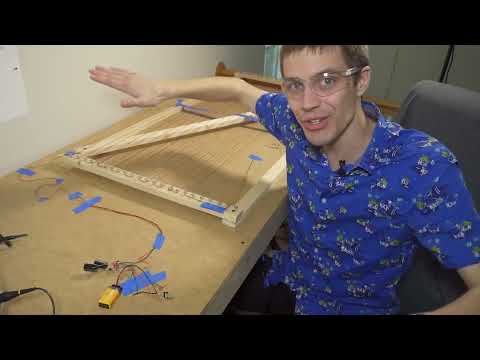 26:29
Watch electricity hit a fork in the road at half a billion frames per second
3M views • 2 years ago
AlphaPhoenix
AlphaPhoenix uses a custom high-speed measurement setup to watch voltage waves travel down wires and split at a fork. It answers how electricity knows where to go and how quickly that process happens.
 23:12
Simulating an epidemic
5.2M views • 6 years ago
3Blue1Brown
3Blue1Brown builds toy SIR models to simulate how an epidemic spreads and tests scenarios like social distancing, travel restrictions, central gathering places and quarantine. It was made during the early COVID-19 outbreak.
 11:32
Why Planes Don't Fly Faster
7.5M views • 9 years ago
Wendover Productions
Wendover Productions explains why modern airliners fly no faster than they did decades ago, covering the economics of speed and fuel efficiency, and why supersonic travel faded.
 24:31
How Electricity Actually Works
12.8M views • 4 years ago
Veritasium
Veritasium explores how electrical energy actually travels in a circuit, arguing that it flows through electromagnetic fields around the wires rather than through the electrons. It builds a long-cable experiment with Caltech to test when a distant bulb lights.
 10:24
Why does light slow down in water?
1.3M views • 7 years ago
Fermilab
Fermilab's Don Lincoln explains why light travels slower in water and glass. He knocks down common wrong explanations such as absorption and re-emission, then gives the wave-mechanics reason tied to refractive index.
 21:38
Risking My Life To Settle A Physics Debate
12.4M views • 5 years ago
Veritasium
Veritasium investigates whether a wind-powered vehicle can travel directly downwind faster than the wind, driving the Blackbird craft himself. The video explains the physics behind a claim some physics professors dispute.
 17:56
A Physics Professor Bet Me $10,000 I'm Wrong
26.3M views • 5 years ago
Veritasium
Veritasium recounts a $10,000 bet with a UCLA physics professor over whether a vehicle can travel downwind faster than the wind. He presents the professor's reasoning and demonstrations, including one without aerodynamics.
 3:34
Complete Solution To The Twins Paradox
2.3M views • 10 years ago
minutephysics
A minutephysics explainer on the twins paradox in special relativity. It shows why the traveling twin ends up younger and how acceleration resolves the paradox.
 16:30
Why is light slower in glass? - Sixty Symbols
848K views • 13 years ago
Sixty Symbols
Professor Mike Merrifield of Nottingham explains in a mostly uncut conversation why light travels slower in glass. He treats light as a wave and describes how the material's electrons produce secondary waves that combine to slow it.
 40:47
Dyson Spheres
838K views • 9 years ago
Isaac Arthur
Isaac Arthur examines Dyson spheres and swarms, including common myths and misconceptions. He covers uses such as interstellar travel, black hole generation, and computing large enough to simulate universes.
 7:00
1,000km Cable to the Stars - The Skyhook
13M views • 6 years ago
Kurzgesagt – In a Nutshell
Kurzgesagt explains the skyhook, a rotating cable with a counterweight that could catapult spacecraft from Earth orbit toward deep space. It covers why it would make space travel cheaper and more efficient.
 5:21
The Best Kind of Dutch Cycling Infrastructure
355K views • 6 years ago
Not Just Bikes
Not Just Bikes explains Dutch bicycle-only roads, which let people travel long distances in and out of cities with almost no car interaction. It shows how this changes cycling from a chore into something enjoyable.