voting reform
 6:23
How We Should Vote (Range Voting)
43K views • 10 years ago
Undefined Behavior
A six-minute explainer from Undefined Behavior on range (score) voting. It follows an earlier video on Arrow's Theorem and shows how range voting seems to satisfy the criteria Arrow's Theorem says no ranked system can.
 14:03
Simulating alternate voting systems
4.5M views • 6 years ago
Primer
Primer uses simulations to compare voting systems such as first-past-the-post, approval, ranked choice and others. It shows how each system behaves and can be manipulated, with links to further voting theory resources.
 4:27
The Voting System That Should Replace Every Election
4.7M views • 15 years ago
CGP Grey
A short CGP Grey explainer on the alternative vote (instant runoff voting) versus first past the post, made around the 2011 UK referendum. It shows how ranked ballots are tallied and why they avoid spoiler effects.
 6:47
The Voting System That's Actually Too Good for Politicians to Allow
10.4M views • 12 years ago
CGP Grey
CGP Grey explains the Single Transferable Vote, a proportional ranked-ballot system, and why politicians have little incentive to adopt it. It is a short animated explainer of how multi-winner ranked voting works.
 6:18
Animated Voting Methods
16K views • 9 years ago
Unify The Vote
An animated simulation comparing single-winner voting methods such as plurality, instant runoff and STAR. Colored regions show which candidate wins as a randomized electorate shifts across a two-dimensional political space, building on Ka-Ping Yee's earlier diagrams.
 12:01
Why Electronic Voting Is Still A Bad Idea
5.1M views • 6 years ago
Tom Scott
Tom Scott explains why electronic voting is a bad idea. Elections must be trusted by everyone and attacks on software scale in ways attacks on paper do not, so open source or blockchain fixes do not solve it.
 8:21
Why Electronic Voting is a BAD Idea - Computerphile
2.3M views • 11 years ago
Computerphile
Tom Scott explains for Computerphile why electronic voting is a bad idea, arguing that paper ballots are transparent, auditable and hard to tamper with at scale. He covers why moving voting to phones, tablets or computers undermines trust and verifiability.
 3:35
How our voting system (and IRV) betrays your favourite candidate
35K views • 12 years ago
The Center for Election Science
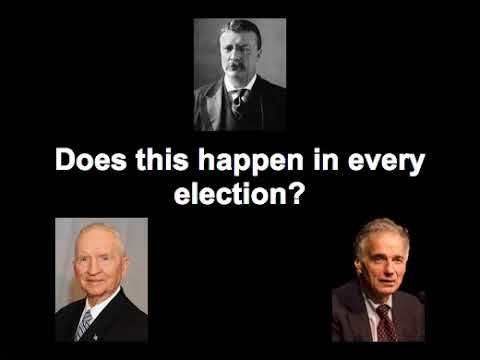
The Center for Election Science explains favorite betrayal in instant-runoff voting: in some elections, ranking your favorite first can cause your least favorite to win. It contrasts this with plurality voting's spoiler problem.
 19:22
Voting Machines: Last Week Tonight with John Oliver (HBO)
6.5M views • 7 years ago
LastWeekTonight
John Oliver's Last Week Tonight segment on US voting machines, covering how they work, their security weaknesses, and how elections could be made more secure.
 4:29
The Voting System That Gives You Two Votes
3.1M views • 15 years ago
CGP Grey
CGP Grey explains Mixed-Member Proportional representation, the system used in New Zealand where voters get two votes. It covers how it differs from first-past-the-post.
 14:09
Voting: Last Week Tonight with John Oliver (HBO)
10.4M views • 10 years ago
LastWeekTonight
A John Oliver Last Week Tonight segment on voting access in the US, covering how some states are making voting less equal. It is a comedic news commentary piece.
 6:31
Why Your Vote Doesn't Count
7.9M views • 15 years ago
CGP Grey
CGP Grey explains first-past-the-post voting and why it pushes elections toward two dominant parties. It is the first in his series on electoral systems.
 1:02:38
The Cardboard Box Reform - Nixon's Ghost Bill & A Crucial Flaw in Democracy
109K views • 12 years ago
CRI
James D'Angelo argues that the 1970 Legislative Reorganization Act made congressional votes public, opening the door to lobbyists and special interests. He proposes restoring secret voting as a cheap fix for corruption and many social ills.
 1:32:08
Theory and Practice of Cryptography
73K views • 18 years ago
Google TechTalks
A Google Tech Talk by Steve Weis that introduces modern cryptography and its use in practice and at Google. It covers proofs of security and security definitions and a special topic. HN commenters treat it as a talk on verifiable electronic voting.
 2:45:38
327 - Choices, costs, and challenges in US healthcare: insurance, drug pricing, & potential reforms
43K views • 1 year ago
Peter Attia MD
On Peter Attia's podcast, Tenet Healthcare CEO Saum Sutaria, formerly of McKinsey, walks through the structure and financial flows of the US healthcare system. They cover insurance, drug pricing, how the system evolved and possible reforms.
 14:29
Milton Friedman - Why Tax Reform Is Impossible
241K views • 14 years ago
LibertyPen
Milton Friedman explains why the US tax code is enormously complex and why meaningful reform is unlikely. He argues that politicians profit from the complexity, since tax breaks are products they sell and the code works as a tool of reward and punishment. The clip is about 14 minutes from his lecture series.
 23:34
Why Democracy Is Mathematically Impossible
10.1M views • 2 years ago
Veritasium
Veritasium explains why no voting system can be perfectly fair, drawing on Arrow's theorem and the work of Eric Maskin. It looks at problems with systems like first-past-the-post and ranked-choice voting.
 8:34
Was YOUR vote counted? (feat. homomorphic encryption) - Numberphile
198K views • 10 years ago
Numberphile
Numberphile interviews cryptographer Ron Rivest about end-to-end verifiable voting. He explains how homomorphic encryption and receipts let a voter confirm their ballot was counted without being able to prove how they voted to anyone else.
 3:38
The Shortest-Splitline Algorithm: a Gerrymandering Solution [Bonus Video]
692K views • 15 years ago
CGP Grey
A short CGP Grey bonus video explaining the shortest-splitline algorithm, which draws electoral districts by repeatedly splitting a state along its shortest dividing line while balancing population. It is offered as a neutral, algorithmic fix for gerrymandering.
 1:27
Teacher admits he helped write Common Core to end white privilege
485K views • 12 years ago
Campus Reform
A short Campus Reform clip in which a teacher claims to have helped write Common Core with the aim of ending white privilege. It is a brief, politically charged advocacy-media piece.
 11:41
RSA ANIMATE: Changing Education Paradigms
18M views • 16 years ago
Royal Society of Arts
An RSA Animate drawn from a Sir Ken Robinson talk arguing that current education systems are modeled on the industrial age. It discusses divergent thinking, standardization, and how schools disengage kids.
 19:08
Laws that choke creativity | Larry Lessig
478K views • 18 years ago
TED
Larry Lessig's TED talk argues that copyright law chokes creativity, drawing on John Philip Sousa, celestial copyrights and the ASCAP cartel to make the case for reviving remix culture.
 27:13
The Longest Year in Human History (46 B.C.E.)
7.4M views • 7 years ago
Historia Civilis
Historia Civilis tells the story of 46 BCE, the 445-day year in which Julius Caesar reformed the Roman calendar. It covers the political context, including the civil war, Cato and Cicero.
 5:29
How to Fix America's Corrupt Political System
479K views • 10 years ago
RepresentUs
A short RepresentUs explainer on how money corrupts American politics and what an anti-corruption act could do about it. It covers lobbying, super PACs and campaign finance, and pitches the group's proposed reforms. The video was later superseded by an updated version.
 4:51
The UK Election Results Were the Worst in History
8.1M views • 11 years ago
CGP Grey
CGP Grey explains how the 2015 UK general election showed the flaws of first-past-the-post voting, with parties like UKIP winning many votes but few seats.
 18:08
What Eating the Rich Did For Japan
2.8M views • 5 years ago
Asianometry
Asianometry traces how the Japanese zaibatsu families grew into vast industrial combines and how postwar reforms abruptly broke up their wealth and control.
 19:20
Conrad Wolfram: Teaching kids real math with computers
363K views • 15 years ago
TED
Conrad Wolfram argues that the part of math taught in schools, hand calculation, is tedious and mostly irrelevant to real mathematics. He proposes teaching math through computer programming so students can tackle real problems.
 13:11
U.S. Territories: Last Week Tonight with John Oliver (HBO)
10.9M views • 11 years ago
LastWeekTonight
A Last Week Tonight segment on how century-old Supreme Court decisions left U.S. territories such as Puerto Rico, Guam and American Samoa without meaningful representation. It mixes comedy with a history of their legal status.
 19:34
Gerrymandering: Last Week Tonight with John Oliver (HBO)
12.6M views • 9 years ago
LastWeekTonight
A Last Week Tonight episode segment in which John Oliver explains gerrymandering, how lawmakers reshape voting districts to shift political power. It uses humor and examples such as oddly shaped districts.
 3:01
Inequality: Why are the rich getting richer?
130K views • 13 years ago
Positive Money UK
A three-minute Positive Money UK explainer arguing that the commercial banking system, where banks create most money as debt, redistributes income from the bottom 90 percent to the top 10 percent through interest.
 4:20
George Carlin Doesn't vote
3.7M views • 18 years ago
BankOFganja
A four-minute clip of George Carlin arguing that voting is a way of keeping people in a distracted bubble, and that non-voters have as much right to complain as anyone.
 18:20
We the People, and the Republic we must reclaim | Lawrence Lessig
314K views • 13 years ago
TED
In this TED talk, Lawrence Lessig argues that American politics is corrupted by Congress's dependence on funding from a tiny fraction of citizens. He uses rapid-fire visuals and calls for a bipartisan push to reclaim the Republic.
 20:54
Our democracy no longer represents the people. Here's how we fix it | Larry Lessig | TEDxMidAtlantic
2.7M views • 11 years ago
TEDx Talks
Harvard law professor Lawrence Lessig argues that US democracy is corrupted by money, since a tiny fraction of the population effectively funds who gets elected. He says fixing this must come before addressing issues like climate change or student debt.
 25:58
Germany: Low Crime, Clean Prisons, Lessons for America | Jeff Rosen | TEDxMountainViewHighSchool
3.1M views • 9 years ago
TEDx Talks
Santa Clara County District Attorney Jeff Rosen explains in a TEDx talk why Germany has lower crime and far fewer prisoners than the US, and what American criminal justice could learn from German prisons.
 20:04
Do schools kill creativity? | Sir Ken Robinson | TED
25.1M views • 19 years ago
TED
Sir Ken Robinson argues, with humor and stories such as that of choreographer Gillian Lynne, that education systems undermine creativity and should be changed. It is one of the most viewed TED talks.
 5:44
The Classroom Only Works for One Kid in the Room
2.5M views • 14 years ago
CGP Grey
CGP Grey argues that a classroom works well only for the one student pitched at the average level, and sketches a future of personalized instruction. It introduces the idea of a Digital Aristotle, a tutor for every learner.
 6:31
You Can Win the Presidency With 22% of the Vote
8.2M views • 15 years ago
CGP Grey
A short CGP Grey animation showing how the US electoral college lets a candidate win the presidency with as little as about 22 percent of the popular vote. It lays out the arithmetic of winning states by narrow margins.
 5:33
Adam Ruins Everything - The Truth About the McDonald's Coffee Lawsuit
978K views • 9 years ago
truTV
An Adam Ruins Everything segment on the real facts of the McDonald's hot coffee lawsuit, covering the severity of the burns and the corporate PR campaign that painted it as frivolous.
 5:04
Liquid Democracy In Simple Terms
76K views • 13 years ago
pxi
A five-minute animated explainer of liquid democracy, in which voters can delegate their vote to trusted people. It starts from the origins of democracy and contrasts direct and representative models.
 0:41
Paul Weyrich - "I don't want everybody to vote" (Goo Goo)
319K views • 19 years ago
peoplefor
A 1980 clip of conservative strategist Paul Weyrich telling a religious audience he does not want everybody to vote. He says elections are not won by a majority and that leverage rises as turnout falls.