web
 22:52
2016/2017 MUST-KNOW WEB DEVELOPMENT TECH - Watch this if you want to be a web developer
916K views • 10 years ago
LearnCode.academy
LearnCode.academy presents a roadmap of web development technologies to learn in 2016 and 2017, spanning front-end, back-end and DevOps tools.
 4:32
Web 2.0 ... The Machine is Us/ing Us
12.1M views • 19 years ago
Michael Wesch
Michael Wesch's five-minute video about Web 2.0, showing how the read/write web, XML and user-generated content change how people create and share information.
 1:20
Paul Otlet, visioning a web in 1934
102K views • 18 years ago
Attila Gárdos
A one-minute clip about Paul Otlet, the Belgian bibliographer who in 1934 imagined users accessing a remote database through an electric telescope over a phone line. It presents his vision as a precursor of the web.
 13:39
How is this Website so fast!?
2.4M views • 2 years ago
Wes Bos
Wes Bos breaks down the techniques behind the McMaster-Carr website's speed: server-rendered HTML, prefetching, CDN and service worker caching, preloading, critical CSS and fixed-size images. He also notes its old-school jQuery and YUI JavaScript.
 4:42
Why Your Webcam Still SUCKS!
552K views • 6 years ago
Techquickie
A short Techquickie explainer on why laptop webcams are much worse than phone cameras. It covers sensor size, image processing, and the interface differences between laptops and phones, with input from a Logitech engineer.
 31:12
The Insane Engineering of James Webb Telescope
8.8M views • 4 years ago
Real Engineering
Real Engineering explains the engineering behind the James Webb Space Telescope, including its folding mirror, sunshield, orbit and cooling systems, and why deployment was so difficult.
 3:37
Why Web Filters Don't Work: Penistone and the Scunthorpe Problem
3.6M views • 10 years ago
Tom Scott
Tom Scott visits Penistone to explain the Scunthorpe problem, showing why naive web and profanity filters block innocent words.
 15:15
why Japan's internet is weirdly designed
5.2M views • 3 years ago
Answer in Progress
Answer in Progress investigates why Japanese websites look different from those elsewhere, using an AI clustering approach to test the 2013 claim. It then looks at possible explanations.
Topic match · Web development 3:45
pointerpointer.com's use of voronoi, canvas, and javascript
40K views • 14 years ago
Paul Irish
Paul Irish explains how pointerpointer.com works. It uses a hidden canvas of colored Voronoi regions to look up which photo matches the cursor position.
Topic match · Web development 4:18
Flexbox vs. CSS Grid — Which is Better?
314K views • 8 years ago
Layout Land
Jen Simmons explains the difference between CSS Flexbox and CSS Grid, and when to use each. She makes the case that Grid does not replace Flexbox and most sites use both.
Topic match · Web development 10:48
PHP doesn't suck (anymore)
223K views • 3 years ago
Aaron Francis
Aaron Francis walks through how PHP has changed from 2012 to 2023, covering traits, array destructuring, generators, typed properties and more. It is a quick chaptered tour of modern PHP features.
Topic match · Web development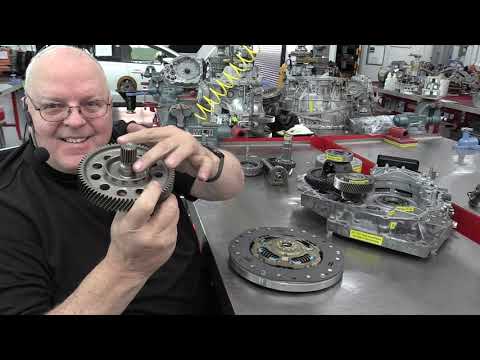 25:15
Understanding the Honda CR-V Hybrid E-Drive
941K views • 5 years ago
WeberAuto
WeberAuto explains how the Honda E-Drive (i-MMD) hybrid transaxle works in the CR-V, Accord, Insight and Clarity hybrids. It walks through the system's three modes of operation.
 12:23
Xanadu Basics 1a - VISIBLE CONNECTION
20K views • 8 years ago
TheTedNelson
Ted Nelson explains the original Xanadu hypertext idea of visible connection, the notion that links between documents should be shown and preserved. He argues that the Web and current document standards lost this concept.
 10:39
This Video Has 77,321,815 Views
77.3M views • 6 years ago
Tom Scott
Tom Scott's video whose title shows its own live view count, and the story of how he made that work. It explains why open APIs were once common and why they largely disappeared.
Topic match · Web development 9:37
Characters, Symbols and the Unicode Miracle - Computerphile
2.1M views • 13 years ago
Computerphile
Tom Scott explains for Computerphile how Unicode and UTF-8 grew out of messy older character encodings to become the web's standard. It covers why the design works and how it handles worldwide text.
Topic match · Networking & internet infrastructure 4:59
This library has every book ever published.
2.4M views • 3 years ago
Tom Scott
Tom Scott visits the British Library, a UK legal deposit library that receives a copy of everything published, and discusses storing so much material, including the web archive.
 42:29
YouTube's copyright system isn't broken. The world's is.
9M views • 6 years ago
Tom Scott
Tom Scott's long explainer on YouTube's copyright system, Content ID and the DMCA. He argues the platform's system is a workaround for a broader copyright system that does not fit the modern world.
Topic match · Internet culture & memes 6:59
The Problem With Facebook
3.1M views • 12 years ago
2veritasium
Veritasium's Derek Muller argues that Facebook's business model works against pages and creators, because it charges them to reach the audiences they built. He explains how filtering and paid promotion undermine the value of likes.
Topic match · Internet culture & memes 6:17
Can You Watch This Without Getting Angry?
12.1M views • 11 years ago
CGP Grey
CGP Grey explains how ideas spread like germs, and why content that triggers outrage spreads fastest, using a study on what makes online content viral. He argues that opposing outrage-driven memes feed each other.
Topic match · Internet culture & memes 9:00
Facebook Fraud
6.6M views • 12 years ago
Veritasium
Veritasium argues that Facebook's ad revenue relies partly on fake likes, after paying to promote his page and gaining tens of thousands of followers in developing countries who never engaged. He shares his experiment and cites other cases.
Topic match · Internet culture & memes 15:41
Why SpaceX is Making Starlink
7.4M views • 7 years ago
Real Engineering
Real Engineering explains why SpaceX is building Starlink, including the economics of satellite internet. It covers the latency advantage of light in vacuum over fiber for long-distance links.
Topic match · Networking & internet infrastructure 6:47
Starlink revisions, Nov 2018
173K views • 7 years ago
Mark Handley
Mark Handley of UCL looks at how SpaceX's November 2018 revisions to the Starlink constellation affect network behavior. The video visualizes the orbits and routing and estimates latencies, building on his earlier video and research paper.
Topic match · Networking & internet infrastructure 10:15
Using ground relays with Starlink
506K views • 6 years ago
Mark Handley
Mark Handley of UCL explains, with simulation visualizations, how early Starlink satellites without inter-satellite links could still give low-latency wide-area communication by hopping via ground relays. He shows it can beat fibre on many long paths.
Topic match · Networking & internet infrastructure 18:57
Manipulating the YouTube Algorithm - (Part 1/3) Smarter Every Day 213
2.7M views • 7 years ago
SmarterEveryDay
Part 1 of Smarter Every Day's three-part series on manipulating the YouTube algorithm. It features Renee DiResta and examples of how social media platforms can be manipulated.
Topic match · Internet culture & memes 17:48
All you need to know to understand 5G
1.6M views • 5 years ago
Sabine Hossenfelder
Physicist Sabine Hossenfelder explains how 5G works and examines the health concerns around millimeter wave radiation. She reviews the scientific evidence and the open letters from scientists.
Topic match · Networking & internet infrastructure 28:09
How does Starlink Satellite Internet Work?📡☄🖥
9.9M views • 4 years ago
Branch Education
Branch Education explains how Starlink works, from the ground dish and satellites to phased-array beam steering and data routing. Animations cover how a beam stays connected to a satellite moving at 27,000 km/h.
Topic match · Networking & internet infrastructure 8:26
AT&T Archives: The Step-By-Step Switch
774K views • 15 years ago
AT&T Tech Channel
A 1951 Bell System training film showing how telephone calls are routed through a step-by-step (Strowger) switching office.
Topic match · Networking & internet infrastructure 21:24
Why are people mean on Twitter? - Smarter Every Day 214
957K views • 7 years ago
SmarterEveryDay
Destin Sandlin of Smarter Every Day examines how bad actors and bots use Twitter, drawing on the released Russian IRA dataset and interviews. It asks why interactions on the platform turn hostile.
Topic match · Internet culture & memes 4:39
How to slow down a stock exchange
4M views • 7 years ago
Tom Scott
Tom Scott visits IEX, a stock exchange that slows down trading with a long coil of fiber. The coil removes the speed advantage of high-frequency traders.
Topic match · Networking & internet infrastructure 4:31
why typing like this is sometimes okay.
5.4M views • 7 years ago
Tom Scott
Tom Scott makes a short descriptivist argument that language keeps changing and that casual internet writing conventions, like lowercase typing and dropped full stops, are legitimate. It is part of his Language Files series, written with Gretchen McCulloch.
Topic match · Internet culture & memes 5:10
Will YouTube Ever Run Out Of Video IDs?
10.1M views • 10 years ago
Tom Scott
Tom Scott explains YouTube's 11-character video IDs, which are base-64 encoded 64-bit numbers, and whether YouTube could ever run out of them. It covers counting systems and base 64 briefly.
Topic match · Internet culture & memes 33:43
TSP #183 - Starlink Dish Phased Array Design, Architecture & RF In-depth Analysis
171K views • 5 years ago
The Signal Path
The Signal Path takes apart a Starlink dish layer by layer, analyzing the phased array RF design, system architecture and integrated circuits, with an X-ray of the RF stack.
Topic match · Networking & internet infrastructure 9:48
Why do YouTube views freeze at 301?
301 views • 14 years ago
Numberphile
Numberphile visits YouTube to learn why view counts on new videos used to freeze at 301. It explains that YouTube holds counts while it verifies views aren't from bots or fakes.
Topic match · Internet culture & memes 16:31
The TRUTH About How LTT Makes Money
1.9M views • 1 year ago
Linus Tech Tips
Linus Tech Tips breaks down the company's income streams, including sponsors, YouTube Premium, merch and other products. It gives percentages for each revenue source.
Topic match · Internet culture & memes 1:14
Sound of the dialup modem explained
512K views • 13 years ago
bialasiczek
A short animation that pairs the sound of a dialup modem handshake with a graphic explaining what each phase of the sound means.
Topic match · Networking & internet infrastructure 14:23
The Long, Twisted And Slightly Ridiculous Story of Avgas Part 1
291K views • 4 years ago
AVweb
AVweb's Paul Bertorelli explains why general aviation has failed to replace leaded avgas, blaming industry inertia, bureaucratic delay and an exemption that removes the incentive. This is part one of two.
 15:16
The Long, Twisted and Slightly Ridiculous Story of Avgas Part 2
169K views • 4 years ago
AVweb
AVweb's Paul Bertorelli explains in part two of a series why general aviation has not replaced leaded avgas. He covers industry inertia, bureaucratic delays and the exemption that lets the industry keep using lead.
 13:44
Are Planes With Parachutes Really Safer?
1M views • 7 years ago
AVweb
AVweb's Paul Bertorelli analyzes the safety record of the Cirrus Airframe Parachute System (CAPS), looking at the 90-plus deployments over 20 years of Cirrus flying. He asks whether the whole-aircraft parachute has actually saved lives.
 10:13
The Problem with Time & Timezones - Computerphile
4.4M views • 12 years ago
Computerphile
Tom Scott explains for Computerphile why handling time and timezones in code is so hard, walking through a simple web app that computes how long ago something happened. It covers the quirks of timezones and calendars and ends in an exasperated rant.
 11:07
How to achieve nanometer precision in space?
748K views • 4 years ago
Breaking Taps
Breaking Taps explains how the cryogenic mirror actuators on the James Webb Space Telescope achieve nanometer precision using flexures. It shows a 3D-printed replica and how one motor handles both coarse and fine motion.