z/os
 23:03
The Universe is Hostile to Computers
26.5M views • 5 years ago
Veritasium
Veritasium explains how cosmic rays and other particles flip bits in computer memory, with examples including a Belgian election count error, plane incidents and game glitches. It is inspired by a RadioLab episode on bit flips.
 15:41
How anti-theft tags work - magnetostriction
886K views • 10 years ago
Applied Science
Applied Science explains how retail anti-theft tags work. A tiny magnetostrictive strip acts as a mechanical oscillator excited by a magnetic field, and magnetizing or demagnetizing it arms or disarms the tag.
 11:11
Hauntology, Lost Futures and 80s Nostalgia
451K views • 8 years ago
Jonas Čeika - CCK Philosophy
A video essay explaining hauntology, Mark Fisher's idea of lost futures, and 80s nostalgia. It uses the Fallout games and other media as examples of a retro-futurism that mourns futures that never arrived.
 7:49
Your Post Code Is the Directions, Not the Destination
3.9M views • 1 year ago
CGP Grey
CGP Grey explains that postal codes are routing instructions for mail rather than geographic regions. He looks at the quirks and problems this causes.
 24:13
Gaslighting Your Fans w/ Dolby ATMOS™
888K views • 3 years ago
Benn Jordan
Musician and audio engineer Benn Jordan tries Dolby Atmos as a consumer, covering the theory of immersive audio, its business model, and home theater and headphone listening. He concludes it often falls short of the pitch.
 19:59
What Happens at the Event Horizon? | Space Time | PBS Digital Studios
3.2M views • 9 years ago
PBS Space Time
PBS Space Time explains what happens as you approach and cross a black hole's event horizon, using Penrose diagrams and light cones as the tool for understanding spacetime there.
 28:33
Terence Tao on the cosmic distance ladder
6.5M views • 1 year ago
3Blue1Brown
Terence Tao and Grant Sanderson of 3Blue1Brown walk through the cosmic distance ladder, showing how humans measured distances from the Earth to the Moon, Sun, planets and beyond. It includes animations and the history behind each step.
 8:17
PHILOSOPHY - Michel Foucault
3.9M views • 11 years ago
The School of Life
A School of Life short introducing Michel Foucault, who questioned assumed progress in how society treats madness, medicine and sexuality.
 11:41
TRUE Limits Of Humanity – The Final Border We Will Never Cross
23.6M views • 5 years ago
Kurzgesagt – In a Nutshell
Kurzgesagt explains why, even with science-fiction technology, most of the universe is permanently out of reach because of cosmic expansion and finite resources.
 23:55
Matrioshka Brains: Star-Powered Computers
505K views • 10 years ago
Isaac Arthur
Isaac Arthur explains the Matrioshka Brain, a hypothetical computer or artificial mind powered by an entire star using nested shells. It covers how such megastructures relate to Dyson spheres and superintelligence.
 7:37
Satoshi Kon - Editing Space & Time
4M views • 12 years ago
Every Frame a Painting
A video essay from Every Frame a Painting on animator Satoshi Kon and his editing style, which distorts and warps space and time. It draws on his four features and one TV series.
 10:19
What Fossils Will We Leave Behind in 65 Million Years?
321K views • 7 years ago
Curious Droid
Curious Droid asks what traces human civilization would leave in the geological record 65 million years from now. It considers how thin the fossil record of humanity might be.
 11:22
Most People Don't Know How Bikes Work
24.9M views • 4 years ago
Veritasium
Veritasium explains why bicycles are stable, arguing that gyroscopic effects are not the answer. The video shows countersteering and an experiment where riders blocked from steering the opposite way cannot turn.
 4:10
Where Do Trees Get Their Mass?
2.5M views • 14 years ago
Veritasium
Veritasium asks people where a tree's mass comes from, then explains that most of a dry tree's mass originates from carbon dioxide in the air. It combines street interviews with a short explanation of photosynthesis.
Topic match · Everyday physics & science demos 18:05
The Crisis in Cosmology
1.1M views • 7 years ago
PBS Space Time
PBS Space Time explains the Hubble constant tension, in which two precise, independent methods of measuring the universe's expansion rate disagree. It covers why this calls some standard cosmology into question.
 18:30
What Happens After the Universe Ends?
2.3M views • 6 years ago
PBS Space Time
PBS Space Time explains Roger Penrose's conformal cyclic cosmology, in which the far future of our universe becomes the big bang of the next. It explores what could come after the universe ends.
Topic match · Cosmology & astrophysics 16:36
JWST just made the "Crisis in Cosmology" WORSE
1.3M views • 3 years ago
Dr. Becky
Astrophysicist Dr. Becky explains the Hubble tension, the disagreement between expansion-rate measurements from the cosmic microwave background and the distance ladder, and what early JWST Cepheid observations add.
 9:29
The Most Extreme Explosion in the Universe
11.6M views • 3 years ago
Kurzgesagt – In a Nutshell
A Kurzgesagt animation on supernovae, the most powerful explosions in the universe. It explains their role in creating elements and what would happen to Earth if one occurred nearby.
 24:46
Breakdown of the Pentagon UFO videos with Mick West
366K views • 6 years ago
Cool Worlds
Astronomer David Kipping of Cool Worlds talks with Mick West to break down the three declassified Pentagon UFO videos. They explain the footage through camera artifacts, glare, and perspective effects.
 12:25
This Invention Made Disney MILLIONS, but Then They LOST It!
7.3M views • 2 years ago
Corridor Crew
Corridor Crew tracks down Disney's lost sodium vapor prism process, used for Mary Poppins-era transparency mattes. They explain how a narrow sodium wavelength and a beam splitter enabled better compositing than green screen.
 8:16
Giving birth costs a lot. Hospitals won't tell you how much.
3.4M views • 10 years ago
Vox
A Vox reporter tries to learn what his son's birth would cost before it happens and fails, showing how opaque US hospital pricing is even for the most common procedure.
 23:47
I Think Faster Than Light Travel is Possible. Here's Why.
3.8M views • 3 years ago
Sabine Hossenfelder
Sabine Hossenfelder explains why she thinks faster-than-light travel may not be ruled out. She argues that the standard objections from special relativity are inconclusive.
 2:23
Music and Life - Alan Watts
2.6M views • 19 years ago
seandulac
A two-minute animation of an Alan Watts talk arguing that life is like music: it is meant to be danced to in the moment, not rushed toward a final goal. It is a short, accessible take on living in the present.
Topic match · Philosophy & ethics 8:25
Akira Kurosawa - Composing Movement
10.8M views • 11 years ago
Every Frame a Painting
An Every Frame a Painting video essay on how Akira Kurosawa used movement, weather and composition to tell stories. It draws on clips and interviews with other filmmakers.
 9:37
PHILOSOPHY - Albert Camus
3.2M views • 11 years ago
The School of Life
A School of Life animated overview of Albert Camus, covering his existentialism and absurdism and his answer to the question of meaninglessness.
 13:01
Could The Universe Be Inside A Black Hole?
3.4M views • 4 years ago
PBS Space Time
A PBS Space Time episode asking whether our universe could sit inside a black hole. It covers what physicists think happens inside black holes and the arguments for and against this idea.
Topic match · Cosmology & astrophysics 4:48
Hans Rosling's 200 Countries, 200 Years, 4 Minutes - The Joy of Stats - BBC
11.5M views • 15 years ago
BBC
Hans Rosling uses augmented-reality animation to show 200 countries over 200 years in four minutes, built from 120,000 data points. It tracks life expectancy and income to show the world's development.
 7:16
Unix and Google
9K views • 10 years ago
FOAM
A short animated simulation comparing how Multics and Unix were developed, showing why Unix's small composable programs and pipes gave it a efficiency advantage. It frames Unix as a moonshot achievable by a small team.
Topic match · Operating systems & kernels 5:07
7 Minutes of Terror: Curiosity Rover's Risky Mars Landing | Video
1.2M views • 14 years ago
VideoFromSpace
NASA's animated explanation of the Curiosity rover's Mars landing, which relied on a complex automated sequence taking about seven minutes. It features NASA engineers discussing the risks before the 2012 landing.
 6:00
Rhyme: Why Eminem is one of the most impressive lyricists ever
3.7M views • 13 years ago
Library of Alexandria
A re-upload of a video breaking down Eminem's rhyme schemes, showing multi-syllable and internal rhymes in songs such as Lose Yourself. It aims to show why he is considered a standout lyricist.
 24:07
AI can't cross this line and we don't know why.
2.5M views • 2 years ago
Welch Labs
A Welch Labs explainer on neural scaling laws and the compute-efficient frontier, asking why model loss seems to hit a line it cannot cross. It draws an analogy to an ideal gas law for AI.
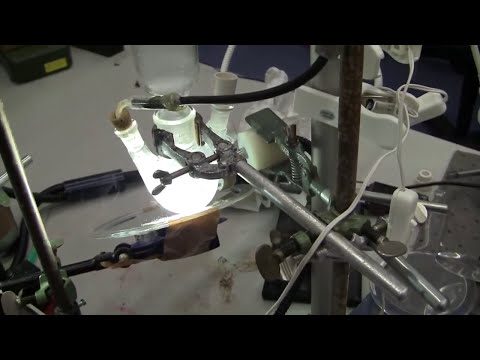 24:59
High speed camera reveals why sodium explodes!
484K views • 11 years ago
Thunderf00t
Thunderf00t presents high-speed camera footage of alkali metals such as sodium and NaK reacting with water. The footage shows that the explosion is not caused by hydrogen ignition, as the usual explanation says. It is a Coulomb explosion driven by electrons leaving the metal.
Topic match · Chemistry 16:37
Does It Make Sense To Put Data Centers In Space? Can They Really Cost Less To Operate?
502K views • 2 years ago
Scott Manley
Scott Manley analyzes the idea of putting data centers in orbit, prompted by Lumen Orbit's funding. He examines the claimed advantage of constant solar power against launch cost, cooling and mass.
 19:19
Was Penrose Right? NEW EVIDENCE For Quantum Effects In The Brain
1.1M views • 2 years ago
PBS Space Time
PBS Space Time examines Roger Penrose's idea that consciousness arises from quantum processes in the brain, and reviews new evidence about microtubules. It ends with an estimate of what replicating consciousness would demand.
 9:29
Inferno: Dust Explosion at Imperial Sugar
2M views • 17 years ago
USCSB
A US Chemical Safety Board video explaining how sugar dust explosions at the Imperial Sugar plant in Georgia killed fourteen workers in 2008.
 5:43
Design Club - Super Mario Bros: Level 1-1 - How Super Mario Mastered Level Design
1.2M views • 12 years ago
Extra History
A Design Club episode that analyzes how Super Mario Bros. level 1-1 teaches players to play through level design alone, without text tutorials.
 11:50
Dark Matter: The Situation has Changed
830K views • 5 years ago
Sabine Hossenfelder
Sabine Hossenfelder explains how her opinion on dark matter has shifted, weighing the evidence for and against it and the case for modified gravity. It runs through what dark matter is and why it has not been detected.
Topic match · Cosmology & astrophysics 16:07
Does the Past Still Exist?
7.5M views • 4 years ago
Sabine Hossenfelder
Sabine Hossenfelder explains how special relativity leads to the block universe, in which past, present and future all exist equally, and asks what that means for whether the past still exists.
Topic match · Philosophy & ethics 21:15
The REAL Possibility of Mapping Alien Planets!
778K views • 4 years ago
PBS Space Time
PBS Space Time explains the proposal to use the Sun's gravity as a giant lens, sending a train of small light-sail spacecraft to the focal point roughly 550 AU out. It covers how such a telescope could image exoplanets in surprising detail and the engineering challenges involved.
 11:27
CGA Graphics - Not as bad as you thought!
2.4M views • 10 years ago
The 8-Bit Guy
The 8-Bit Guy covers IBM's 1981 CGA graphics system, including how composite output and artifacting produced extra colors beyond the nominal palette. He argues CGA looked better in period than it does on RGB monitors.
Topic match · Demoscene & retrocomputing