Why our IQ levels are higher than our grandparents' | James Flynn
TED3 HN recommenders · recommended in 3 months, 2020-2024
3.2M views · 13 years ago · talk · evergreen
Moral philosopher James Flynn explains the Flynn effect, the steady rise of IQ scores across the 20th century. He argues the shift reflects a move toward abstract, hypothetical thinking as cognitively demanding professions grew.
HN recommends it as a clear explanation of why generations think differently and why IQ scores have risen.
 13:11
Jordan Peterson - Controversial Facts about IQ
Bite-sized Philosophy
2.2M views • 9 years ago
 2:39:46
The Bell Curve
Shaun
4M views • 6 years ago
 21:51
Do we see reality as it is? | Donald Hoffman | TED
TED
3.1M views • 11 years ago
 21:20
The surprising science of happiness | Dan Gilbert
TED
4.7M views • 14 years ago
 3:56
Orwell comes to america - clip - reason 1
rTests334
19K views • 17 years ago
 20:37
The riddle of experience vs. memory | Daniel Kahneman
TED
1.5M views • 16 years ago
 19:00
Optical illusions show how we see | Beau Lotto
TED
3.5M views • 17 years ago
 59:52
The Secret of Our Success | Joseph Henrich | Talks at Google
Talks at Google
40K views • 10 years ago
 5:25
Does the language you speak change how you think?
Tom Scott
1.6M views • 3 years ago
 1:06:31
Genetics and Intelligence
Google TechTalks
91K views • 15 years ago
 7:41
Why Life Seems to Speed Up as We Age
Veritasium
8M views • 10 years ago
 6:24
Feynman: How to think 1 of 2 FUN TO IMAGINE 11
Christopher Sykes
388K views • 17 years ago
 1:01:45
Information, Evolution, and intelligent Design - With Daniel Dennett
The Royal Institution
586K views • 11 years ago
 19:19
Was Penrose Right? NEW EVIDENCE For Quantum Effects In The Brain
PBS Space Time
1.1M views • 2 years ago
 2:09:42
Jeff Hawkins: Thousand Brains Theory of Intelligence | Lex Fridman Podcast #25
Lex Fridman
329K views • 7 years ago
 16:29
The great porn experiment | Gary Wilson | TEDxGlasgow
TEDx Talks
17.8M views • 14 years ago
 11:48
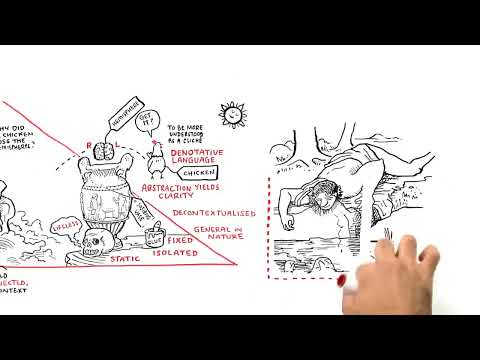
RSA ANIMATE: The Divided Brain
Royal Society of Arts
2.2M views • 15 years ago
 10:52
The Power of belief -- mindset and success | Eduardo Briceno | TEDxManhattanBeach
TEDx Talks
5.6M views • 13 years ago
 1:02:27
Thinking, Fast and Slow | Daniel Kahneman | Talks at Google
Talks at Google
2.2M views • 15 years ago
 9:02
Why hierarchy creates a destructive force within the human psyche (by dr. Robert Sapolsky)
TheSymposionNights
322K views • 14 years ago
5 comments from Hacker News
I think James Gleick is missing a lot of context her. James Flynn[0] also gave a TED talk and mentioned those interviews[1]. Apparently it's based on interviews done by Alexander Luria[2] and he put those in writing in one of his books The Making of Mind: A Personal Account of Soviet Psychology (Chapter 4[3]). [0]: link [1]: ▶ this video [2]: link [3]: link
You mention that men under 70 lack a certain something. Are you sure it isn't that men have gained something they didn't have in the past? I have thought a lot about how the human condition has changed over the years. I feel the most important change is modern human's ability to think in the abstract. If you were to ask a pre-modern human to group a chicken, a crow, a stick, and a tree. They might group the chicken and the stick together because they would use the stick to kill the chicken and make a meal. Whereas a modern human would most likely group the chicken and crow, and the stick and tree together. The tendency to think abstractly has exploded over the last hundred years or so, and it has fundamentally changed how we see and react to the world. A great explanation of this comes from the Ted-talk of James Flynn. ▶ this video
I think TED talks used to be better. Perhaps it's nostalgia, but I really enjoyed TED talks in the past. Martin Rees talking cosmology, Richard Dawkins talking about why the universe seems so strange, James Flynn talking about the Flynn effect[0], Barry Schwartz talking about the paradox of choice etc are enjoyable to me even today. There are many others, but I've not enjoyed as many in the recent years. [0] ▶ this video
This is an off-topic point, but perhaps this TED talk by James Flynn might give you a perspective to understand why your parents and grandparents tought: ▶ this video It posits the idea that the way of thinking back then was different, because they had to overcome different cognitive challenges from us today. This would shape how people back then viewed the world.
I disagree. I think stories like this are important. They teach you to take a hypothetical scenario seriously. It teaches people to ask "what if X were true?" and to seriously consider the ramifications. This is a springboard into abstract thinking. Without people taking the hypothetical seriously they will want to deal with concrete things and will have trouble with abstract reasoning. Imagine you were trying to have a discussion about racism with someone. You would tell them "How would you feel if one day you woke up black and people were biased against you due to your skin color?" They would tell you that it's the dumbest thing they've ever heard. Who have you ever known that woke up with a different skin color?[0] For someone to take an argument like this seriously they have to be willing to engage in a hypothetical scenario. Waking up with a different skin color is as fantastical as the stories you're talking about. This means that they won't engage with your hypothetical scenario. [0] This is an argument made by James Flynn in his amazing TED talk: ▶ this video