Try this bizarre audio illusion! 👁️👂😮 - BBC
BBC2 HN recommenders · recommended in 2 months, 2011-2020
5.8M views · 16 years ago · demo · evergreen
A BBC Horizon clip demonstrating the McGurk effect, where the same audio sounds like different syllables depending on the mouth movements you see. It shows that people integrate visual speech information into what they hear.
HN uses it as the standard demonstration that the brain reinterprets perception, in threads on speech, AI audio and illusions.
 2:12
McGurk effect - Auditory Illusion - BBC Horizon Clip
sixesfullofnines
745K views • 10 years ago
 19:00
Optical illusions show how we see | Beau Lotto
TED
3.5M views • 17 years ago
 1:15
Watch How This Blind Man Uses Echo Location To Ride a Bike
Inside Edition
402K views • 10 years ago
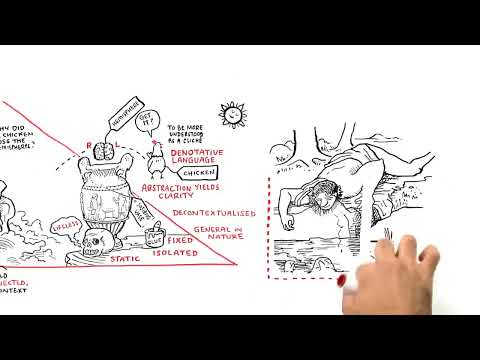 11:48
RSA ANIMATE: The Divided Brain
Royal Society of Arts
2.2M views • 15 years ago
 17:01
Your Brain Hallucinates Your Conscious Reality | Anil Seth | TED
TED
12M views • 9 years ago
 5:01
Shepard Tone
J_II
4M views • 14 years ago
 2:41
Speaking Piano - Now with (somewhat decent) captions!
TheMcphearson
2.2M views • 17 years ago
 12:54
I have APHANTASIA (and you may too...without realising it!)
JAMIEvstheVOID
8M views • 8 years ago
 3:37
Burnistoun - Voice Recognition Elevator in Scotland
VideoFunStation
3.4M views • 15 years ago
 1:22
selective attention test
Daniel Simons
34.1M views • 16 years ago
 14:20
Reveal Invisible Motion With This Clever Video Trick
Steve Mould
2.8M views • 6 years ago
 21:51
Do we see reality as it is? | Donald Hoffman | TED
TED
3.1M views • 11 years ago
 53:33
Your Brain: Who's in Control? | Full Documentary | NOVA | PBS
NOVA PBS Official
11.6M views • 3 years ago
 4:58
You Actually Share Your Brain With a Silent Stranger
CGP Grey
20.2M views • 10 years ago
 5:25
Does the language you speak change how you think?
Tom Scott
1.6M views • 3 years ago
 3:04
Bobby McFerrin Demonstrates the Power of the Pentatonic Scale | World Science Festival
World Science Festival
12.9M views • 17 years ago
 1:00:14
The Neuroscience of Consciousness – with Anil Seth
The Royal Institution
1.9M views • 9 years ago
 0:34
One of a kind Wax Cylinder breaks on camera
jessieawebb
702K views • 18 years ago
 1:45
What Languages Sound Like To Foreigners
Sara Forsberg
22.6M views • 12 years ago
 3:48
Burnistoun - Voice Recognition Lift
Burnistoun
1.8M views • 11 years ago
15 comments from Hacker News
It was people clapping in mission control but your brain wants to think the sound matches the images so your brain tricks you into thinking it is the sound of water splashing. This is sometimes known as the McGurk effect ▶ this video
>For some reason I can easily understand people on video chat even if they have strong accent whereas I can't grok anything on a phone call. See the McGurk Effect: ▶ this video
Are you talking about the McGurk effect? You hear either Ba or Fa depending on which you expect to hear based on the lip reading (but the sound that is actually playing is Va): ▶ this video It is really cool that small contextual information can change our senses so dramatically without us being aware of it happening.
I wonder if we will have visual assisted tts. Humans do it: ▶ this video The McGurk illusion is so strong that I'm sure visual cues have a major role in error correction or voice recognition assistance for humans.
If you like this sort of thing, and haven't heard of the McGurk Effect before, take a look at this: ▶ this video .
Fooling humans is much easier when about 50% of the sound is always accurate (in any case it's a wooden drumstick hitting something). The human mind is very forgiving, especially when vision accompanies sound (McGurk effect [1]) Furthermore this fixed variable makes the pool of samples to choose from much much smaller. Still impressive of course ;) just far from dubbing any video there is. [1] ▶ this video
great link thanks! it's like the McGurk Effect ▶ this video , and why I time Vocal Text to appear just before you hear it link
Brief reminder that what you hear is being reinterpreted by your brain to match the things that you see. ▶ this video
I originally started with web resources, but here's the stuff I credit with really advancing me properly, roughly in the order I read or used it: 1. TTMIK's Hangeul Master . It's really easy to pick up hangul basics so spending $20 on a book that's superficially just about the alphabet might seem silly. But the harder part to learn isn't really the symbols, it's the pronunciation. You need to get to grips with the various sound change rules that apply when various characters are adjacent to each other, and with the pronunciation differences between the normal and tense consonants, and so on. If you can't look at a word and confidently form its sound in your head you can't read or write efficiently, so this is crucial. TTMIK's book is really a solid package: You get the basics (the symbols, the stroke order, etc.) but also a good introduction to the sound change rules, not just on paper but also in really well-done supplementary audio resources and quizzes (where many books fail). Finally there's a second section on various Korean handwriting styles that I found surprisingly useful (Korean TV shows and other materials often use pen scripts that can be hard to read without spending some time with this). 2. To complement the above, the Korean Wiki Project has a lot of good sound files for various character combinations. 3. Billy Go's two Korean Made Simple books are just great. They're highly accessible introductions to core grammar and core vocab, with short, digestible chapter
It is really interesting and amusing how persistent certain 'illusions' can be even when one is exposed to it just once and for a short time. Fun story, this was a long time ago: I was interning at Google at that time. One day I tell my then cube neighbor about an interesting experiment on visual perception that I had read about. A professor at MIT had carried out experiments on his class. Students were asked to wear prismatic goggles that shifted their vision and then try to catch objects. Hilarity ensued, but soon enough the brain adapted to the shift. Same with inverting glasses, soon the students would not even realize that their vision was inverted. The fun part was when they took their glasses off, their motor reflexes would still compensate assuming that they were wearing those glasses. Much hilarity again. I was telling all this to my cube neighbor Michael Riley, not knowing who he was, he says with a twinkle in his eye "Yeah, that was us". The most remarkable thing about these experiments that I learned from him was that the professor would provoke an illusion on the students on the first day of class. I dont remember exactly what the illusion was, but it was some visual artifact, seeing patterns that werent visible a moment ago, much like the OP. At the end of the semester the professor would demonstrate that the entire class could still see that illusion, although they have not been exposed to it in the intervening 4 months ! I tried hard to find an articles on the
There is a considerable body of evidence that "top-down" processes affect not only how sensory evidence is processed, but how the sensations themselves are experienced. In other words, high-level (but subconscious) neural "judgments" about the statistics of the world, actually influence how you perceive it. To put it still another way: sensations aren't simply passively experienced; they are actively constructed by the brain. Phantom phone vibration is, in many ways, just as "constructed" as real phone vibration. Perceptual illusions provide one of the clearest ways to show that sensations reflect factors other than external stimuli. Here are two illusions, in different sensory modalities, that demonstrate the strong top-down influence of the brain on perception: The rubber hand illusion [1,2] and the McGurk effect [3,4]. The rubber hand illusion is particularly relevant because it is quite similar to the phantom phone vibration effect. 1. link 2. link 3. link 4. ▶ this video EDIT: Here's an additional example to consider. People generally can't tickle themselves. The sensations are less strong when one touches oneself than when someone else does so. The explanation for this is that the brain automatically discounts sensations which arise as a result of self-motion. This has obvious advantages, namely that you don't constantly overstimulate yourself just in the process of moving through the world and are as such better able to attend to important externally generated stimuli
Sub vocalizing is the fact or reading syllables instead of entire words at once. Deaf could find very useful to vocalize words as they could read peoples lips and faces based on those units. Everybody read lips and faces subconsciously, there are famous illusions in witch people hear different sounds with the same sound file depending of the video of a mouth they watch: ▶ this video
> The disbelief came when it was time to listen to singular > words. With the screen turned off, I got 0%. With the > screen turned on, I got 8%. That’s crazy! It's really amazing how pervasive (putatively Bayesian) multisensory integration of information is in the brain. Even individuals without impaired hearing have their auditory perceptions strongly a affected by other inputs. The McGurk effect is a great example of this: link ▶ this video
"People already lie to themselves" The most compelling illustration I've seen of this is the McGurk Affect[1]. [1] ▶ this video
This was on reddit the other day direct with a link to youtube, this feels like blogspam to me cashing in on hunch adds no value and shows a tiny player. ▶ this video Direct Link