ar headset
 43:57
Civilizations at the End of Time: Iron Stars
2.1M views • 9 years ago
Isaac Arthur
An Isaac Arthur episode on civilizations in the far future, past the Black Hole Era. It covers iron stars, Boltzmann brains, reversible computing and the idea of reversing entropy.
 29:34
How Do Nuclear Submarines Make Oxygen?- Smarter Every Day 251
10.4M views • 5 years ago
SmarterEveryDay
A Smarter Every Day episode from aboard a nuclear submarine on how the crew makes breathable air. It covers oxygen generation from seawater, oxygen candles and CO2 scrubbing with amine.
 6:42
Carl Sagan - Cosmos - Eratosthenes
3M views • 17 years ago
carlsagandotcom
A short clip from Carl Sagan's Cosmos in which he explains how Eratosthenes measured the circumference of the Earth using shadows in two Egyptian cities. It is a clear, visual account of an ancient scientific feat.
 34:32
Colonizing Mars
819K views • 9 years ago
Isaac Arthur
Isaac Arthur's in-depth look at what it would take to settle and eventually terraform Mars. He covers the challenges and the scale of the work needed to make it a home for humanity.
 1:10:52
The Fermi Paradox Compendium
815K views • 10 years ago
Isaac Arthur
Isaac Arthur surveys the popular proposed solutions to the Fermi Paradox in a 71-minute compendium. He weighs the strengths and weaknesses of each argument.
 6:47
Starlink revisions, Nov 2018
173K views • 7 years ago
Mark Handley
Mark Handley of UCL looks at how SpaceX's November 2018 revisions to the Starlink constellation affect network behavior. The video visualizes the orbits and routing and estimates latencies, building on his earlier video and research paper.
 17:55
The Fermi Paradox: Dark Forest Theory
412K views • 7 years ago
Isaac Arthur
Isaac Arthur examines the Dark Forest theory, Cixin Liu's proposed solution to the Fermi Paradox in which civilizations stay silent and may destroy any that reveal themselves. He tests the theory's underlying assumptions and arguments.
 28:44
Arcologies
397K views • 10 years ago
Isaac Arthur
An Isaac Arthur episode on arcologies, self-sufficient habitats that could house whole cities, on Earth or on harsh worlds. It covers how such structures might work and what limits their size.
 10:22
Shakespeare: Original pronunciation (The Open University)
5.6M views • 15 years ago
OpenLearn from The Open University
David and Ben Crystal introduce the Original Pronunciation production of Shakespeare and show what it reveals about the history of English, including puns and rhymes lost in modern speech.
 10:15
Using ground relays with Starlink
506K views • 6 years ago
Mark Handley
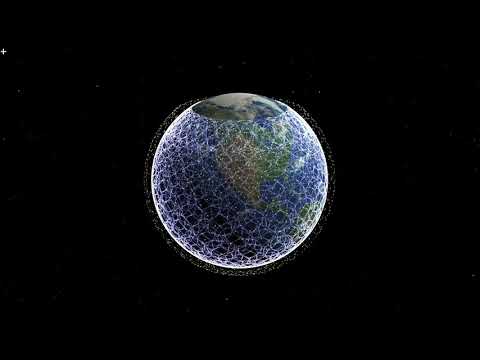
Mark Handley of UCL explains, with simulation visualizations, how early Starlink satellites without inter-satellite links could still give low-latency wide-area communication by hopping via ground relays. He shows it can beat fibre on many long paths.
 40:54
Fermi Paradox: The Dyson Dilemma v2.0
397K views • 10 years ago
Isaac Arthur
Isaac Arthur examines the Dyson Dilemma, the puzzle of why we see no Dyson spheres or megastructures if growth-oriented civilizations should build them. He covers detectability and whether such structures could hide.
 42:02
How to Surface a Submarine in the Arctic Ocean - Smarter Every Day 260
6.4M views • 5 years ago
SmarterEveryDay
Destin Sandlin of Smarter Every Day explains how a US Navy nuclear submarine surfaces through Arctic ice, filmed during the ICEx exercise. It shows ballast and control systems and the physics involved.
 15:37
Everything About Grain Bins (Farmers are Geniuses) - Smarter Every Day 218
7.8M views • 7 years ago
SmarterEveryDay
Destin Sandlin of Smarter Every Day explores how grain bins work and the engineering and know-how involved in farming. His point is that farmers are exceptionally capable.
 30:14
Power Satellites & Space Based Solar Power
254K views • 8 years ago
Isaac Arthur
Isaac Arthur explores space-based solar power, in which satellites beam energy down via microwaves to rectennas on Earth. He discusses feasibility, profitability and its role in spurring space colonization.
 23:32
The Solar Gravitational Lens will Map Exoplanets. Seriously.
582K views • 6 years ago
Launch Pad Astronomy
Explains the proposed NASA JPL plan to use the Sun as a gravitational lens, sending solar sail craft to its focal region to image an exoplanet's surface. It covers the distances involved, how imaging with the Sun would work and the mission design.
 23:16
The Machinery Of Freedom: Illustrated summary
164K views • 14 years ago
bitbutter
An illustrated 23-minute summary of David Friedman's talk based on The Machinery of Freedom. It describes how law, police and courts could work as market services in a stateless society, covering private law, polycentric law and objections.
 10:03
The determinant | Chapter 6, Essence of linear algebra
5M views • 10 years ago
3Blue1Brown
A 10-minute 3Blue1Brown chapter explaining the determinant as the factor by which a linear transformation scales area or volume. It builds the idea geometrically with animations before any formulas.
 8:28
The Fastest Way to Board a Plane Feels Like the Slowest
37.5M views • 7 years ago
CGP Grey
CGP Grey compares airplane boarding methods, based on an arXiv paper, and shows why the intuitive back-to-front approach is slow while random or outside-in boarding does better.
 18:48
Connecting Solar to the Grid is Harder Than You Think
2.4M views • 2 years ago
Practical Engineering
Practical Engineering explains why connecting solar and other inverter-based generation to the grid is hard. It covers grid stability, load balancing and the behind-the-scenes engineering challenges of renewables.
 31:39
Parking Laws Are Strangling America | Climate Town
1.9M views • 3 years ago
Climate Town
Climate Town traces the history of American parking minimums, how they came from shaky research and ITE guides, and how they shape zoning, cities and housing costs. It is a long, comedic video essay.
 10:22
How Far Are The Nearest Stars?
3.7M views • 9 years ago
Cody'sLab
Cody's Lab builds a 200-billionth-scale model to show how far away the nearest stars are, using parallax and light speed. A short astronomy explainer on interstellar distances.
 17:06
What Is A Black Start Of The Power Grid?
3.1M views • 3 years ago
Practical Engineering
Practical Engineering explains what a black start is: restarting a power grid after total collapse. It shows why most plants need outside power to start and why rebuilding a synchronized grid is delicate and high-stakes.
 13:30
Cities: Skylines | Power, Politics, & Planning: Episode 1: Parking
136K views • 8 years ago
donoteat01
The first episode of a Cities: Skylines series on urban politics and planning, focused on parking. It uses the game to show how parking minimums shape cities, drawing on Donald Shoup's book The High Cost of Free Parking.
 9:13
Worst Nuclear Accidents in History
10.9M views • 5 years ago
Kurzgesagt – In a Nutshell
Kurzgesagt compares how many people nuclear accidents have killed against other energy sources. It walks through the worst nuclear accidents and puts their death tolls in context per unit of energy.
 8:39
How to Move the Sun: Stellar Engines
19.5M views • 6 years ago
Kurzgesagt – In a Nutshell
Kurzgesagt explains stellar engines such as the Shkadov thruster and Caplan thruster, which could move the Sun and solar system across the galaxy over millions of years to avoid hazards and reach new regions.
 10:50
The most feared song in jazz, explained
10.6M views • 7 years ago
Vox
Vox Earworm explains why John Coltrane's Giant Steps is so hard to improvise over: it is fast and moves through three keys. Musicians Braxton Cook and Adam Neely walk the host through the underlying music theory.
 14:12
How Harley-Davidson Killed Itself
5M views • 6 years ago
FortNine
FortNine explains how Harley-Davidson ended up in decline, from a narrow lifestyle niche and an aging customer base to the pandemic hitting a company already in trouble.
 16:01
Mars Helicopter (before it went to Mars)
6.2M views • 7 years ago
Veritasium
Veritasium's Derek Muller visits NASA JPL to see the Mars helicopter Ingenuity before it was mounted on the rover. He explains how it can fly in Mars's thin atmosphere with large, fast-spinning contra-rotating rotors and low mass, and covers power and cold.
 43:48
dark matter is not a theory
750K views • 3 years ago
Angela Collier
Physicist Angela Collier argues that dark matter is not a theory but a set of observations, covering rotation curves, the CMB and why modified gravity struggles to explain them.
 27:19
Electric car chargers aren't chargers at all – EVSE Explained
2.2M views • 6 years ago
Technology Connections
Technology Connections explains that the so-called EV charger in an electric car's charging cable or wall unit is really an EVSE, a smart switch that safely delivers AC power. The actual charger is inside the car. The video covers the safety signaling and mechanisms involved.
 11:54
Tested: Where Does The Tone Come From In An Electric Guitar?
2.9M views • 4 years ago
Jim Lill
Guitarist Jim Lill methodically tests what in an electric guitar affects its tone, swapping parts on a partscaster and even trying a 2x4 body. He finds that wood and construction matter far less than people assume.
 20:57
Atari's Quadrascan Explained
239K views • 5 years ago
Retro Game Mechanics Explained
Retro Game Mechanics Explained dissects how Atari's Quadrascan vector displays and vector generator hardware drew games like Asteroids and Tempest.
 5:52
Equipment Review: Best Carbon-Steel Skillets (Can This One Pan Do It All?) & Our Testing Winner
2M views • 11 years ago
America's Test Kitchen
America's Test Kitchen tests eight carbon-steel skillets to find the best one, asking whether a single pan can replace stainless, cast iron and nonstick. It names a winner and covers how the pans perform.
 18:20
The Problem with Solar Energy in Africa
8.1M views • 5 years ago
Real Engineering
Real Engineering looks at why Africa's abundant solar potential is hard to turn into usable power, especially for Europe. It covers the transmission, infrastructure and economic obstacles, and the pivot from concentrated solar to photovoltaics.
 15:41
Why SpaceX is Making Starlink
7.4M views • 7 years ago
Real Engineering
Real Engineering explains why SpaceX is building Starlink, including the economics of satellite internet. It covers the latency advantage of light in vacuum over fiber for long-distance links.
 7:56
Building a Marsbase is a Horrible Idea: Let’s do it!
21.9M views • 7 years ago
Kurzgesagt – In a Nutshell
A Kurzgesagt animation walking through how a Mars base could be built and why it would be punishing, covering radiation, temperature extremes, toxic dust and the need for shielding.
 17:52
Training AI Without Writing A Reward Function, with Reward Modelling
259K views • 6 years ago
Robert Miles AI Safety
Robert Miles explains reward modelling, in which an AI learns what humans want from their preference comparisons instead of a hand-written reward function. He walks through the 2017 paper on deep reinforcement learning from human preferences.
 5:07
7 Minutes of Terror: Curiosity Rover's Risky Mars Landing | Video
1.2M views • 14 years ago
VideoFromSpace
NASA's animated explanation of the Curiosity rover's Mars landing, which relied on a complex automated sequence taking about seven minutes. It features NASA engineers discussing the risks before the 2012 landing.
 10:00
Is The Alcubierre Warp Drive Possible? | Space Time | PBS Digital Studios
2.5M views • 11 years ago
PBS Space Time
PBS Space Time introduces Miguel Alcubierre's warp drive, explaining how spacetime itself could be warped rather than moving a ship through it, and whether it is physically possible.
 15:07
The most mind-blowing concept in music (Harmonic Series)
1.3M views • 6 years ago
ANDREW HUANG
Andrew Huang explains the harmonic series, which he calls the foundation of almost all music. He builds the idea up step by step, with demonstrations of overtones and how harmonies derive from them.