asking for help
 1:43
Steve Jobs on Failure
6.7M views • 15 years ago
Silicon Valley Historical Association
A two-minute clip from a 1994 interview with Steve Jobs by the Santa Clara Valley Historical Association. Jobs talks about failure and about how most people never ask for help, recalling that he simply called people to ask.
 9:18
Forklift Driver Klaus english subtitles
416K views • 13 years ago
PegasusForklifts
An English-subtitled version of Staplerfahrer Klaus, a gory dark-comedy German workplace safety film about the dangers of forklifts in warehouses.
 20:13
Restoring the ancient Caledonian Forest Alan Watson Featherstone TEDxFindhorn
718K views • 10 years ago
Trees for Life
Alan Watson Featherstone, founder of Trees for Life, describes nearly 30 years of work restoring the ancient Caledonian Forest in the Scottish Highlands, illustrated with his photography.
 13:43
Why Quantum Information is Never Destroyed
715K views • 8 years ago
PBS Space Time
A PBS Space Time episode asking whether the universe's information can ever truly be lost, tying quantum mechanics, determinism and black holes together. It sets up the black hole information paradox.
 19:42
But what is the Fourier Transform? A visual introduction.
12.6M views • 8 years ago
3Blue1Brown
3Blue1Brown's animated visual introduction to the Fourier Transform, showing how a signal breaks into frequency components.
 27:14
Transformers, the tech behind LLMs | Deep Learning Chapter 5
11.6M views • 2 years ago
3Blue1Brown
3Blue1Brown's visual explanation of how transformers and GPT-style language models work, tracing data through tokens, embeddings and attention.
 1:13:41
CppCon 2014: Chandler Carruth "Efficiency with Algorithms, Performance with Data Structures"
235K views • 12 years ago
CppCon
Chandler Carruth's CppCon 2014 talk on writing fast C++, explaining why data structure choice and memory layout matter more than clever algorithms. It covers why standard containers like unordered_map perform poorly on modern CPUs.
 21:19
Manufactured Discontent and Fortnite
1.7M views • 7 years ago
Folding Ideas
Dan Olson of Folding Ideas critiques Fortnite's monetization, arguing it uses manufactured discontent, such as shop design and skins, to push spending. The video dissects the psychological techniques behind the game's business model.
 16:30
Civil Forfeiture: Last Week Tonight with John Oliver (HBO)
15.9M views • 12 years ago
LastWeekTonight
John Oliver's Last Week Tonight segment on civil asset forfeiture, the process by which police can seize property they suspect is tied to crime. It explains how the property itself is put on trial and how departments profit.
 38:55
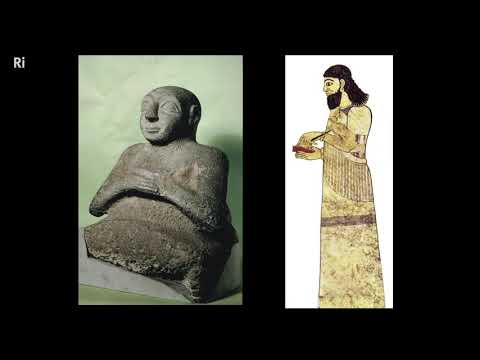
Cracking Ancient Codes: Cuneiform Writing - with Irving Finkel
2.8M views • 7 years ago
The Royal Institution
Irving Finkel of the British Museum lectures at the Royal Institution on the invention and decipherment of cuneiform writing in Mesopotamia, and why it is so hard to translate.
 1:40
Steve Jobs, "Computers are like a bicycle for our minds." - Michael Lawrence Films
676K views • 20 years ago
Michael Lawrence
A short clip of Steve Jobs describing the computer as a bicycle for the mind. He compares human efficiency of travel to what computers do for mental work.
 29:38
Man Spends 30 Years Turning Degraded Land into Massive Forest – Fools & Dreamers (Full Documentary)
4.7M views • 7 years ago
Happen Films
Fools & Dreamers is a 30-minute documentary about Hinewai Nature Reserve in New Zealand, where botanist Hugh Wilson let gorse grow as a nurse canopy to regenerate native forest. It shows the results after 30 years and the local skepticism he faced.
 23:20
Dwarf Fortress Creator Explains its Complexity & Origins | Noclip Interview
2M views • 6 years ago
/noclip
A /noclip interview with Tarn Adams of Bay 12 Games about Dwarf Fortress: where the ASCII simulation came from, how it works, and the plans for its Steam release. It includes his telling of the famous bug in which cats were poisoned by alcohol.
 26:10
Attention in transformers, step-by-step | Deep Learning Chapter 6
4.8M views • 2 years ago
3Blue1Brown
3Blue1Brown's visual walkthrough of the attention mechanism inside transformers, covering self-attention, multiple heads and cross-attention. It is chapter 6 of his deep learning series.
 28:48
LSTM is dead. Long Live Transformers!
540K views • 6 years ago
Seattle Applied Deep Learning
Leo Dirac explains how transformer models have replaced LSTMs in NLP. He gives background from bag of words through RNNs and LSTMs, then a technical deep dive into multi-headed self-attention and positional encoding, with sample code.
 12:42
How To Terraform Venus (Quickly)
22.8M views • 5 years ago
Kurzgesagt – In a Nutshell
Kurzgesagt lays out a speculative plan to terraform Venus, covering its hostile atmosphere and how it might be made Earth-like, with a sources page linked.
 39:33
Bret Victor - Media for Thinking the Unthinkable
33K views • 11 years ago
Colin McDonnell
Bret Victor's 2013 MIT Media Lab talk argues that the media we think with determine which thoughts are possible. He demos new representations for scientific papers, circuits, filters and signal processing.
 24:28
Euler's formula with introductory group theory
2.8M views • 9 years ago
3Blue1Brown
3Blue1Brown builds intuition for Euler's formula, e^(pi i) = -1, using the core ideas of group theory. It treats exponentiation geometrically as rotation and scaling instead of repeated multiplication.
 47:43
Sulforaphane and Its Effects on Cancer, Mortality, Aging, Brain and Behavior, Heart Disease & More
2.9M views • 9 years ago
FoundMyFitness
Rhonda Patrick of FoundMyFitness makes a case for isothiocyanates such as sulforaphane from cruciferous vegetables and broccoli sprouts. It covers cancer, aging, heart disease, brain and behavior, and neurodegeneration, with chapter timestamps.
 1:01:51
Lecture 1: Introduction to Information Theory
411K views • 12 years ago
Jakob Foerster
The first lecture of David MacKay's Cambridge course on information theory, pattern recognition and neural networks. It introduces the core ideas of his book Information Theory, Inference, and Learning Algorithms.
 20:39
AI Language Models & Transformers - Computerphile
354K views • 7 years ago
Computerphile
Rob Miles explains on Computerphile how language models generate plausible text and how transformers improved on recurrent networks, with a look at what comes next.
 1:00:34
High Performance Web Sites and YSlow
90K views • 18 years ago
Google TechTalks
A Google Tech Talk on Yahoo's 14 rules for faster web pages and the YSlow tool. It covers front-end practices like avoiding @import and fixing ETags, with live analysis of popular sites.
 26:17
How to write cuneiform with Irving Finkel and @preservethings I Curator's Corner S4 Ep9
648K views • 7 years ago
The British Museum
British Museum curator Irving Finkel teaches how to write cuneiform, with a colleague following along. It is a short, lively introduction to the script.
 59:31
CppCon 2014: Zaika Antoun "Microsoft w/ C++ to Deliver Office Across Different Platforms, Part I"
21K views • 12 years ago
CppCon
A CppCon 2014 talk from Microsoft engineers on using portable single-source C++ to deliver Office across iOS, Android, Windows and Mac. It covers architectures, techniques and lessons from real cross-platform projects.
 23:51
Web 2.0 Expo NY: Clay Shirky (shirky.com) It's Not Information Overload. It's Filter Failure.
55K views • 18 years ago
O'Reilly
Clay Shirky argues at Web 2.0 Expo NY that the problem online is not information overload but filter failure. He says the real challenge is building better ways to filter and organize what we see.
 17:46
Why do Biden's votes not follow Benford's Law?
3.7M views • 5 years ago
Stand-up Maths
Matt Parker examines claims that Biden's 2020 vote counts violate Benford's Law, explaining the law and why it often does not apply to precinct-level election data.
 1:01:09
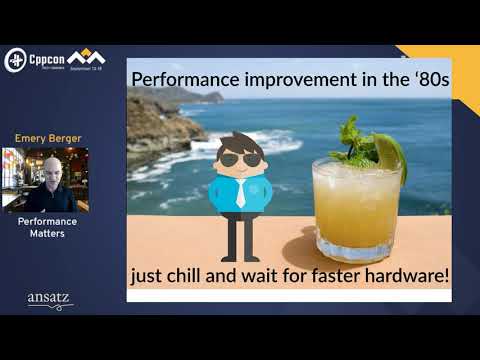
Plenary: Performance Matters - Emery Berger - CppCon 2020
32K views • 6 years ago
CppCon
Emery Berger's CppCon 2020 plenary on why performance is hard on modern hardware after the end of Dennard scaling. It covers benchmarking pitfalls and introduces new profiling tools for finding real bottlenecks.
 30:38
Solving Wordle using information theory
11.8M views • 4 years ago
3Blue1Brown
3Blue1Brown uses Wordle as an excuse to teach information theory and entropy, building a solver that picks guesses by expected information and incorporating word frequencies.
 49:45
seL4 Is Free – What Does This Mean For You?
10K views • 11 years ago
Linux.conf.au 2015 -- Auckland, New Zealand
Gernot Heiser presents seL4, a microkernel with a mathematical proof connecting security properties to the binary code, and explains what its open-sourcing means for users. It covers its roles as a microkernel, separation kernel and hypervisor.
 1:06:26
Over the Shoulder 1 - Text Preprocessing in Forth
25K views • 12 years ago
Andreas Wagner
Samuel Falvo II live-codes a text preprocessor and blog engine in Forth over about an hour. It shows Forth's dictionary being snapshotted and restored in place of mutation, and how a small Forth system gets real work done.
 56:55
AWS re:Invent 2017: How Netflix Tunes Amazon EC2 Instances for Performance (CMP325)
18K views • 8 years ago
Amazon Web Services
A Netflix performance engineer presents how Netflix tunes EC2 instances, covering instance type choice, Xen modes, SR-IOV and kernel tuning. The goal is near bare-metal performance in the cloud.
 18:51
Forensic Science: Last Week Tonight with John Oliver (HBO)
10.6M views • 9 years ago
LastWeekTonight
A John Oliver Last Week Tonight segment on how forensic science used in criminal trials is often unscientific. It looks at unreliable methods and lab malpractice, and ends with a joke about a TV procedural that might change public perception.
 52:29
Stanford's Sapolsky On Depression in U.S. (Full Lecture)
6.4M views • 17 years ago
Stanford
Stanford professor Robert Sapolsky lectures on depression as a real biological disease. He covers its biological and psychological causes, how it differs from ordinary sadness, and ideas such as learned helplessness. He ties these together into one account.
 1:08:40
Lecture 1 | Machine Learning (Stanford)
2.7M views • 18 years ago
Stanford
The first lecture of Andrew Ng's Stanford CS229 Machine Learning course, giving an overview of the course. It introduces supervised and unsupervised learning, learning theory and reinforcement learning.
 15:05
Steve Jobs' 2005 Stanford Commencement Address
49.4M views • 18 years ago
Stanford
Steve Jobs' 2005 Stanford commencement address, told through three stories: connecting the dots, love and loss, and death. It includes the calligraphy class and the 'stay hungry, stay foolish' close.
 58:19
Irving Finkel | The Ark Before Noah: A Great Adventure
5.1M views • 10 years ago
The Institute for the Study of Ancient Cultures
Irving Finkel of the British Museum tells how a 4,000-year-old cuneiform tablet came to him for examination. It revealed the oldest known account of Noah's Ark and led to a book and a documentary.
 35:42
Progressive Performance (Chrome Dev Summit 2016)
34K views • 9 years ago
Chrome for Developers
Alex Russell's Chrome Dev Summit 2016 talk on building web experiences that work on slow, flaky networks and low-power devices. It argues developers should focus on the performance of real-world mobile hardware rather than desktop machines.
 22:10
Steve Jobs' 2005 Stanford Commencement Address (with intro by President John Hennessy)
6.3M views • 18 years ago
Stanford
Steve Jobs' 2005 Stanford commencement address, in which he tells three stories from his life about connecting the dots, love and loss, and death. He urges graduates to follow their dreams and find opportunity in setbacks.
 47:50
Lecture 1 | Modern Physics: Classical Mechanics (Stanford)
1.4M views • 18 years ago
Stanford
The first lecture of Leonard Susskind's Stanford Continuing Studies course on modern physics, beginning with classical mechanics. It is the start of a six-quarter sequence on the theoretical foundations of physics.
 2:39
Stanford Professor Andrei Linde celebrates physics breakthrough
3.2M views • 12 years ago
Stanford
A short Stanford video in which Chao-Lin Kuo surprises Professor Andrei Linde with BICEP2 evidence supporting cosmic inflation, the first apparent images of primordial gravitational waves.